
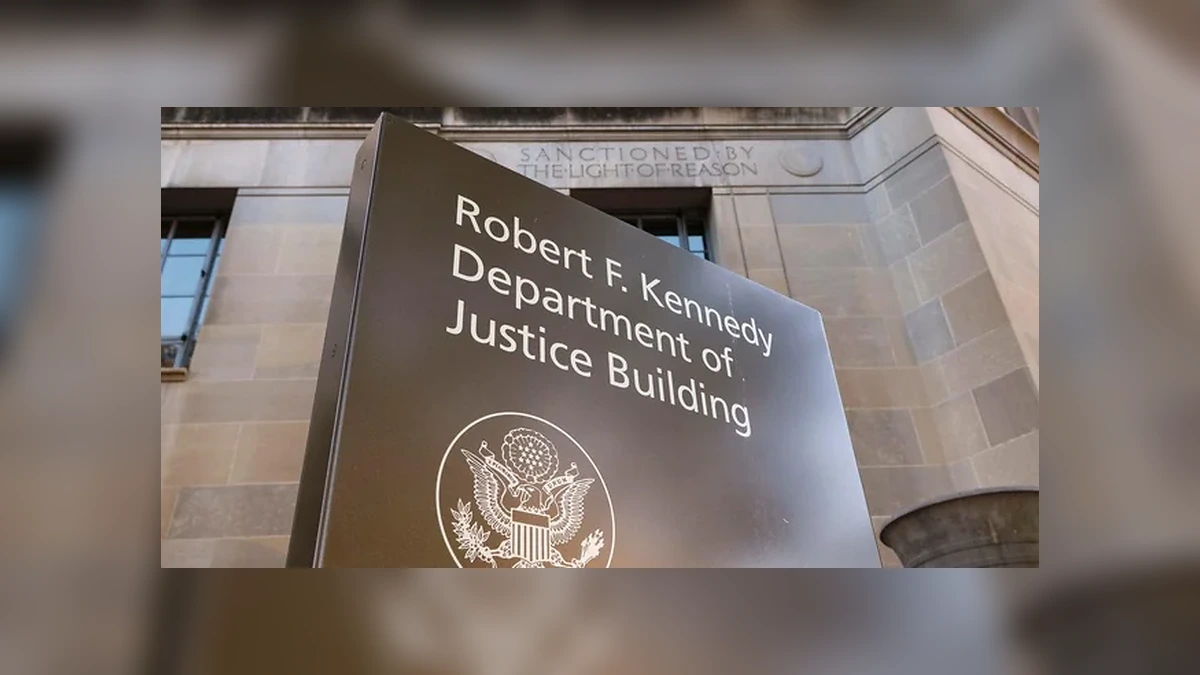
The US Department of Justice (DOJ) has supported the dismissal of federal school desegregation cases involving at least 56 school districts since January 2025, according to an analysis by the civil rights oversight project Red Line for Civil Rights.
The department has either withdrawn from existing cases or declined to oppose requests to end court-supervised consent decrees that have remained in place for decades.
The change represents a shift in the federal government’s approach to enforcing desegregation requirements in school districts previously subject to judicial oversight.
Analysis Raises Questions Over Verification of Desegregation
Red Line for Civil Rights found that in at least 18 of the cases, the DOJ supported ending federal supervision without first asking courts to determine whether the districts had achieved unitary status.
Under established legal standards, unitary status is a judicial finding that a school district has eliminated the remaining effects of past racial discrimination. It is generally required before a court can release a district from desegregation oversight.
Courts assess six main areas when considering whether a district has met the standard: student assignments, faculty assignments, staff assignments, transportation, school facilities and extracurricular activities.
According to the analysis, supporting dismissals without first seeking a unitary-status determination removes the usual step of obtaining a judicial assessment before ending the legal requirements imposed on a district.




Civil Rights Division Changes Its Approach to Consent Decrees
The DOJ’s Civil Rights Division is responsible for enforcing consent decrees, which are legal agreements requiring school districts to change policies and practices to address racial segregation.
Such agreements have been used in federal desegregation cases following the US Supreme Court’s 1954 decision in Brown v. Board of Education, which declared racial segregation in public schools unconstitutional.
Assistant Attorney General for Civil Rights Harmeet Dhillon has described longstanding consent decrees as “onerous and outdated”, arguing that extended federal supervision does not reflect conditions in classrooms today.
Under the administration’s revised approach, the department has moved towards seeking the termination of existing cases rather than negotiating new compliance agreements or asking courts to certify that districts have achieved unitary status.
Concordia Parish Case Illustrates the Policy Change
The proceedings involving Concordia Parish in Louisiana provide an example of how the shift has been applied.
In 2024, the DOJ proposed a new agreement intended to address continuing discrimination in the district. The local school board rejected the proposal.
After the administration changed in January 2025, the department reversed its position and joined the school board in seeking dismissal of the case.
A US district court judge initially blocked the dismissal, citing the need for evidence that the district had achieved unitary status. The school board appealed the ruling, and the case was ultimately dismissed.
Red Line for Civil Rights Documents Dismissals Across Dozens of Districts
The analysis by Red Line for Civil Rights identified at least 56 school districts in which the DOJ had supported ending federal desegregation proceedings since January 2025.
The findings also identified at least 18 cases in which the department supported ending oversight without first requesting a judicial determination of unitary status.
The cases reflect the department’s move away from continued federal supervision under longstanding consent decrees and towards terminating desegregation litigation.
