
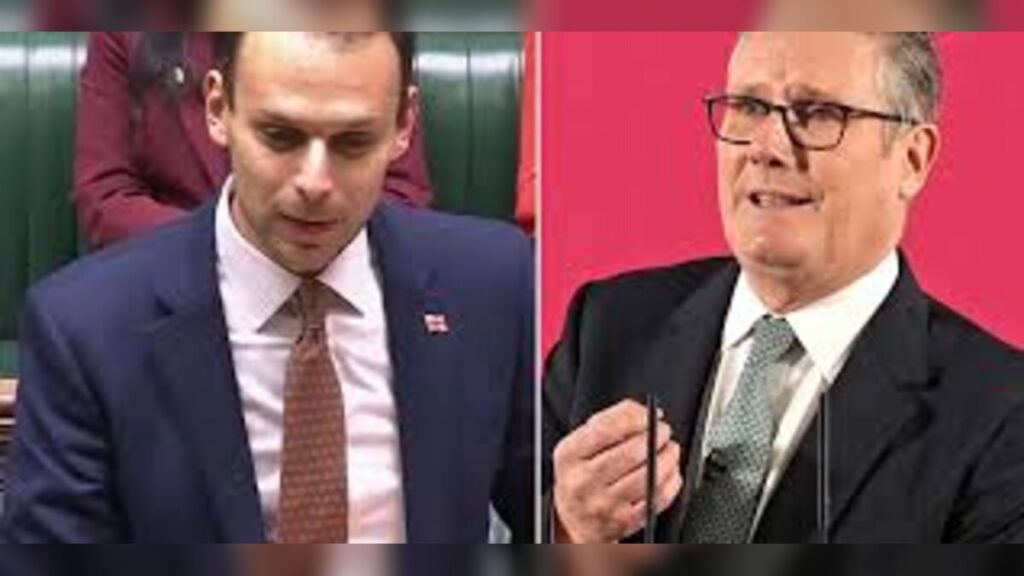
What was meant to be a routine political setback has instead cracked open a full-blown internal revolt inside the Labour Party.
After a bruising set of local election results that saw more than 1,100 council seats lost, pressure is now building on Prime Minister Sir Keir Starmer from inside his own ranks.
Instead of calming nerves, Starmer doubled down, insisting he will remain in office for what he calls a “10-year project of renewal.”
But behind the scenes, the mood is anything but settled, with MPs openly questioning whether he can survive the storm.
Former Allies Break Ranks as Confidence Collapses
One of the most striking developments is that criticism is no longer coming only from long-time opponents.
Former allies are now joining the chorus.
Labour MP Josh Simons, once linked closely to Starmer’s rise through Labour Together, has publicly admitted he no longer believes the Prime Minister can “rise to this moment.”
His remarks carry weight because he was previously seen as part of Starmer’s intellectual support network.
He described the recent election results as more than a typical midterm warning, calling them a direct rejection of Labour’s direction.
His conclusion was blunt: the party, he argues, may need an “orderly transition” at the top.
That kind of language—coming from within the system—is what has made Westminster unusually tense this week.
A Party Divided and Union Pressure Rising
The unrest is not limited to MPs. Trade unions, historically the backbone of Labour support, are also turning critical.
Leaders such as Sharon Graham of Unite and Dave Ward of the Communication Workers Union say the party has drifted away from working-class voters.
Their message is consistent: Labour has lost touch with its base.




This matters politically because unions are not just commentators—they are influential power brokers in Labour leadership stability.
At the same time, internal numbers suggest around 36 MPs are now willing to publicly support calls for Starmer to step down, a figure that could grow if local anger spreads further.
Westminster Maneuvering and Leadership Rumours
Inside Parliament, the atmosphere is increasingly strategic rather than united.
Some MPs are openly discussing potential successors, while others are trying to contain the situation before it escalates into a formal challenge.
Figures such as Angela Rayner are once again being mentioned in political circles as possible alternatives, though she remains focused on government responsibilities and personal political issues.
Meanwhile, veteran voices like Gordon Brown and Harriet Harman have been brought back into advisory roles, a move seen by some as an attempt to steady the ship—but by others as evidence of instability.
The Conservative opposition and emerging parties such as Reform UK and the Greens are also capitalising on Labour’s losses, reshaping the broader political battlefield.
Impact and Consequences
The immediate impact is clear: Labour’s authority has been weakened at exactly the point it needs unity.
Losing over a thousand council seats is not just symbolic—it signals declining trust at the local level, where parties usually build momentum.
Inside government, this creates hesitation.
MPs who fear electoral backlash are less likely to fully support unpopular decisions, which can slow policy delivery.
There is also reputational damage. Voters who backed Labour in hopes of change in 2024 are already expressing frustration, and that sentiment is now being echoed inside the party itself.
If the leadership question continues to grow, it risks overshadowing governance entirely, turning policy debates into survival politics.
What’s Next?
The next few weeks will be critical. If internal dissent reaches the threshold for a formal leadership challenge, Labour could enter a full contest for the top job.
Starmer’s strategy appears to be endurance—holding firm and arguing that reform takes time.
But that approach depends heavily on whether MPs and unions continue to tolerate declining local support.
Much will also depend on whether the opposition continues to gain ground in polling, particularly in regions Labour traditionally dominates.
For now, the party is stuck between two pressures: staying loyal to a leader who promises long-term renewal, or reacting to immediate electoral punishment.
Summary
Labour is facing one of its most serious internal crises since returning to government leadership.
After heavy losses in local elections, Sir Keir Starmer is under pressure from MPs, unions, and former allies.
While he insists he will stay and complete a decade-long reform plan, growing dissent suggests his position is no longer secure, and the party is entering a period of instability.
Bulleted Takeaways
- Labour lost over 1,100 council seats in recent local elections
- Former ally Josh Simons says Starmer cannot “rise to the moment”
- Around 36 MPs are reportedly supporting resignation calls
- Trade unions accuse Labour of losing connection with working-class voters
- Leadership speculation is growing inside Westminster
- Starmer insists he will remain Prime Minister for up to 10 years
- Veterans like Gordon Brown and Harriet Harman have been brought back as stabilisers
- Reform UK and Greens benefited from Labour’s losses
- Party unity is weakening at a critical political moment
- Future leadership challenge depends on continued internal and electoral pressure

