
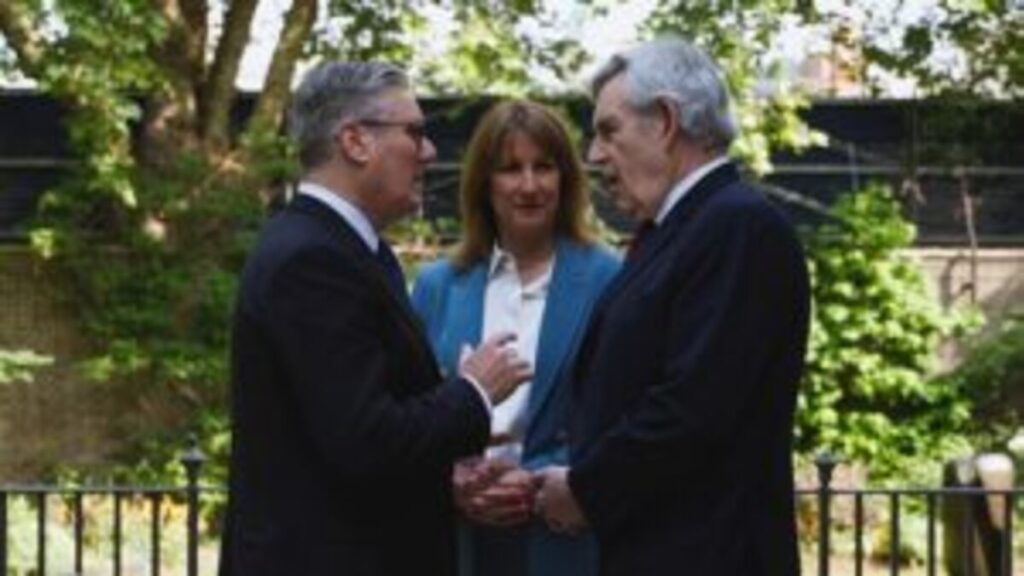
Britain’s political landscape has been thrown into fresh turmoil after Prime Minister Keir Starmer publicly declared he has no intention of leaving office anytime soon, despite growing unrest inside the Labour Party.
Under mounting pressure from angry MPs, disappointing election results, and fears of a voter rebellion, Starmer insisted he remains committed to what he called a “10-year project of national renewal.”
His comments come at a time when many within Labour are openly questioning whether he can still lead the party into the next general election.
The situation has rapidly escalated into one of the biggest internal crises Labour has faced in years.
Local Election Disaster Sparks Panic Inside Labour
The latest local elections proved disastrous for Labour in several traditional strongholds.
Voters in many northern and Midlands areas shifted toward Nigel Farage and Reform UK, while the Green Party also made major gains in urban regions that Labour once considered safe territory.
The scale of the losses has rattled MPs and advisers alike.
Many now believe Labour’s identity crisis is becoming impossible to ignore.
Some party figures argue Labour has drifted too far from working-class Brexit-supporting communities.
Others insist the party must appeal more strongly to progressive city voters worried about climate change and social issues.
The split has created two competing visions for Labour’s future.
Behind closed doors, frustration has reportedly reached boiling point.
Gordon Brown and Harriet Harman Return Draws Mockery
In an attempt to calm tensions, Starmer brought back senior Labour veterans Gordon Brown and Harriet Harman into government discussions.
However, the move appears to have backfired badly.
Instead of reassuring MPs, many inside Labour reportedly saw the decision as proof that the party leadership was out of fresh ideas.
Critics argued that relying on figures from previous political eras would do little to reconnect with frustrated voters in former Labour heartlands.
One Labour backbencher reportedly mocked the strategy by saying voters angry about the political establishment would hardly be inspired by “Gordon, Harriet and one degree closer to the EU.”
The criticism reflects growing fears that Labour may once again reopen divisions surrounding Brexit — an issue that reshaped British politics for years.
Brexit Debate Returns to the Centre of Labour’s Problems
Starmer is expected to use a major speech to outline plans that could move Britain closer to the European Union in some areas.
That prospect has already triggered concern among MPs representing Brexit-supporting constituencies.
For many Labour MPs in so-called Red Wall seats, any hint of reversing Brexit arrangements could fuel further voter anger and strengthen Reform UK’s rise.
At the same time, many London-based MPs and party activists support closer ties with Europe, believing it would help economic growth and international cooperation.
The internal disagreement has exposed a widening divide between Labour’s metropolitan wing and representatives from working-class regions.
Leadership Challenge Threat Looms Over Downing Street
The biggest immediate threat to Starmer now comes from within his own parliamentary party.




Labour MP Cat West has threatened to launch a “stalking horse” leadership challenge unless senior Cabinet figures intervene.
Although West currently has support from only a small group of MPs, nervousness inside Downing Street is growing because Labour rules require backing from 81 MPs to trigger a formal leadership vote.
Some insiders fear anger inside the party could spread rapidly if Starmer’s upcoming speech fails to convince doubters.
West said she would prefer the Cabinet unite around an alternative leader rather than force a prolonged internal election battle.
Her remarks added fuel to speculation that several senior Labour figures may already be positioning themselves for a post-Starmer future.
Wes Streeting and Andy Burnham Enter the Conversation
Rumours are also circulating that supporters of Health Secretary Wes Streeting may quietly favour an earlier leadership contest.
Some within Labour believe Streeting could benefit politically if Starmer falls before Greater Manchester Mayor Andy Burnham has a pathway back into Parliament.
Burnham continues to be viewed by sections of Labour as a politician capable of reconnecting with traditional working-class voters.
Interestingly, Cat West openly praised Burnham and suggested he should eventually play a major leadership role, even floating the idea of him serving in government through the House of Lords.
That unusual suggestion highlights how desperate some MPs are becoming to find a figure capable of uniting the fractured party.
Angela Rayner Keeps a Low Profile
Deputy Prime Minister Angela Rayner has remained noticeably cautious throughout the crisis.
While speculation about her ambitions continues, Rayner has avoided publicly backing or attacking Starmer.
Instead, she posted photos from a charity fundraiser where she appeared swimming and covered in mud — a striking contrast to the political chaos unfolding in Westminster.
Her silence has only intensified speculation about future leadership manoeuvres.
Some Labour insiders believe her standing has weakened after Reform UK performed strongly in areas connected to her political base.
MPs Fear Starmer Cannot Reset Labour Again
A major issue for Starmer is that many MPs no longer believe another “reset” strategy will work.
Since becoming Labour leader, Starmer has repeatedly attempted to rebrand the party and adjust its political messaging.
But critics inside Labour say each attempt has failed to build lasting momentum with voters.
One senior party figure reportedly complained that Starmer struggles to understand the emotional side of politics and often delivers speeches that fail to inspire people.
That criticism may prove especially dangerous now, as Labour faces pressure not only from Conservatives but also from Reform UK and the Greens simultaneously.
Impact and Consequences
The political consequences of this internal Labour crisis could be enormous.
If Labour remains divided, Reform UK could continue expanding its influence across former Labour strongholds, particularly in northern England and the Midlands.
That would fundamentally reshape Britain’s political map.
A leadership challenge could also trigger months of instability inside government, weakening Labour’s ability to focus on economic issues, healthcare, housing, and immigration.
Financial markets and international allies are also closely watching events.
Any sign that Britain’s governing party is becoming unstable could create uncertainty around future policy direction.
For Starmer personally, the next few days may determine whether he survives as prime minister or becomes another short-lived British leader consumed by party infighting.
What’s Next?
All attention now turns to Starmer’s upcoming speech, which many MPs see as a defining moment.
He is expected to present a clearer long-term vision for Britain, explain how Labour plans to recover lost voters, and defend his strategy for government.
If the speech fails to energise MPs or reassure the public, pressure for a leadership challenge could intensify very quickly.
Behind the scenes, rival camps are already watching closely and calculating their next moves.
The coming weeks could decide not only Starmer’s future, but also the direction of the Labour Party for years to come.
Summary
Keir Starmer is facing the most dangerous political crisis of his leadership as Labour MPs grow increasingly restless after disastrous local election results.
While Starmer insists he remains committed to leading Britain for another decade, critics inside his own party believe Labour is losing touch with key voters.
The return of veteran figures like Gordon Brown and Harriet Harman has done little to calm fears, while debates over Brexit, Reform UK’s rise, and Labour’s identity crisis continue to divide the party.
With leadership challenge rumours growing louder, Starmer’s next speech could become a pivotal moment in modern British politics.
Bulleted Takeaways
- Keir Starmer insists he will remain PM and lead a “10-year renewal project.”
- Labour suffered major losses in local elections to Reform UK and the Green Party.
- Cat West is threatening a leadership challenge against Starmer.
- The return of Gordon Brown and Harriet Harman was heavily criticised inside Labour.
- Internal divisions are growing over Brexit and Labour’s political direction.
- Angela Rayner has remained largely silent amid the turmoil.
- Wes Streeting and Andy Burnham are being discussed as possible future leadership figures.
- Starmer’s upcoming speech may determine whether he can survive the growing rebellion inside Labour.

