
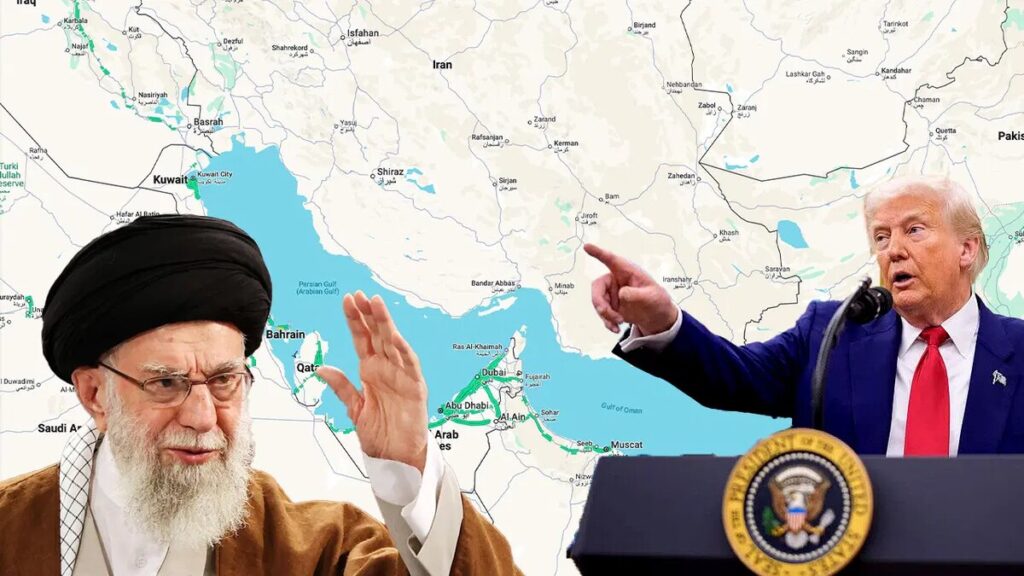
The already fragile situation between Iran and the United States has taken another dangerous turn, with Tehran’s Revolutionary Guard navy issuing a stark warning.
Iran says any strike on its oil tankers or commercial shipping will trigger a “heavy assault” targeting US military bases in the region as well as enemy naval vessels.
The message, broadcast through Iranian state media, came just one day after reports that US forces struck two Iranian oil tankers in disputed waters.
Even though a ceasefire is technically still in place, the latest exchanges are pushing both sides closer to open confrontation again.
Ceasefire Under Pressure as Maritime Attacks Escalate
Washington insists the ceasefire remains active, but the situation at sea suggests otherwise.
The US military claims it disabled two Iranian tankers allegedly attempting to break a blockade on Iranian ports, and also disrupted earlier attacks on American naval ships operating in the region.
The Pentagon also confirmed strikes on Iranian military assets near the Strait of Hormuz, a waterway that carries a huge share of the world’s oil supply.
These incidents have made the ceasefire feel increasingly symbolic rather than practical.
Tensions have now reached a point where even routine shipping in the Gulf is being treated as a potential flashpoint.
Strait of Hormuz Becomes the Centre of Global Anxiety
The Strait of Hormuz has once again become the most sensitive maritime corridor in the world.
Iran has repeatedly hinted it could disrupt traffic through the waterway, while the US has responded with its own blockade measures.
Iranian officials have warned Gulf states, including Bahrain, against supporting US-led efforts.
One senior Iranian parliamentary security figure even suggested that backing Washington could bring “severe consequences” and long-term economic risk if the strait were shut.
For global energy markets, the stakes are enormous.
A disruption in this narrow passage could send oil prices soaring worldwide within hours.
Arrests in Bahrain Add a Domestic Security Layer
The crisis has also spilled into internal security concerns in Bahrain, where authorities say they arrested 41 people linked to alleged networks connected to Iran’s Revolutionary Guard.
Bahrain, a Sunni-led monarchy with a majority Shiite population, has long been sensitive to accusations of foreign-backed influence.
Human rights groups argue that regional tensions are often used as justification for cracking down on domestic opposition.
The presence of the US Fifth Fleet in Bahrain makes the country a strategic but vulnerable hub in the unfolding crisis.




Naval Confrontation and Expanding Military Deployments
The US military has ramped up its presence in the region, reporting that it has turned back dozens of commercial vessels and disabled several ships since the blockade intensified.
Video released by US Central Command reportedly shows Iranian tankers being struck by American aircraft.
In earlier incidents, US forces claim they damaged vessels attempting to breach restrictions on Iranian ports.
At least one reported attack led to casualties, with Iranian media stating a cargo ship caught fire and sailors were killed or injured, though details remain unclear.
Oil Spill Raises Environmental and Strategic Concerns
Satellite imagery has revealed a large oil slick near Kharg Island, Iran’s main oil export hub.
Analysts estimate tens of thousands of barrels may have leaked into the Gulf, though the cause remains unknown.
It is still unclear whether the spill resulted from sabotage, military action, or infrastructure failure.
However, experts warn it could spread toward the coasts of the UAE, Qatar, or Saudi Arabia, potentially creating an environmental crisis alongside the geopolitical one.
Global Diplomacy Scrambles to Contain the Crisis
While military tensions rise, diplomatic efforts are quietly accelerating behind the scenes.
Countries including Russia, Egypt, Qatar, and Pakistan have all called for restraint and renewed negotiations.
Russia has pushed for a settlement involving international oversight of Iran’s nuclear materials under the supervision of the International Atomic Energy Agency.
Meanwhile, European allies such as Britain and France are preparing naval deployments aimed at protecting commercial shipping once conditions allow.
The broader goal remains the same: prevent the Strait of Hormuz from becoming fully militarised.
Impact and Consequences
The consequences of continued escalation could be severe and far-reaching.
Energy markets are already reacting nervously, with any disruption to Gulf shipping likely to push global oil prices sharply higher.
Military clashes also risk dragging in regional allies, turning a bilateral US-Iran standoff into a wider Gulf conflict.
Countries hosting US bases, such as Bahrain and Qatar, could become direct flashpoints.
Beyond geopolitics, environmental damage from oil spills and damaged tankers could affect marine ecosystems for years.
Global trade routes may also face higher insurance costs and shipping delays even if full-scale war is avoided.
What’s Next?
The immediate focus is whether Iran will formally respond to the latest US strikes or continue operating under the current fragile ceasefire.
Washington is also waiting for Tehran’s response to a proposed diplomatic deal involving nuclear limits and reopening maritime corridors.
In the coming days, military movements in the Strait of Hormuz will be closely watched.
Any further naval confrontation could quickly undo remaining diplomatic progress.
Behind closed doors, international mediators are trying to prevent escalation while keeping communication channels open between both sides.
Summary
Tensions between Iran and the United States are once again approaching a critical point after renewed naval clashes and strikes on oil tankers.
Iran has warned of severe retaliation against US forces if its shipping interests are attacked, while Washington insists it is enforcing maritime security measures.
The Strait of Hormuz remains the central pressure point in the crisis, with global energy security hanging in the balance.
Despite diplomatic efforts from multiple countries, both sides appear to be preparing for the possibility that the ceasefire may not hold.
Bulleted Takeaways
- Iran’s Revolutionary Guard navy threatens retaliation against US bases over tanker strikes
- US military says it disabled Iranian tankers and blocked port breach attempts
- Strait of Hormuz remains the most dangerous flashpoint for global oil shipping
- Bahrain arrests 41 people allegedly linked to Iran’s Revolutionary Guard network
- Reports of oil spill near Kharg Island raise environmental concerns
- Satellite images suggest tens of thousands of barrels may be leaking into the Gulf
- Britain and France preparing naval deployments to secure shipping routes
- Multiple countries, including Russia and Pakistan, call for renewed diplomacy
- US and Iran remain locked in ceasefire uncertainty despite ongoing clashes
- Global energy markets remain on edge amid fear of wider regional escalation

