
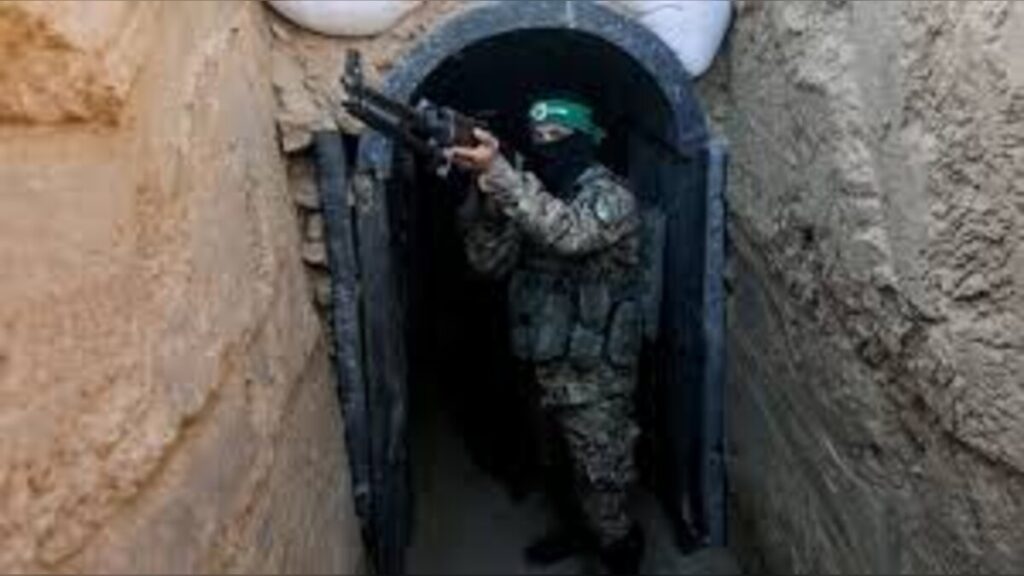
Military operations in the central Gaza area have reportedly led to the destruction of a complex underground tunnel system, with troops uncovering hidden routes, weapons caches, and explosive devices.
The operation is part of ongoing fighting in the region involving the Israel Defense Forces inside the wider conflict zone of the Gaza Strip.
According to military statements, the focus of the operation was an area east of what is being referred to as the “Yellow Line” in central Gaza, where underground infrastructure has long been suspected.
Two Tunnel Routes Stretching Across Nearly Two Kilometres
Soldiers reportedly dismantled two separate underground tunnel routes with a combined length of roughly two kilometres.
These tunnels are believed to have been used for movement, storage, and concealment purposes.
Inside the passages, troops say they found multiple hiding spots along with weapons storage areas, suggesting the tunnels were not simply transit routes but part of a wider operational network.
The discovery adds to a growing list of underground structures identified during the ongoing conflict, where tunnel systems have played a major tactical role for years.
Rockets and Explosives Found During Search Operations
Beyond the tunnels themselves, forces searching the surrounding area reportedly uncovered dozens of rockets and explosive devices.
These findings indicate that the underground network was linked to a broader weapons storage system above and below ground.




Military officials described the area as heavily embedded with armed infrastructure, requiring detailed clearing operations to ensure no additional threats remained hidden.
A Pattern of Underground Warfare in the Region
The use of tunnels in Gaza is not new. Over the past two decades, underground networks have been a defining feature of conflict in the region, used for movement, storage, and concealment.
Such structures have often been difficult to detect and destroy due to their depth, complexity, and integration into densely populated urban areas.
Previous military assessments have repeatedly highlighted the challenge of mapping and neutralising these tunnel systems without extensive ground operations.
Impact and Consequences
The reported dismantling of the tunnel network represents a significant tactical development in the ongoing conflict inside the Gaza Strip.
From a military perspective, destroying underground routes can limit mobility and disrupt supply lines tied to armed groups operating in the area.
However, such operations also tend to intensify ground activity, increasing risks for both combatants and civilians in surrounding neighbourhoods where infrastructure is densely packed.
The discovery of rockets and explosives also highlights the continued militarisation of underground spaces, raising concerns about long-term stability and reconstruction challenges once fighting subsides.
What’s Next?
Military operations in central Gaza are expected to continue as forces search for additional tunnel routes and storage sites linked to the destroyed network.
Future efforts will likely focus on mapping remaining underground infrastructure and preventing re-use of cleared passages.
At the same time, international observers continue to monitor developments closely, particularly regarding humanitarian conditions in affected areas of the Gaza Strip.
Summary
Israeli forces say they have dismantled two underground tunnel routes totaling around two kilometres in central Gaza, uncovering weapons caches, rockets, and explosive devices in the process.
The operation highlights the continued strategic role of tunnel networks in the conflict and adds to ongoing military activity in the region.
Bulleted Takeaways
- Israel Defense Forces report dismantling two underground tunnel routes in central Gaza
- Combined tunnel length is estimated at around 2 kilometres
- Operations took place east of the “Yellow Line” area in the Gaza Strip
- Troops reportedly found hideouts and weapons storage inside the tunnels
- Dozens of rockets and explosive devices were discovered during searches
- Underground tunnel systems have long been a key feature of conflict in Gaza
- Operations may continue to locate and destroy additional hidden infrastructure
- Findings raise concerns about both security risks and post-conflict recovery challenges

