
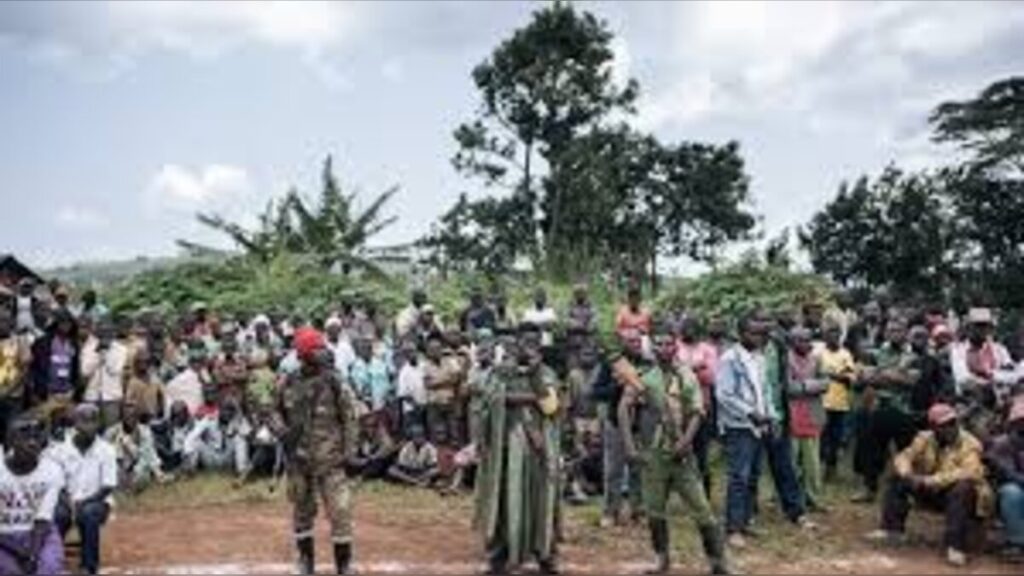
In the northeast of the Democratic Republic of Congo, another brutal chapter has unfolded in a region that rarely sees peace.
At least 69 people were killed in coordinated militia attacks across villages in Ituri province, according to local and security sources speaking to AFP.
This area, already scarred by decades of violence, is once again at the center of a deadly cycle involving rival armed groups, ethnic tensions, and control over valuable mineral land.
A Region Trapped in a 30-Year Cycle of Conflict
Eastern DRC has long been described as one of the most unstable regions in Africa.
The violence is not random—it is deeply tied to land, identity, and resources.
The province of Ituri, which borders Uganda and South Sudan, sits on rich deposits of gold and other minerals.
This wealth has made it a constant target for armed factions.
Two communities, the Hema and the Lendu, have been locked in recurring violence for years.
Their conflict has been exploited and intensified by militias claiming to defend one side or the other.
Codeco Militia and Retaliatory Attacks
The latest killings are linked to fighters from the Codeco militia, short for Cooperative for the Development of Congo, which says it represents the Lendu community.
According to reports, Codeco militants attacked several villages on April 28, killing civilians and militia members alike.
At least 69 people were confirmed dead, though some sources suggest the toll may be higher.
The violence followed earlier clashes involving another armed group, the Convention for the Popular Revolution (CRP), which claims to defend the Hema community and has targeted positions held by the Congolese army near Pimbo.
What followed was a cycle of retaliation. In earlier counterattacks, more than 70 people were reportedly killed, further escalating tensions across the region.




Bodies Left Behind and Communities in Shock
Local accounts describe a deeply disturbing aftermath.
A civil society leader, Dieudonne Losa, said only 25 bodies had been buried so far, with many still missing or unrecovered due to insecurity in the area.
Humanitarian workers reported scenes of devastation, including bodies left exposed near villages such as Bassa, where access remained dangerous for several days after the attacks.
Even recovery efforts were delayed because militia fighters remained active in the area, preventing families from retrieving their dead safely.
International Response and Rising Alarm
The United Nations mission in the DRC reported that it had evacuated nearly 200 civilians caught in crossfire during earlier fighting involving the CRP and the Congolese army.
It later condemned the renewed wave of violence, warning that civilians continue to bear the highest cost of the conflict.
Local organizations, including groups representing the Hema community, described the killings as a “massacre” and urged restraint to prevent further retaliation.
Why Eastern Congo Keeps Erupting
Beyond ethnic tensions, the conflict is deeply tied to resource competition.
The eastern DRC is rich in cobalt, copper, diamonds, uranium, and gold. These resources have fueled armed groups for decades, making peace agreements fragile and often temporary.
The region also faces pressure from other armed groups, including the Allied Democratic Forces, which has pledged allegiance to the Islamic State and continues to carry out attacks in rural areas.
Political instability, weak infrastructure, and limited government control have allowed militias to operate with relative freedom in remote regions.
Impact and Consequences
The latest killings deepen an already severe humanitarian crisis in Ituri province. Nearly one million people are displaced across the region, according to United Nations humanitarian data.
Families are being forced to flee repeatedly, often returning to destroyed villages or unsafe land. Local economies, especially farming and mining, are severely disrupted.
The psychological impact is also growing—communities are trapped in fear of retaliation, with trust between ethnic groups further eroded.
Internationally, the violence raises concerns about the effectiveness of peacekeeping efforts and the ability of state forces to secure rural territories.
What’s Next?
For now, there is little sign of de-escalation. Militias remain active, and retaliation cycles continue to drive violence.
Peacebuilding efforts will likely depend on stronger coordination between the Congolese government, local leaders, and international partners.
Without meaningful security reforms and control over armed groups, analysts warn that similar attacks could continue in the coming months.
Humanitarian agencies are expected to increase emergency support, but access challenges may limit how quickly aid reaches affected villages.
Summary
A series of militia attacks in Ituri province, eastern Democratic Republic of Congo, has left at least 69 people dead. The violence is part of a long-running conflict involving ethnic tensions between Hema and Lendu communities, as well as competing armed groups like Codeco and CRP. Despite international condemnation, insecurity continues to escalate, worsening an already critical humanitarian situation.
Bulleted Takeaways
- At least 69 people killed in recent militia attacks in Ituri province
- Violence linked to Codeco militia and retaliatory clashes with rival groups
- Conflict rooted in long-standing Hema–Lendu ethnic tensions
- Eastern DRC remains rich in minerals like gold, cobalt, and diamonds
- Bodies remain unrecovered due to ongoing insecurity
- UN reports evacuations of civilians caught in crossfire
- Nearly one million people displaced in the region
- Armed groups continue to exploit weak state control and resource wealth
- Humanitarian crisis worsening with repeated cycles of retaliation
- No immediate sign of peace or stabilization in the region

