
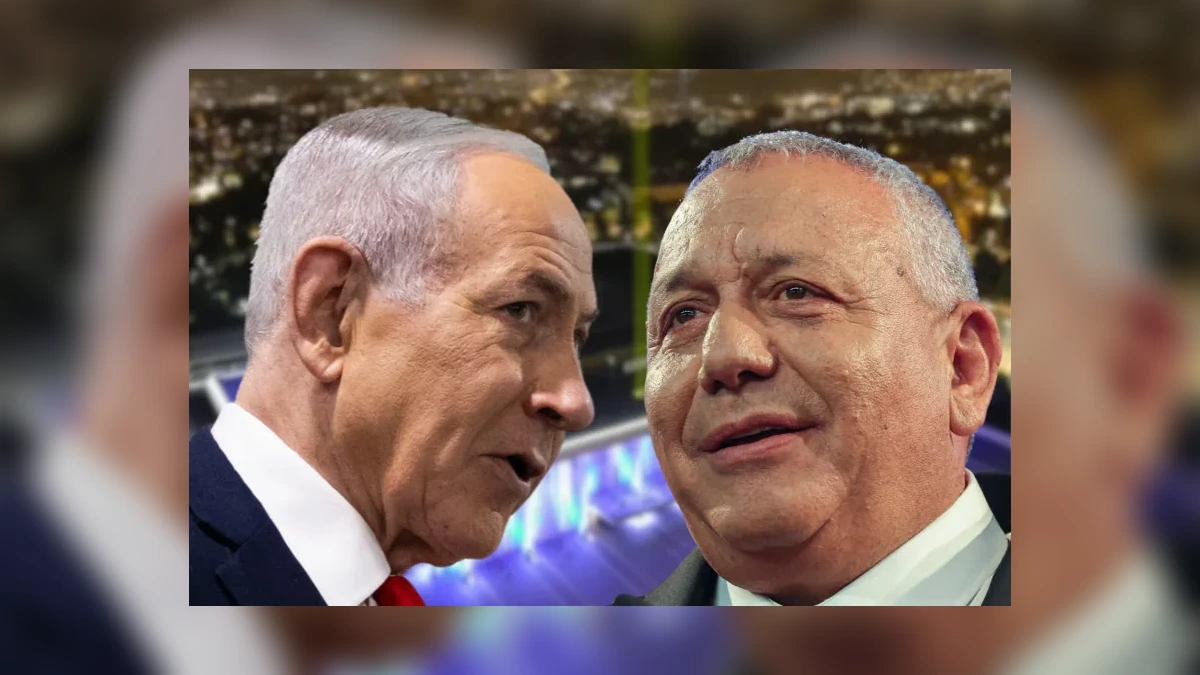
Yashar Party chairman Gadi Eisenkot has ruled out joining a government led by Israeli Prime Minister Benjamin Netanyahu, saying he would maintain his position even if US President Donald Trump personally requested that he reconsider.
According to Israeli public broadcaster KAN, Eisenkot made the comments during a recent closed-door meeting, where he reportedly told participants that he would not serve in a government headed by Netanyahu.
“I will not sit in a government led by Netanyahu,” Eisenkot said, according to sources cited by KAN.
He also indicated that he would accept an invitation to meet Trump but would make clear that decisions about Israel’s internal politics should remain an Israeli matter.
“If Trump calls me, I will respect the president and come, but I will insist that this is an internal Israeli matter and will avoid interference,” he reportedly said.
Trump Associates Discussed Possible Unity Government
The comments come after reports that representatives of Trump had contacted Israeli officials following the election to discuss the possibility of forming a national unity government involving Netanyahu and Eisenkot.
A Likud official cited by The Washington Post said Trump wanted Israel to have a stable government established as quickly as possible after the election.
“What Trump wants is a stable and reliable Israeli government that can be formed as soon as possible after the election,” the official said.




The Washington Post also reported that Netanyahu had told US officials he considered Eisenkot the most suitable partner if hostilities between Israel and Iran resumed.
According to the report, Netanyahu indicated that a partnership with Eisenkot could lead to the formation of a more moderate coalition.
Opposition Leaders Back Eisenkot to Form Government
Opposition leaders Naftali Bennett, Yair Golan and Avigdor Liberman have announced that they would recommend Eisenkot to President Isaac Herzog as the candidate to receive the mandate to form the next government.
The three leaders, together with Eisenkot and outgoing opposition leader Yair Lapid, were scheduled to hold their first joint meeting since the election on Tuesday.
Their discussions come as opposition parties consider how to secure sufficient parliamentary support to form a government.
Election Results Leave Israel Without a Parliamentary Majority
The election produced no outright majority in Israel’s 120-member Knesset.
Netanyahu’s political bloc secured 53 seats, while opposition parties won 48. Arab parties collectively secured the remaining 19 seats.
Support from the Arab parties could potentially give Eisenkot backing from 67 lawmakers, providing a possible route towards forming a government.
However, disagreements within the opposition over cooperation with Arab parties have complicated the process.
Liberman Rejects Coalition Dependent on Arab Parties
Liberman has ruled out joining a government that depends on support from Arab parties. He has also rejected the possibility of participating in a unity government with Netanyahu.
The positions taken by opposition leaders leave negotiations over the next government complicated, despite their stated support for Eisenkot as a potential candidate to receive the mandate to form an administration.

