
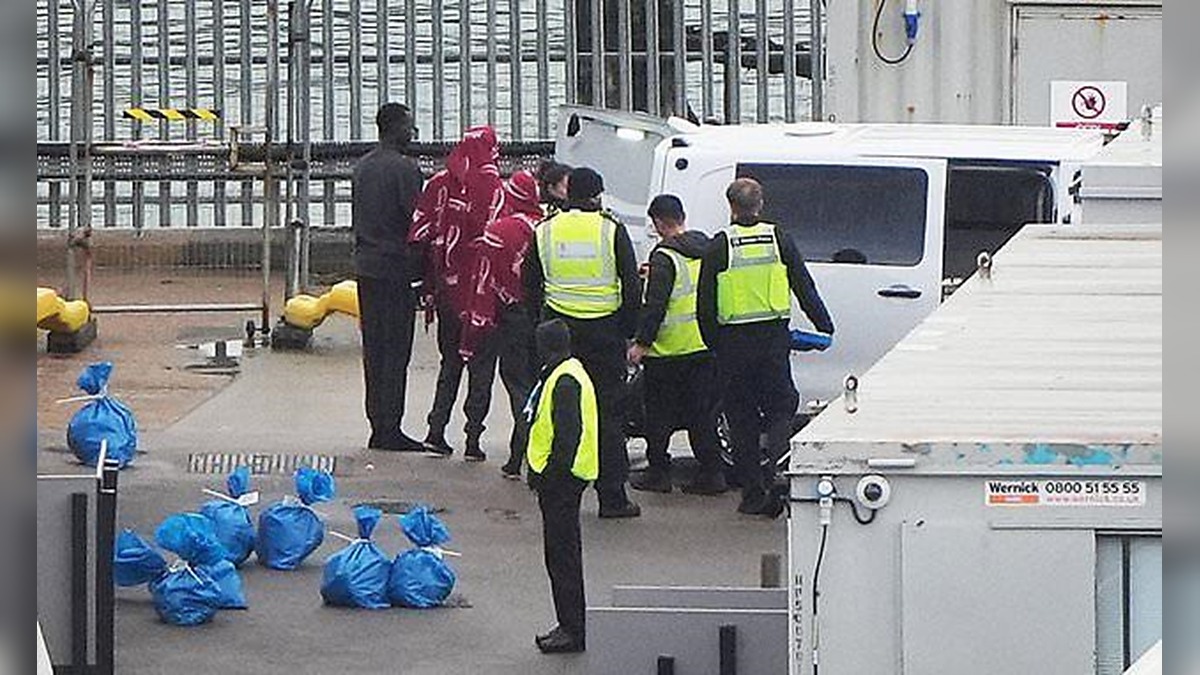
More than 10,000 migrants have crossed the English Channel in small boats since Andy Burnham became Prime Minister, with the latest arrivals pushing the total to 10,136.
Home Office figures show that 1,670 people reached Britain between Thursday and Sunday, bringing an end to a three-week period without recorded arrivals.
The latest figures represent an average of approximately 96.5 crossings per day since Mr Burnham took office.
1,670 Migrants Cross the Channel in Four Days
The latest surge began on Thursday, when 263 migrants arrived in the UK. A further 671 people made the crossing on Friday, followed by 259 on Saturday.
On Sunday, another 477 migrants arrived aboard seven boats, taking the total for the four-day period to 1,670.
The overall figure under Mr Burnham’s premiership now stands at 10,136.
The daily average is higher than those recorded during the premierships of Rishi Sunak, Boris Johnson and Theresa May.
However, it remains slightly below the average recorded under Sir Keir Starmer, whose time in office saw 77,183 small boat arrivals at an average of 103.5 per day.
Opposition Attacks Burnham Over Migration Figures
The latest arrivals have prompted criticism of the Prime Minister’s handling of illegal migration.
Chris Philp, the Shadow Home Secretary, accused Mr Burnham of failing to address the crossings and criticised the Government’s proposed changes to immigration settlement rules.
Speaking to the Daily Mail, he said: “Open-borders Burnham has done nothing to tackle illegal immigration, and his watering down of settlement reforms will only make the problem worse by keeping the incentives to come here illegally firmly in place.”
Mr Philp called for the Government to remove incentives for illegal migration through deportations and restrictions on benefits for foreign nationals.
He also argued that the Conservatives were the only party prepared to introduce a border strategy involving withdrawal from the European Convention on Human Rights (ECHR) and the deportation of all illegal immigrants.
Burnham Cites Brexit in Explanation of Channel Crossings
In an interview towards the end of last month, Mr Burnham identified Brexit as one of the factors affecting Britain’s ability to prevent migrant crossings.
He said the UK’s departure from the European Union had weakened cooperation with neighbouring countries, making it harder to maintain the previous levels of collaboration.
Mr Burnham said: “I do point to the loss of collaboration with neighbours that came with Brexit. That hasn’t helped.”




He added that the Government would continue working to reduce crossings, stating that its objective was to reach a point where no migrants made the journey.
The Prime Minister also highlighted that the overall number of people arriving in Britain so far this year was lower than at the same point in 2025.
Labour abandoned the Conservatives’ Rwanda asylum agreement shortly after winning the 2024 General Election.
The party subsequently pursued a different approach, focusing on improved cooperation between police forces and other law enforcement agencies to tackle small boat crossings.
Mahmood Prepares to Announce Revised Immigration Rules
The latest Channel arrivals come as Home Secretary Shabana Mahmood prepares to announce changes to Britain’s immigration settlement system.
Her proposals, expected to be presented to Parliament on Monday afternoon, concern the length of time foreign nationals must live in the UK before qualifying for indefinite leave to remain (ILR).
The original plans proposed increasing the standard qualifying period from five years to ten years. Some categories of migrants, particularly low-skilled foreign workers and those who received welfare support, would have faced considerably longer waiting periods.
However, the proposals have been substantially revised following opposition from Labour MPs, with some of the Home Secretary’s toughest measures expected to be diluted.
Labour Opposition Forces Changes to Settlement Proposals
Among the proposals that attracted criticism was a plan to extend the settlement waiting period for foreign care workers by as much as ten years beyond the existing five-year requirement.
Under the original framework, migrants who had received benefits for up to 12 months would have faced a 15-year qualifying period.
Those who had claimed benefits for more than a year would have been required to wait 20 years before becoming eligible for settled status.
Migrants who entered Britain illegally, including those who arrived through small boat crossings, could have faced a waiting period of up to 25 years.
By contrast, doctors, nurses and other foreign workers in senior public sector positions would have qualified for a shorter five-year period.
Other migrants who made higher tax contributions would also have been eligible for preferential treatment.
The proposals attracted strong opposition from within the Labour Party. Angela Rayner, who has since returned to the Cabinet under Mr Burnham, previously described the plans as “un-British” when she criticised them in March as a backbencher.
Energy Secretary Miatta Fahnbulleh also spoke out against the proposals last month.
The extent of the changes to Ms Mahmood’s original plans is expected to become clear when she addresses the House of Commons.
Millions of Migrants Could Be Affected by Settlement Reforms
The Home Secretary initially introduced the proposals to reduce the impact of the large number of foreign nationals expected to become eligible for indefinite leave to remain between 2026 and 2030.
Government estimates put the number of people potentially affected at between 1.3 million and 2.2 million.
The group includes approximately 463,000 people who entered Britain through the foreign care worker visa route, which has been widely abused through fraudulent applications.
Home Office Defends Government’s Border Measures
A Home Office spokesman defended the Government’s record on tackling small boat crossings, pointing to a reduction in arrivals and enforcement operations carried out since the election.
The spokesman said the UK had recorded its lowest number of summer arrivals since 2020, adding that more than 48,000 attempted crossings had been prevented.
The department also reported that 1,100 boats and engines had been seized through joint enforcement efforts.
The spokesman said the Government intended to increase the number of officers operating in France and continue efforts to remove the factors attracting migrants to Britain through illegal and dangerous routes.
