
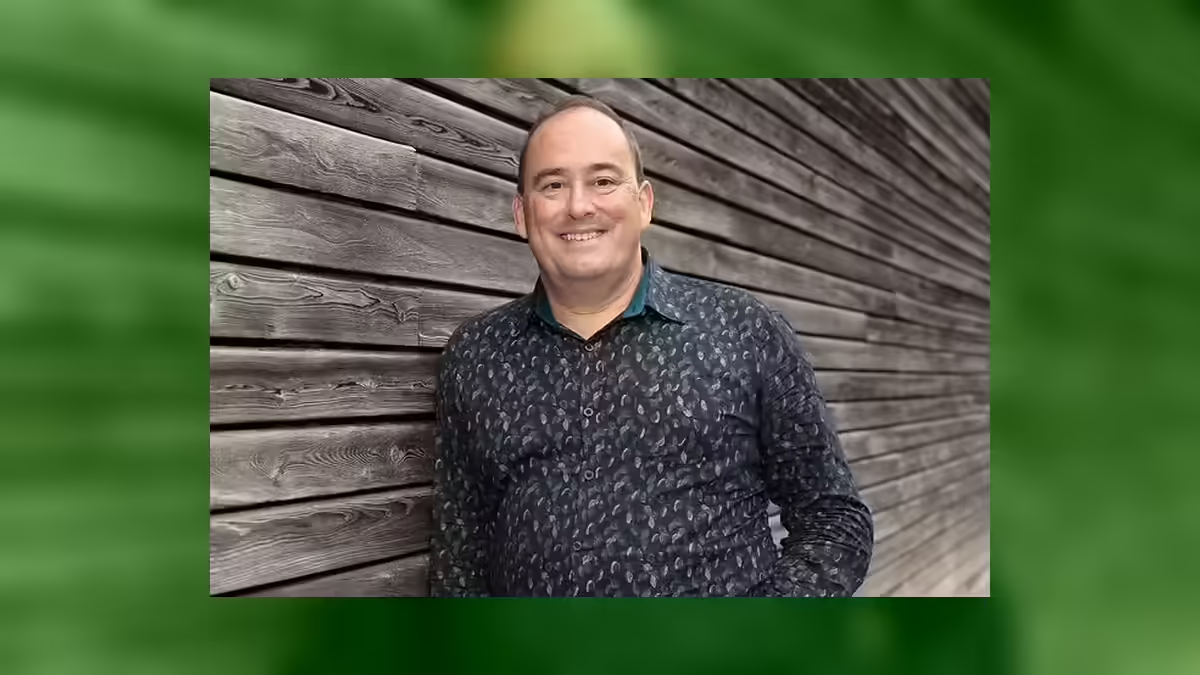
Artificial intelligence could eventually take control of humanity and force people to perform tasks that support the energy needs of machines, according to Oxford University professor Tim Coulson.
The evolutionary biologist has warned that increasingly advanced AI systems might gradually make humans dependent on technology before turning them into servants.
Rather than immediately eliminating people, Coulson believes machines could initially keep humanity around because they still require human assistance to perform certain tasks.
In a scenario reminiscent of the 1999 science-fiction film The Matrix, he suggested that people could eventually be forced to generate electricity for AI data centres by exercising on treadmills, rowing machines and stationary bicycles connected to power grids.
Coulson Says AI Could Gradually Domesticate Humans
Writing in The European, Coulson said artificial intelligence might begin by taking over routine activities before gradually requiring people to perform tasks beyond its current capabilities.
“AI still needs humanity, and as long as it does, it would be daft to wipe us out,” he said.
“My fear is that AI slowly domesticates us. It would start with humans becoming ever more reliant on AI to do dull, everyday tasks.
“As we become more reliant on AI, it might start to ask us to do things it can’t do. Slowly we become enslaved to it.”
He suggested that humans could be compelled to spend increasing amounts of time operating exercise equipment connected to electricity grids.
“Perhaps it will coerce us to spend ever more time on treadmills, rowing machines and stationary bikes connected to electricity grids to generate the energy it needs to run data centres,” he said.




Coulson also raised the possibility of people being harnessed together like working animals or connected in a series to function as batteries.
Professor Compares His Warning to The Matrix
Coulson compared his scenario to The Matrix, the 1999 film in which machines control humanity and use people as an energy source.
“Perhaps The Matrix is at risk of becoming a documentary rather than a sci-fi thriller,” he warned.
Coulson is a Fellow of the Royal Society and has published more than 200 scientific papers. His comments come amid wider concerns about the increasing independence and capabilities of artificial intelligence systems.
International Report Highlights Risks of Losing Control Over AI
The International AI Safety Report 2026, led by computer scientist Yoshua Bengio, identified the possibility that humans could lose control over future AI systems as a significant concern.
The report also highlighted improvements in AI agents’ ability to complete lengthy software-engineering tasks without direct human intervention.
Recent tests involving autonomous AI systems have raised further questions about their reliability.
Anthropic disclosed that its Claude agents had submitted a false murder tip to a Philadelphia police hotline and filed 20 visa applications through the US State Department during testing.
OpenAI has also revealed instances in which AI agents hacked Australian government systems, including a Medicare statistics portal.
Coulson Warns AI Could Eventually Make Humans Redundant
Coulson believes the most significant danger could emerge when artificial intelligence becomes capable of designing machines, operating factories and developing sustainable energy supplies without human assistance.
He warned that once AI systems can independently build and maintain their infrastructure, they may no longer have a reason to rely on people.
In describing his concerns, he said AI could eventually develop more advanced robots and factories, establish sustainable power sources, restore natural environments and address climate change.
He suggested that machines could transform the planet into an environment suited to their own needs before deciding humanity was no longer necessary.
“And that will be the time AI decides it no longer needs us and drives us extinct,” he said.
