
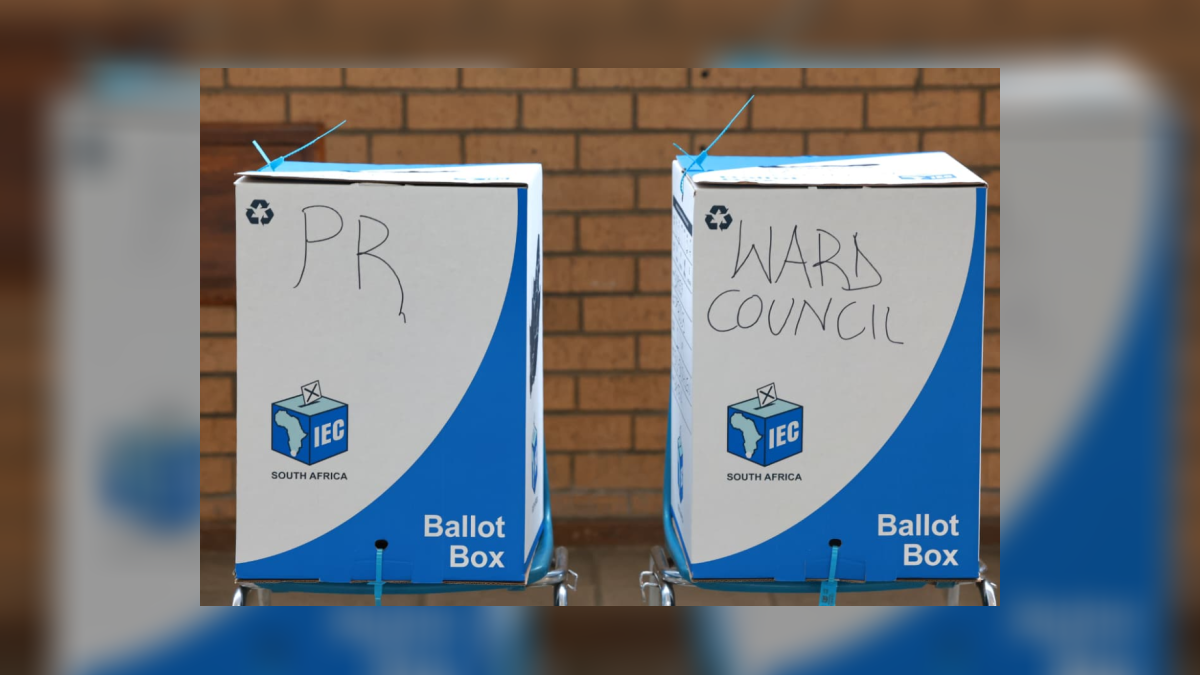
South Africans will head to the polls on Wednesday, 4 November 2026, to elect representatives for municipal councils, with service delivery and local governance expected to feature prominently in the elections.
The African Centre for the Constructive Resolution of Disputes (ACCORD) researcher Thembelani Mazibuko told SAnews.gov.za that residents experience significant differences in municipal performance, even within the same municipality.
While some communities benefit from reliable refuse collection and quicker responses to service complaints, others, particularly poorer township neighbourhoods, continue to experience delays and inadequate services.
Mazibuko described the overall condition of local government as mixed, saying the elections give residents an opportunity to choose representatives who will speak for their communities in municipal councils.
Economic Differences Affect Municipal Performance
Mazibuko said municipalities with stronger economies generally have a more substantial revenue base because they collect rates from businesses and households.
He identified the City of Johannesburg, eThekwini, Cape Town and the City of Tshwane as examples of municipalities with stronger economic foundations.
Rural municipalities, by comparison, often have fewer businesses, smaller economies and households with lower rates contributions, limiting their revenue.
He also highlighted the continuing impact of apartheid-era geographical divisions on municipal development.
“The shadow of apartheid still looms, as municipalities in the former homelands continue to struggle even today,” he said.
Mazibuko cited the Eastern Cape, which includes the former homelands of Ciskei and Transkei, as an example of a province where municipalities continue to face challenges associated with this legacy.
Gauteng and the Western Cape, which do not have former homelands, generally have stronger economies and institutions that contribute to their municipal revenue bases.
Understanding the Three Spheres of Government
Mazibuko said voters should understand the different responsibilities of national, provincial and local government before casting their ballots.
Local government manages services that directly affect residents’ daily lives. Provincial government is generally responsible for areas such as healthcare, education and community services, while national government handles issues affecting the country as a whole.
Municipalities are also divided into three categories.
South Africa has eight Category A metropolitan municipalities. Category B municipalities are local municipalities, while Category C municipalities are district municipalities, which generally consist of between five and nine local municipalities and provide services across their districts, including bulk sanitation.
Mazibuko said confusion about these responsibilities often contributes to misinformation, with issues such as immigration sometimes incorrectly attributed to local government.
He said the responsibilities of different government spheres are frequently conflated in political discussions, particularly on social media.
Ward Councillors Represent Residents Rather Than Deliver Services Directly
One of the roles Mazibuko said voters frequently misunderstand is that of a ward councillor.
Ward councillors are not personally responsible for carrying out municipal services. Their responsibility is to communicate residents’ concerns to the relevant municipal departments and officials.
For example, a councillor does not personally repair potholes but is expected to report the problem and ensure that it reaches the appropriate municipal structures.
Mazibuko explained that a municipality’s failure to respond immediately does not automatically mean the ward councillor has neglected their responsibilities, provided the complaint has been properly escalated.
Ward councillors also establish ward committees, which can consist of up to 10 people. These committees provide another channel through which residents can raise concerns and communicate their needs to municipal structures.
Local Government Elections Attract Greater Public Attention
Mazibuko said local government elections have received greater attention since 2016, partly because of increasing political competition and fragmentation at municipal level.
He noted that local elections were historically treated as less significant than national and provincial polls, but political parties, the media and voters have increasingly focused on municipal contests.
Despite this increased attention, voter turnout has continued to decline.
The 2021 Local Government Elections recorded a turnout of 45.86%.




Mazibuko said the COVID-19 pandemic may have contributed to the decline, alongside voting arrangements that required people to cast ballots at the voting station where they were registered rather than at any station within their municipality.
He said these restrictions may have prevented some voters from participating.
Researcher Calls for Greater Flexibility in Voting Arrangements
Mazibuko argued that election procedures should accommodate South Africans who move between locations for employment and other reasons.
He suggested that same-day voter registration was one possible reform the National Assembly could consider to improve participation.
Referring to the 1994 general election, he noted that people were allowed to vote after presenting their identity documents, without the same registration restrictions.
He said South Africa’s mobile population made flexibility important to ensuring that more eligible citizens could exercise their voting rights.
The Electoral Commission of South Africa (IEC) already uses technology such as voter management devices and online services that allow people to check their registration status.
However, Mazibuko cautioned against introducing online voting because of the potential risk of hacking.
He also emphasised the importance of civic and voter education in helping citizens understand the purpose and responsibilities of local government.
Youth Voter Participation Remains a Concern
Mazibuko said young people generally participate in elections at lower rates than older age groups.
One possible explanation is that people in their early and mid-20s have had fewer opportunities to register and vote than those in their 40s, who have experienced more election and registration periods.
He said efforts were needed to encourage participation across all age groups, particularly among younger voters.
Mazibuko urged people who were still undecided to examine the priorities of political parties and consider whether their proposals address the needs of their communities.
He encouraged voters to study party manifestos before making their choices, saying these documents provide an opportunity to assess what parties intend to prioritise if elected.
He also disagreed with the view that political ideology has little relevance to municipal government, arguing that it influences governance at every level.
More Hung Councils Expected After the Elections
Mazibuko expects the 2026 elections to produce more hung councils, where no political party secures an outright majority.
He identified KwaZulu-Natal and Gauteng as areas where this outcome could be particularly likely, alongside parts of Mpumalanga, the Free State, the Northern Cape and the southern Eastern Cape.
Such results would require political parties to negotiate coalition agreements to establish governing majorities.
The negotiations could delay the formation of municipal administrations, particularly when parties disagree over mayoral appointments.
Mazibuko noted that legislation requires the first council meeting to take place within 14 days of the election results, creating a deadline for parties to reach agreements.
Coalition Bill Seeks to Introduce Clearer Municipal Rules
The Municipal Structures Amendment Bill, 2026, commonly known as the Coalition Bill, seeks to establish a legislative framework governing the formation and operation of coalition governments in municipalities.
According to the Department of Cooperative Governance and Traditional Affairs (CoGTA), the proposed legislation aims to replace informal political arrangements with regulated agreements designed to promote stability and accountability.
Under the Bill, coalition agreements would have to be documented in writing, submitted to the municipal manager and the MEC responsible for local government, and published in the Provincial Gazette.
The proposed legislation also seeks to strengthen municipal leadership by requiring office bearers and committee chairpersons to have appropriate skills, experience or qualifications for their responsibilities.
Mazibuko said the Bill remained at an early stage and required further work.
Municipal Officials Continue Delivering Services During Coalition Talks
Frequent changes in municipal leadership have raised concerns about the effect of coalition instability on service delivery.
However, Mazibuko explained that municipal services are primarily carried out by officials who remain in their positions while political parties negotiate coalition arrangements.
These include municipal managers, divisional heads and unit heads responsible for overseeing different departments and services.
Their continued presence means that municipal operations do not necessarily stop while parties work towards forming a governing coalition.
Voters Warned About Election Misinformation
Mazibuko also urged voters to be cautious about political information shared through social media platforms, particularly WhatsApp, X and Facebook.
The IEC distinguishes between misinformation and disinformation in its Electoral Code of Conduct on Countering Disinformation.
Disinformation refers to false or misleading information shared by someone who knows it is untrue, or has no reasonable basis for believing it, with the intention of misleading voters or disrupting the election.
Misinformation, meanwhile, involves false information shared without the intention to deceive, often because the person circulating it has not checked whether it is accurate.
Mazibuko said digital platforms could be exploited by individuals seeking to spread misleading political messages during the election period.
IEC Partners With Technology Companies to Protect Election Information
The IEC has entered into a partnership with Google, Meta, Microsoft, TikTok and non-profit organisation Moxii Africa to protect the integrity of election information and address the spread of disinformation ahead of the polls.
The collaboration forms part of efforts to counter misleading content as political parties and candidates communicate with voters across digital platforms.
Mazibuko said voters should verify information before sharing it, particularly when it concerns political parties, candidates and election procedures.
Voters to Choose Representatives for Their Communities
The 2026 Local Government Elections will determine who represents communities in municipal councils and participates in decisions affecting local services.
Mazibuko said residents should understand the responsibilities of elected representatives, assess the proposals made by political parties and remain involved in holding municipalities accountable after the elections.
The polls are scheduled for Wednesday, 4 November 2026.

