
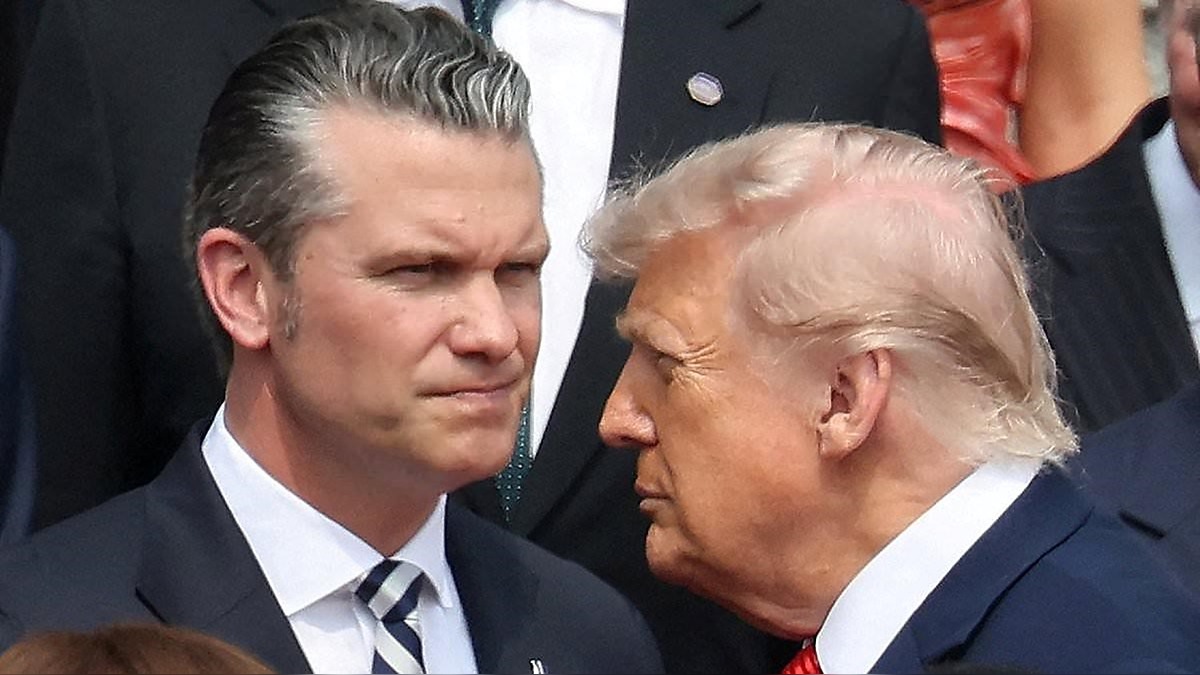
Donald Trump is reportedly considering removing Defence Secretary Pete Hegseth and Joint Chiefs Chairman General Dan Caine from their positions after the midterm elections, as concerns grow over the handling of the conflict with Iran.
According to The Atlantic, the president has privately questioned close advisers about the performance of both men, who had assured him that the military campaign would be concluded well before the midterm elections.
With Republicans facing the possibility of losing control of both chambers of Congress, Trump reportedly believes the Iran war could contribute to the party’s electoral difficulties.
His attention has consequently turned towards officials who had promised a swift and decisive military operation.
One outside adviser described Hegseth as someone who was particularly effective at telling Trump what he wanted to hear.
Other individuals close to the president reportedly believe the defence secretary has presented an overly positive picture of the conflict to maintain Trump’s confidence.
White House Reviews Options for Renewed Attacks
The possibility of further military action against Iran remains under consideration, with a fresh round of strikes potentially taking place within days of Tuesday’s midterm vote, according to advisers.
Hegseth, General Caine and Admiral Brad Cooper, who leads US Central Command, reportedly attended a White House briefing last week to present Trump and Vice President JD Vance with several military options.
The proposals were designed to give the president an opportunity to declare victory in the conflict.
They range from limited strikes lasting several hours to a military campaign extending over several weeks.
One of the options involves targeting Iran’s nuclear programme, while a broader campaign would focus on the country’s remaining military defences and infrastructure.
The administration is expected to argue that the infrastructure targeted in a prolonged operation serves both military and civilian purposes.
Trump is also considering maintaining the naval blockade at the Strait of Hormuz while keeping the possibility of additional military action open.
Alternatively, the administration could decide to withdraw from the confrontation.
Netanyahu Pushes for Immediate Military Action
Trump and Israeli Prime Minister Benjamin Netanyahu held a direct telephone conversation on Saturday to discuss negotiations with Iran and the possibility of resuming military operations.




According to one Israeli source and one American source who spoke to Axios, the conversation addressed the progress of diplomatic efforts and the timing of any renewed attacks.
Netanyahu is reportedly pressing Trump to launch fresh strikes immediately after Tuesday’s midterm elections.
However, the US president wants to allow negotiations to continue before making another military decision.
The Israeli prime minister is said to be concerned about Trump’s preference for giving diplomacy more time, particularly as Israel pushes for a more immediate response.
Previous Strikes Failed to Secure Iran’s Cooperation
The shorter military operations conducted since the wider campaign began in late February have reportedly strengthened Tehran’s determination to resist rather than bring the conflict to an end.
Iran has also retaliated against American military assets and US allies across the region following the attacks.
Meanwhile, Vance attempted to reopen direct negotiations with Tehran by sending a letter to Iranian security chief Mohsen Rezaei last Sunday.
In the correspondence, the vice president proposed restarting direct discussions, with Iran’s nuclear programme included on the negotiating agenda from the beginning.
However, Vance did not specify what concessions or benefits the Iranian government could receive in exchange for returning to negotiations.
Hegseth Continues Military Leadership Changes
As questions emerge over his position, Hegseth has continued making changes within the US military leadership.
The defence secretary recently removed Army Lieutenant General Brett Sylvia, the Joint Staff’s director of planning, following allegations that he failed polygraph examinations connected to an investigation into leaked information.
Sylvia is among more than two dozen generals and admirals who have been removed from their positions during Hegseth’s tenure.
The latest dismissal comes as the defence secretary faces scrutiny over the administration’s handling of the Iran conflict and the military advice provided to Trump.
White House Faces Internal Tensions Ahead of Midterms
The discussions over military strategy and possible personnel changes are taking place against a backdrop of growing anxiety within the White House.
The administration has experienced staff turnover, internal disagreements and concerns about the possibility of Republicans losing control of Congress.
Trump has reportedly dismissed polling indicating widespread dissatisfaction with his presidency and expressed frustration that his political message is failing to gain traction.
As pressure builds ahead of the elections, the president has increasingly surrounded himself with trusted allies.
Among them is Natalie Harp, who has moved her desk into Trump’s private dining room, which is reportedly filled with documents and other belongings.
Housing chief Bill Pulte has also become a regular presence aboard Air Force One, where he reportedly brings poster boards and artificial intelligence-generated memes.
Bush’s Response to 2006 Midterm Defeat Offers a Precedent
The situation has drawn comparisons with the political developments that followed the 2006 midterm elections under former President George W. Bush.
After Democrats secured major victories in both chambers of Congress, largely amid public dissatisfaction with the Iraq War, Bush removed Defence Secretary Donald Rumsfeld the day after the election.
Two months later, the former president announced a troop surge in Iraq.
Trump’s current consideration of changes to his military leadership comes as Republicans prepare for a potentially difficult midterm election and the administration weighs whether to intensify its military campaign against Iran.
