
The world is facing a growing education crisis.
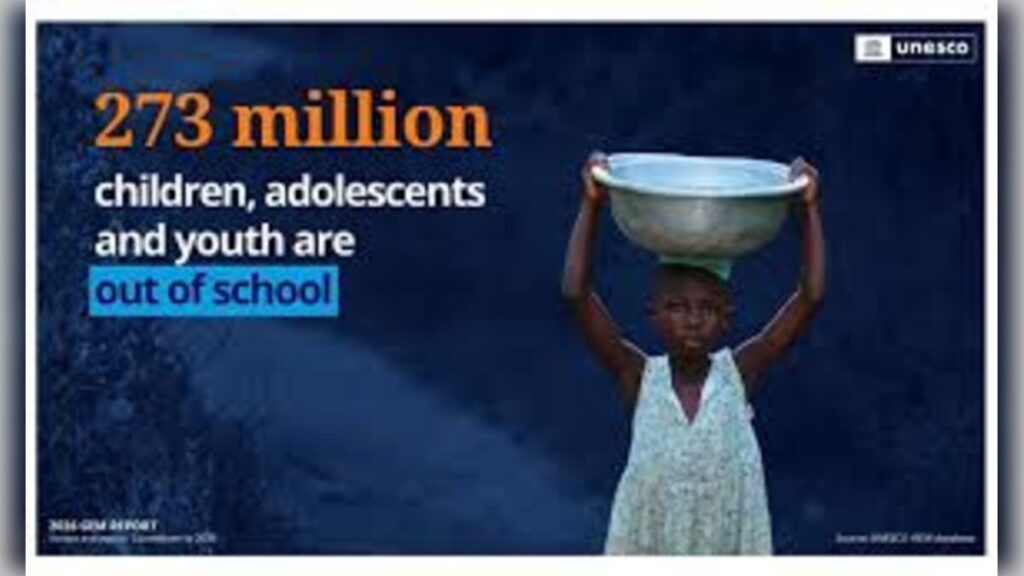
According to the latest UNESCO Global Education Monitoring Report 2026, 273 million children and young people are currently out of school.
This marks the seventh consecutive year that the number of out-of-school students has increased worldwide.
One in six school-age children are not receiving education, and only about two-thirds make it through secondary school.
The data paints a stark picture of education inequality, showing that millions of young people are being left behind despite global development efforts.
Regional Disparities and Driving Factors
The report identifies certain regions as particularly hard-hit.
Sub-Saharan Africa faces severe challenges, with both conflict and rapid population growth contributing to rising school absenteeism.
In active conflict zones, the situation is even more critical, as official statistics often fail to capture the true scale of the problem.
UNESCO warns that progress in keeping children in school has slowed almost everywhere, signaling that traditional policies may no longer be enough to address the complex barriers to education.
Not All Doom and Gloom
Despite the setbacks, there are bright spots.
Global enrolment has improved dramatically since 2000, with more than 25 additional children entering school every minute over the past two decades.




Some countries have made impressive strides, reducing out-of-school rates and expanding access to pre-primary, primary, and secondary education.
These successes demonstrate that with the right policies and sustained investment, meaningful progress is possible.
Why One-Size Solutions Don’t Work
The report emphasizes that no single strategy can solve educational exclusion.
Context-specific approaches are crucial.
Tailored solutions that address local challenges — from conflict and poverty to cultural barriers and infrastructure gaps — are needed to ensure every child can attend and complete school.
Investing in education, improving teacher training, and ensuring safe learning environments are key steps to close the growing gap.
Impact and Consequences
The rise in out-of-school children has profound consequences.
Lack of education reduces lifetime earning potential, limits social mobility, and perpetuates cycles of poverty.
For conflict-affected regions, the impact is even more severe, as education is critical to long-term stability and development.
Countries with high dropout rates also face future labor shortages and weakened economies.
Moreover, social inequality grows when vast segments of children are denied basic education.
What’s Next?
UNESCO urges governments and international partners to step up efforts, particularly in regions affected by conflict and population pressure.
Solutions include targeted funding, innovative educational models, and community-driven programs that keep children in school.
The report also stresses the importance of monitoring progress and ensuring that education systems adapt to changing demographics and emerging challenges, such as climate-related displacement.
Summary
The 2026 Global Education Monitoring Report highlights a worrying trend: 273 million children and young people are out of school, with sub-Saharan Africa and conflict zones most affected.
While global enrolment has improved over the past two decades, the pace of progress is slowing.
Tailored, sustained approaches are essential to ensure that all children have the opportunity to learn.
Bulleted Takeaways
- 273 million children and young people are out of school globally in 2026
- One in six school-age children lack access to education
- Only two-thirds of children complete secondary school
- Conflict and population growth are major drivers of absenteeism
- Sub-Saharan Africa faces the highest challenges
- Global enrolment has risen significantly since 2000
- No single policy can address exclusion; tailored, context-specific solutions are needed
- Lack of education perpetuates poverty, limits future opportunities, and impacts economic grow

