
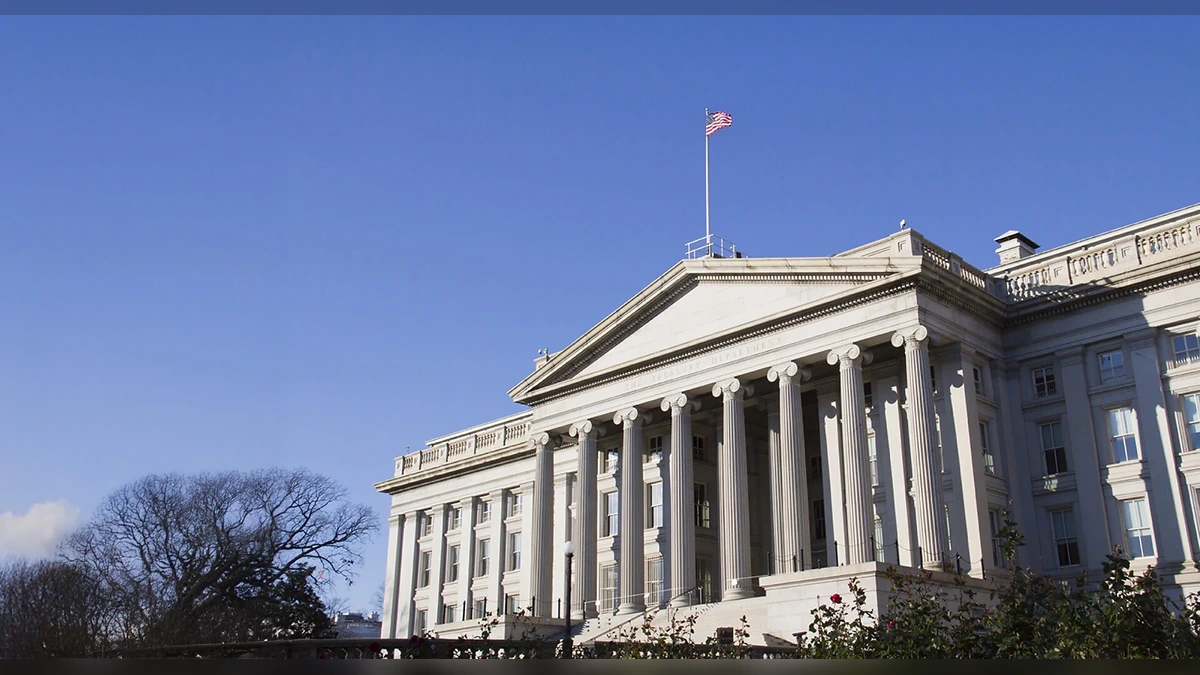
The United States Treasury Department has ordered restrictions that would prevent American financial institutions from processing transactions involving cryptocurrency exchange MEXC Global, following allegations that the platform facilitated at least $16 billion in illicit financial activity.
The measure was issued on November 6 by the Financial Crimes Enforcement Network (FinCEN) under Operation Economic Outcast. The agency said the alleged transactions occurred between May 2021 and May 2026 and included activity connected to sanctions evasion, cybercrime and other illegal financial operations.
The allegations involve networks linked to Iran, Russia and North Korea, as well as ransomware payments, scams and darknet markets.
Russia-Linked Transactions Account for Major Share of Allegations
FinCEN identified substantial transaction activity connected to Russian sanctions evasion, including nearly $1.5 billion in transfers.
Of that amount, approximately $232 million involved direct transactions with entities sanctioned by the United States, the European Union or the United Kingdom.
The agency also alleged that MEXC continued processing transactions involving Russian cryptocurrency exchange Garantex and its successor, Grinex, as recently as June 2026.
An additional $26 million was reportedly connected to Russia’s sanctioned A7 network, while almost $200 million in transactions involved A7A5, a stablecoin backed by the Russian rouble.
Iran-Related Transactions Also Identified
The Treasury investigation also highlighted financial activity involving Iranian cryptocurrency networks.
Between May 2021 and May 2026, MEXC allegedly sent or received approximately $1 billion through direct transactions involving more than 40 Iranian cryptocurrency exchanges.
FinCEN further identified around $22 million in transactions benefiting Iran’s Central Bank, the Islamic Revolutionary Guard Corps (IRGC) and its Qods Force.




The agency said the findings raised concerns about the exchange’s anti-money-laundering safeguards, despite its stated policies restricting transactions involving certain sanctioned jurisdictions.
US Financial Institutions Face Restrictions on MEXC Transfers
The Treasury order prohibits financial institutions in the United States from processing transfers to or from MEXC Global.
Issued under Section 9714(a) of the Combating Russian Money Laundering Act, the restriction will take effect 30 days after its publication in the Federal Register.
Financial institutions that breach the order could face civil or criminal penalties.
Treasury Secretary Scott Bessent defended the action, saying: “Financial institutions cannot have it both ways: Either you support the Iranian regime, or you have access to the U.S. financial system.”
The measure does not constitute a worldwide ban on MEXC or automatically freeze all cryptocurrency held by its customers. Instead, it restricts the exchange’s access to transactions processed through American financial institutions.
It also differs from a conventional designation imposed under the Office of Foreign Assets Control (OFAC).
MEXC’s Position Among Major Cryptocurrency Exchanges
The enforcement action targets a platform that has a significant presence in the global cryptocurrency market.
According to Treasury estimates, MEXC was processing more than $1 billion in daily transactions as of September 2026 and held approximately $5 billion in reserves.
Those figures placed the exchange among the world‘s 20 largest cryptocurrency trading platforms.
The restrictions could affect its ability to maintain connections with traditional financial institutions in the United States, depending on how banks and other financial service providers implement the order.
US Crackdown Raises Compliance Questions for Crypto Industry
The action forms part of wider efforts by US authorities to disrupt financial networks suspected of helping sanctioned individuals and organisations move money through digital assets.
By restricting an exchange’s access to the American financial system, the Treasury has targeted the financial connections supporting its operations rather than imposing an automatic freeze on individual customer wallets.
The case is also expected to draw attention to compliance procedures across the cryptocurrency sector, particularly customer verification, transaction monitoring and controls designed to identify dealings with sanctioned entities.
International exchanges face increasing regulatory scrutiny over their exposure to prohibited financial networks and their ability to prevent illicit transactions.
The immediate consequences for MEXC will depend on how the company and financial institutions respond before the restrictions take effect.
