
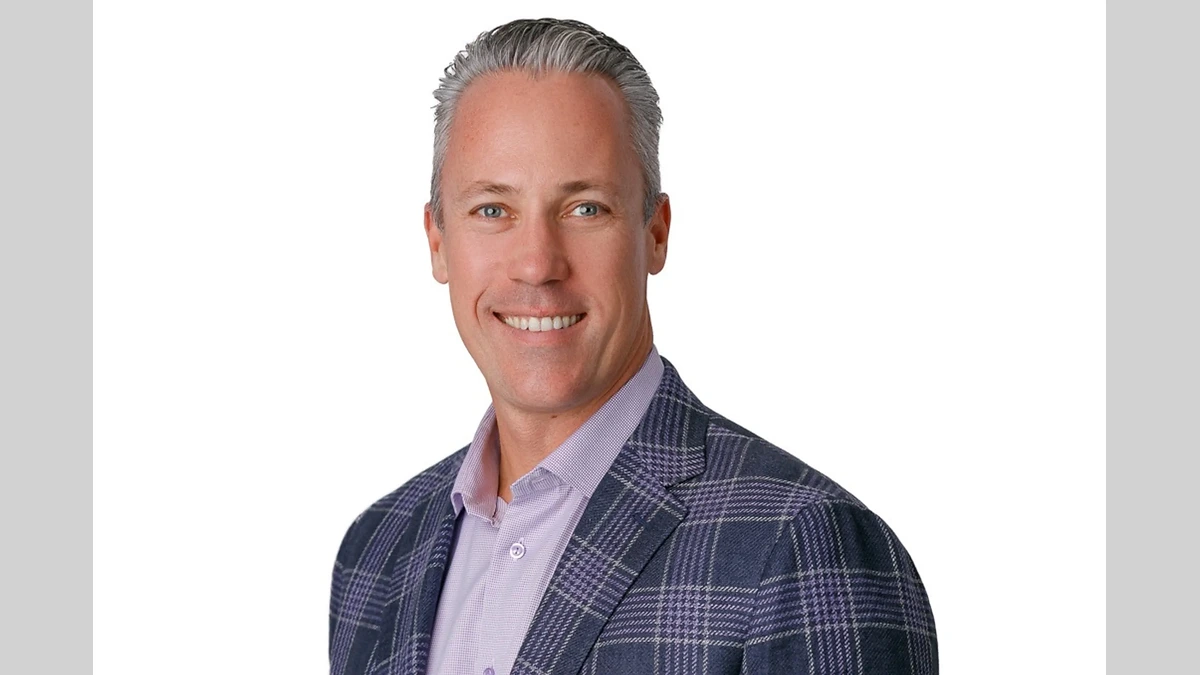
Jake Leach’s journey to becoming chief executive of Dexcom began with a modest laboratory cleaning job that paid just $10 an hour.
During the 1990s, Leach was a teenager in California saving money to finance his education at community college. His high school girlfriend had completed a summer internship at MiniMed, an insulin pump manufacturer, and offered him her position before returning to school.
His responsibilities included washing laboratory equipment such as beakers and flasks. Although the work was far removed from a senior healthcare executive role, it introduced him to the diabetes technology industry, where he would spend the next three decades.
Leach, now 48, told Fortune that his career progression was driven by consistent effort rather than a carefully mapped-out ambition to become a company leader.
“It’s all about hard work,” he said. “There’s no shortcut.”
Family Circumstances Taught Him the Value of Earning His Own Money
Leach grew up in California’s San Fernando Valley. His father worked in groundskeeping at a Catholic school, while his mother later became a teacher’s aide.
With limited money available at home, he learned from an early age that he would have to work and save if he wanted to afford things for himself.
One example was a bicycle he wanted while still in elementary school. The $350 price was beyond what his family could comfortably afford, so Leach decided to save the money himself after discovering the layaway system.
He spent a summer washing cars, earning $2 for each vehicle, until he had enough to buy the bicycle.
“With the income of my family, I had no business having that kind of a bike, but I just wanted it so bad,” he recalled.
The experience helped establish an approach to work that he continued to follow as an adult.
“Hard work gets you what you want, and you know you may not always succeed, but you can control it—you can control that outcome,” Leach said.
His Grandfather Introduced Him to Engineering
Leach’s interest in engineering developed partly through time spent with his maternal grandfather, who worked as a handyman and handled household repairs involving plumbing and electrical systems.
His grandfather regularly took him along while working on projects around the house. By the age of 10, Leach was learning how light switches operated, how to connect electrical wiring and how electrical panels worked.
He later developed an interest in experimenting with old video cassette recorders and building homemade rockets.
His grandfather also had diabetes, giving Leach a personal connection to the medical technology industry he would eventually enter. After his grandfather suffered a ruptured gallbladder, the family learned that the emergency was related to his diabetes. He subsequently required insulin for the remainder of his life.




These early experiences contributed to Leach’s interest in electrical engineering and helped establish a connection between his technical interests and diabetes treatment.
From Community College to UCLA and MiniMed
Leach attended Glendale Community College before transferring to the University of California, Los Angeles, where he studied electrical and biomedical engineering.
He became the first member of his family to graduate from a four-year university.
Meanwhile, the laboratory cleaning position he had initially accepted at MiniMed developed into a full-time job. He remained with the company for seven years, including the period before its acquisition by Medtronic in 2001.
In 2004, Leach received an opportunity to join Dexcom, a startup with approximately 30 employees seeking to compete in the diabetes technology market.
The move offered him the chance to help develop a business from an early stage. It also came with a substantial salary increase, from $45,000 at the time to $95,000.
He accepted the offer and began what would become a more than two-decade career at Dexcom.
Dexcom’s Growth and Leach’s Rise to Chief Executive
Dexcom went public in 2005 and developed into a major healthcare technology company specialising in glucose-monitoring systems.
According to its 2025 annual report, the company generated $4.6 billion in annual revenue, served approximately 3.5 million users globally and employed around 11,000 full-time workers.
The business has also operated amid changes in diabetes treatment, including the growing use of GLP-1 medications for type 2 diabetes and increased attention to glucose monitoring.
Leach held several senior positions as the company expanded. He became chief technology officer in 2018 before taking on the role of chief operating officer in 2022.
In January, he became Dexcom’s president and chief executive officer.
His compensation now includes an annual base salary of $1.15 million, marking a significant change from the $10-an-hour laboratory job through which he first entered the industry.
Leach Says He Never Asked for a Promotion
Despite his rise through Dexcom’s leadership structure, Leach said he never approached his career with a specific promotion or executive position in mind.
He explained that his focus was on performing well in his current role, addressing major challenges, developing other employees and learning from colleagues.
“It’s always been: keep doing a really good job, keep solving big problems, keep fostering leaders, teaching people, [and] learning from other people,” he said.
Leach also said he had never directly asked for a promotion during his 22 years at Dexcom. Instead, he concentrated on delivering results and taking responsibility for the work assigned to him.
He added that he regularly volunteered for tasks that other colleagues were less willing to handle, including responsibilities outside his immediate area of work.
Advice to Younger Workers: Look Beyond Your Job Description
Leach believes employees can become more valuable to an organisation by considering its wider needs rather than concentrating exclusively on their individual responsibilities.
He said workers should sometimes step outside their usual departments and take on assignments that benefit the company as a whole.
“A lot of times we tend to focus on our own work and what we’re trying to get done, and it’s really helpful sometimes to take a step back and say what’s right for the company, not necessarily what’s right for me or what’s right for the function I’m leading,” he said.
He encouraged younger employees to look beyond the specific duties attached to their positions and develop an understanding of how different parts of an organisation operate.
“It’s like getting outside your swim lane,” Leach said. “Everyone kind of has their functional swim lane. You got to get out of that, and I think that’s when you become a more valuable leader for an organization.”
