
Former New York Governor Andrew M. Cuomo has warned that the United States risks falling behind in the digital-asset economy unless Congress establishes a durable regulatory framework for the industry.
Cuomo argues that cryptocurrency and other digital assets are no longer an emerging side issue for the financial system. In his view, the technology is already reshaping markets, leaving policymakers with a choice over whether the United States creates stable rules for the sector or allows regulatory uncertainty to persist.
His warning comes after the Senate failed in September to advance the Digital Asset Market CLARITY Act, dealing a major setback to legislation designed to establish a comprehensive federal framework for the crypto industry. The measure received 49 votes in favour and 50 against, falling short of the 60 votes required to advance.
The CLARITY Act Was Supposed to Set the Rules
The legislation was intended to clarify how digital assets are regulated and divide responsibilities between the Securities and Exchange Commission and the Commodity Futures Trading Commission.
For businesses, investors and consumers, that framework would have provided greater certainty over which assets fall under which regulator and what rules apply to companies operating in the market.
The House passed its version of the legislation in 2025, but the Senate has yet to approve a final measure for the president.
The Senate’s September vote exposed continuing disagreements over issues including consumer protection, banking, anti-money-laundering safeguards, regulatory jurisdiction and ethics provisions concerning government officials with crypto interests.
Federal Regulators Are Moving Without Congress
With legislation stalled, federal regulators have increasingly taken steps of their own.
The Commodity Futures Trading Commission proposed a new federal framework in October for cryptocurrency exchanges offering leveraged or margined trading, including a proposed category of regulated crypto-asset markets.
The proposal is part of a broader effort by regulators to provide greater clarity using their existing statutory powers rather than waiting indefinitely for Congress to enact new market-structure legislation.
Cuomo argues that this approach may create opportunities for the industry in the short term, but he questions how durable those rules will be without congressional legislation behind them.
In his view, regulations created through agency authority can be more vulnerable to changes in political leadership, congressional oversight and legal challenges than a framework enacted directly into law.
The Next Election Could Change the Regulatory Landscape
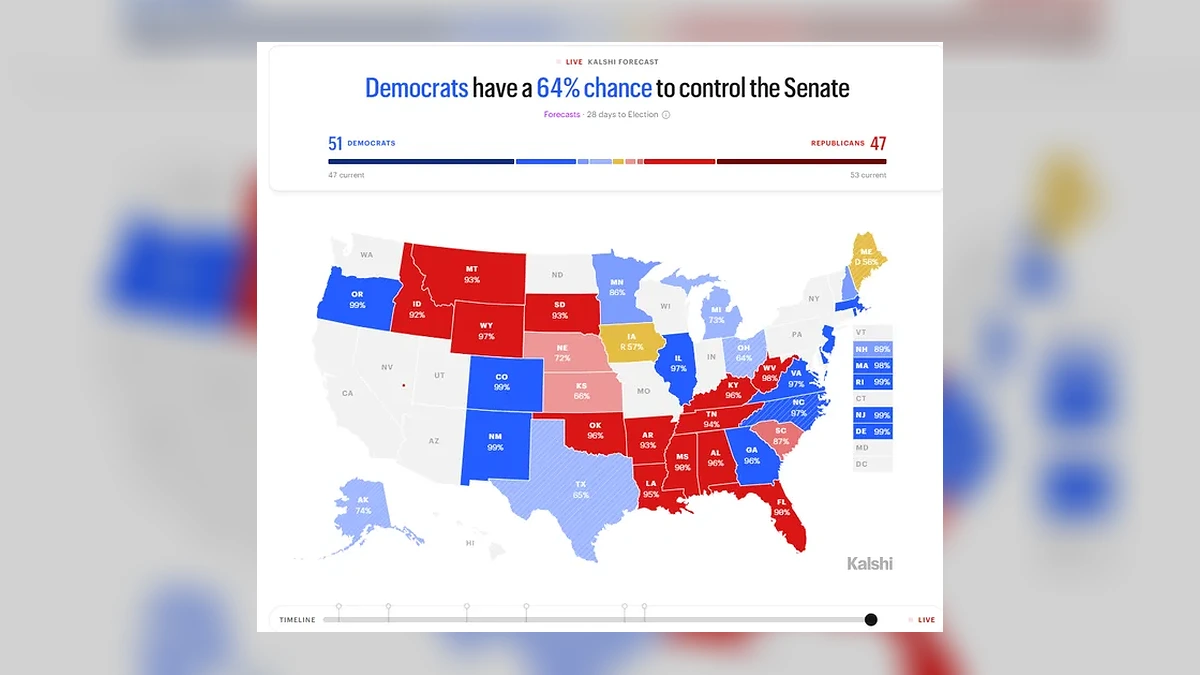
A central part of Cuomo’s argument is that the future of crypto regulation could become even more politically uncertain after the US midterm elections.
He points to the possibility of Democrats gaining control of one or both chambers of Congress and argues that a change in congressional leadership could bring significantly greater scrutiny of regulatory decisions made under the Trump administration.
Cuomo draws on his own experience in Washington, recalling his time at the Department of Housing and Urban Development during the Clinton administration.
After Republicans won control of Congress in the 1994 midterm elections, he says, congressional oversight became a major constraint on the administration’s ability to pursue its agenda.
He argues that a similar dynamic could emerge around digital-asset regulation if control of Congress changes.
Congress Has Several Ways to Challenge Agency Rules
Cuomo points to the range of powers available to Congress when lawmakers disagree with executive-branch agencies.




Congress can conduct investigations, hold hearings, issue subpoenas, restrict funding and pass legislation that changes the legal framework under which agencies operate.
Lawmakers can also use the Congressional Review Act to seek the repeal of certain federal regulations.
For the crypto industry, Cuomo argues, that creates a potentially unstable environment if major regulatory decisions are based primarily on executive and agency authority rather than a bipartisan statute.
The CFTC’s current proposals themselves acknowledge the uncertainty created by the absence of comprehensive legislation, with the regulator moving to establish rules while the broader congressional framework remains unresolved.
Political Disputes Have Already Complicated the Bill
The collapse of the Senate vote was not simply a disagreement over whether crypto should be regulated.
Democratic lawmakers raised concerns about ethics provisions and potential conflicts involving President Donald Trump’s financial interests in the digital-asset sector, among other issues.
Republican supporters of the bill argued that the legislation incorporated numerous Democratic requests and would establish clearer protections and rules for the industry.
Senate Banking Digital Assets Subcommittee Chair Cynthia Lummis said the final draft included 126 substantive changes made following bipartisan negotiations.
Sen. Adam Schiff, however, said he could not support market-structure legislation without stronger and enforceable ethics provisions, particularly because of concerns over Trump’s crypto interests.
Cuomo Calls for Politics to Be Put Aside
Cuomo’s central argument is that regulatory certainty should not depend on which political party controls Washington.
He says companies should be able to determine what activities are legal, which regulator has authority and how rules will be enforced without having to calculate whether those rules will survive the next election.
For investors and consumers, he argues, predictable rules are equally important.
In his view, a successful framework should encourage innovation while protecting consumers, maintaining market integrity and giving law enforcement tools to combat illicit activity.
Other Countries Are Already Establishing Crypto Frameworks
Cuomo also points to regulatory developments outside the United States as evidence of the competitive pressure facing Washington.
The European Union has established its Markets in Crypto-Assets framework, commonly known as MiCA, while Singapore has developed rules governing digital payment-token activities under its financial-services framework.
His argument is that international competitors are not waiting for the United States to settle its political disagreements.
If American companies face prolonged uncertainty while other jurisdictions establish clearer rules, Cuomo believes investment and innovation could increasingly move toward markets offering greater regulatory predictability.
The Former Governor Has Deepened His Own Crypto Ties
Cuomo’s position also comes as he has become directly involved in the digital-asset industry.
He joined the board of cryptocurrency exchange OKX in July 2026 after previously advising the company on regulatory and institutional strategy in the United States.
OKX and Intercontinental Exchange, the parent company of the New York Stock Exchange, have also formed a joint venture focused on tokenized and digitally native financial products, with Cuomo serving as a co-chair.
That connection provides additional context for his argument in favour of greater regulatory certainty, although his broader case centres on the need for Congress to establish lasting rules for the industry.
The US Crypto Debate Is Far From Over
The failure of the CLARITY Act to advance has not ended the debate over how digital assets should be regulated in the United States.
Instead, regulators are continuing to use existing authority while lawmakers remain divided over the legislation needed to establish a comprehensive framework.
For Cuomo, that situation represents a problem that cannot be solved indefinitely through temporary regulatory measures or political manoeuvring.
His argument is ultimately that the United States needs legislation capable of surviving changes in administrations and congressional control.
With digital assets continuing to expand across financial markets, the question is no longer simply whether crypto regulation will arrive. The more consequential question is whether Washington can agree on rules durable enough to withstand the country’s political cycles.

