
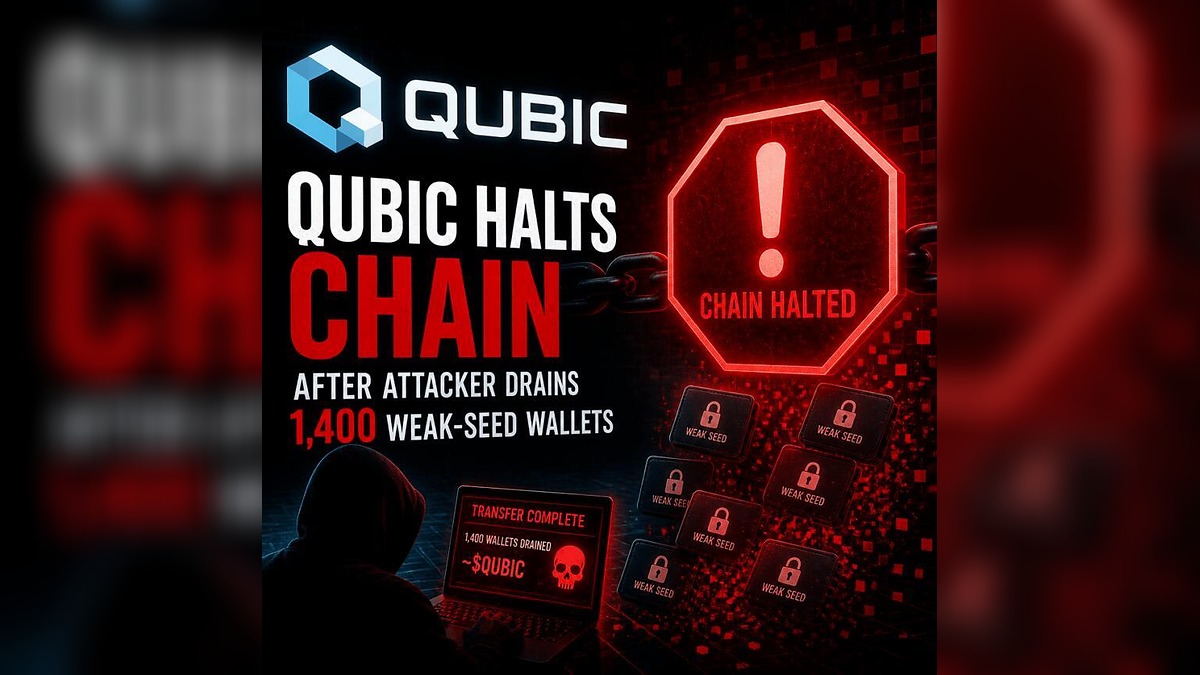
The Qubic cryptocurrency project has halted its network after attackers exploited a weakness in wallet credential generation, resulting in the reported loss of approximately $1.4 million in cryptocurrency.
According to the project’s account of the incident, 1,404 wallets were affected, with around 2.94 trillion QU involved in the reported losses.
The incident has prompted an emergency response as developers and network validators work to contain the situation and assess the available options.
Weak Wallet Seed Generation Identified as the Cause
Qubic developers linked the vulnerability to the process used to generate wallet seeds in a web-wallet environment. Reports indicated that JavaScript’s Math.random() function may have been involved.
The function is not designed to provide the cryptographically secure randomness required to generate private keys and other sensitive wallet credentials.
When wallet secrets are generated using predictable randomness, attackers may be able to reconstruct the credentials and gain control of the associated funds.
This can allow unauthorised transfers to be signed and processed as valid transactions on the blockchain.
Developers Say the Issue Was Linked to Wallet Credentials
The reported incident was attributed to the wallet seed-generation process rather than a confirmed compromise of Qubic’s blockchain consensus rules.




The distinction separates a weakness in the creation and protection of private keys from a failure in the system responsible for validating transactions.
A blockchain may continue to process transactions according to its established rules even when users lose access to their funds because their private keys have been exposed or become predictable.
Qubic Suspends Network Operations During Response
Following the discovery of the incident, Qubic initiated an emergency halt while developers and validators considered measures to contain the damage.
Stopping network activity can limit the immediate movement of funds while an investigation is underway. However, it also prevents ordinary users from carrying out transactions during the suspension.
The decision raises questions about how a decentralised network should respond to a security incident, including who has the authority to halt operations and whether any form of transaction rollback should be considered.
QU Holders Urged to Follow Official Security Guidance
Users holding QU have been advised to rely on official security instructions before importing or transferring credentials associated with potentially affected wallets.
Creating a new wallet address using updated software does not automatically recover cryptocurrency that has already been transferred to another address.
Users therefore need to distinguish between securing their remaining funds and attempting to recover assets lost during the incident.
Incident Highlights Risks in Cryptocurrency Wallet Design
The Qubic incident highlights the importance of using secure methods to generate private keys and wallet seeds.
Cryptographic wallet software requires strong randomness from appropriate operating-system security interfaces to help ensure that wallet credentials cannot be easily predicted or reconstructed.
The incident also demonstrates that blockchain transaction processing and wallet security are separate aspects of cryptocurrency protection. Even when a ledger operates according to its rules, weaknesses in the generation of private keys can leave users vulnerable to unauthorised transfers.

