
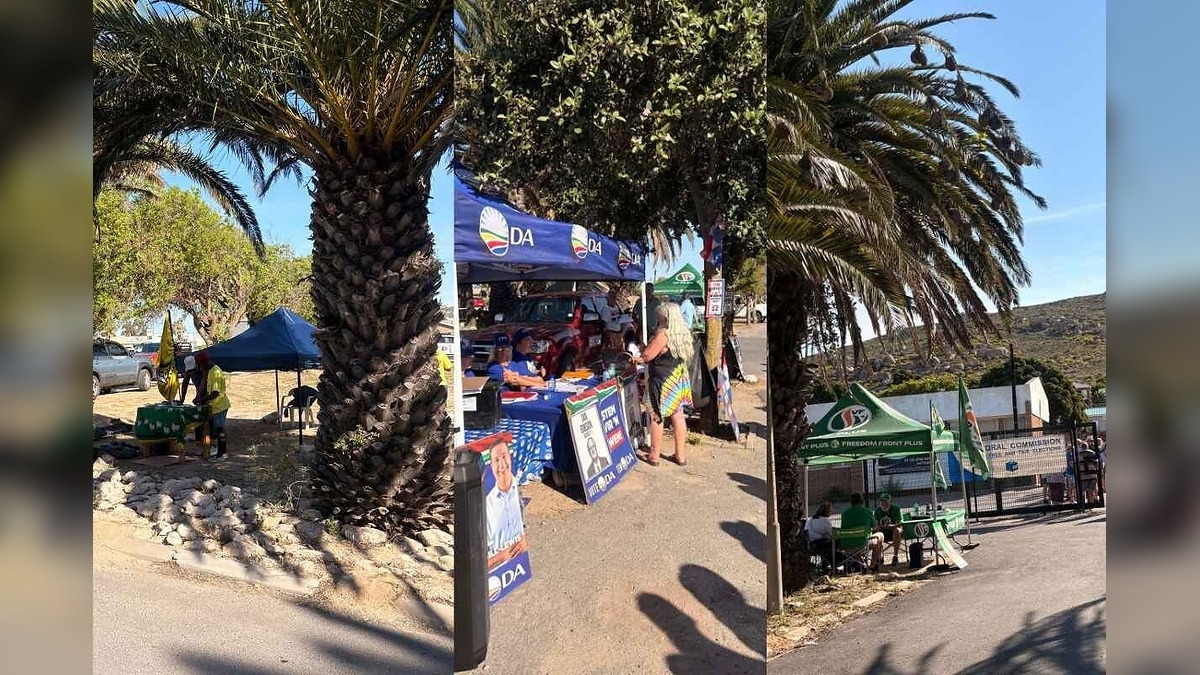
Political negotiations are expected to play a decisive role in determining who governs many South African municipalities following the 2026 local government elections, particularly in councils where no party has secured an outright majority.
With 122 hung councils recorded so far, political parties will need to negotiate coalition agreements or arrange support from other parties to elect mayors and speakers.
Approximately 14.5 million people participated in the elections, including around 1.5 million special voters.
The Electoral Commission of South Africa (IEC) is legally required to announce the final results within seven days of election day.
IEC Completes 98% of National Results
By 10:30 on Saturday, 7 November, the IEC had finalised 98% of election results across the country.
Results had been completed in 191 of South Africa’s 213 local and metropolitan municipalities, with most of the outstanding counts concentrated in metropolitan areas.
The results remain provisional until the commission makes its formal declaration.
Hung Councils Reach 122 Across the Country
A hung council occurs when no political party wins more than half of the available council seats. In such circumstances, parties must negotiate to establish a coalition government or secure support from other councillors on individual votes.
These arrangements determine who becomes council speaker and mayor, as well as how municipal administrations are governed.
The number of hung councils has increased significantly over successive local government elections. In 2016, 27 councils were left without an outright majority, while the 2021 elections produced 66.
The provisional figure for the 2026 elections has now reached 122.




Nelson Mandela Bay Emerges as a Key Coalition Battleground
The outcome of coalition negotiations will be particularly important in South Africa’s eight metropolitan municipalities, which collectively account for approximately 40% of the country’s 29.2 million registered voters.
Nelson Mandela Bay is the first metro to have provisional seat allocations available.
The Democratic Alliance (DA) secured 53 of the municipality’s 120 council seats, leaving it eight seats short of an outright majority. The African National Congress (ANC) won 32 seats, while the Economic Freedom Fighters (EFF) secured seven.
A total of 18 political parties are represented in the council.
The DA has ruled out entering an arrangement with either the EFF or the uMkhonto weSizwe (MK) Party. The EFF, meanwhile, has indicated that it is willing to hold discussions with all political parties.
A council meeting is reportedly expected around the middle of November, depending on the progress of coalition negotiations.
New Councils Must Be Constituted Within 14 Days
The Municipal Structures Act requires every newly elected council to hold its first meeting within 14 days after the IEC formally declares the election results.
During that meeting, councillors elect a speaker, who then presides over the process of electing a mayor.
Political parties therefore have a limited period to negotiate agreements and secure the support needed to establish municipal leadership.
If a council fails to constitute itself, it may be dissolved, with fresh elections required to take place within 90 days.
Coalitions Bill Will Not Apply to the 2026 Elections
A proposed Coalitions Bill intended to improve the stability of coalition governments was tabled in Parliament in August.
However, Parliament has confirmed that the legislation will not be completed in time for the current local government elections.
The existing legal framework will therefore remain in force, including the requirement for newly elected councils to hold their first meetings within 14 days of the formal results declaration.
Unstable Coalitions Could Affect Municipal Services
The negotiations following the elections will have implications beyond the distribution of political positions.
Coalition instability after the 2016 and 2021 elections contributed to political deadlocks in several municipalities, affecting the ability of councils to approve budgets and appoint municipal officials.
Such difficulties can also disrupt the delivery of essential services, including water, electricity and refuse removal.
Residents can monitor the official election results through the Electoral Commission of South Africa’s website as the remaining counts are completed and formally declared.
