
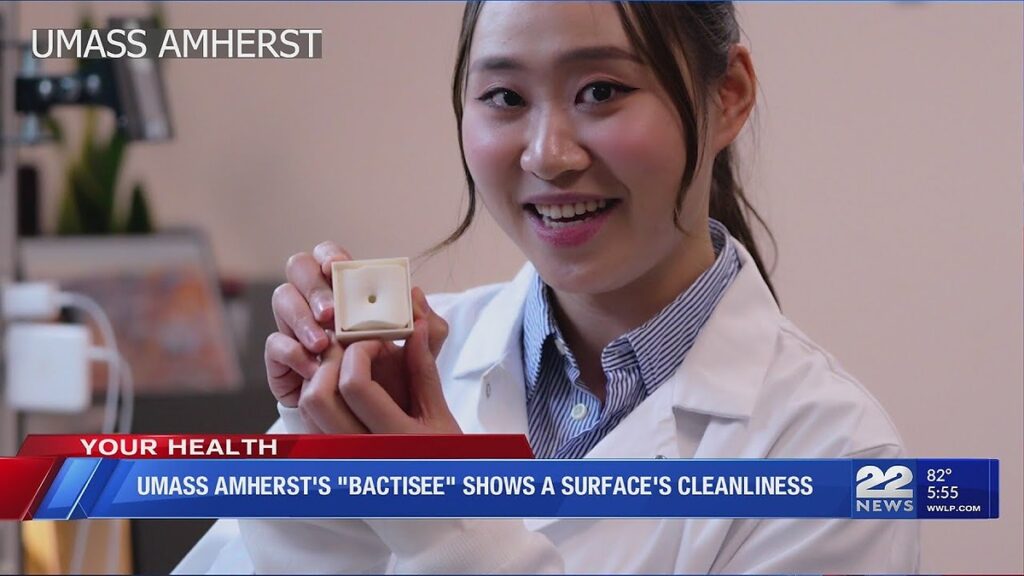
Researchers at the University of Massachusetts Amherst have unveiled a new smartphone-compatible system designed to identify bacterial contamination on surfaces in just a few minutes, potentially changing how hygiene is monitored in sensitive environments such as hospitals, gyms, and food production facilities.
The innovation offers a faster alternative to traditional laboratory-based testing, aiming to support real-time decisions on cleanliness and safety.
“BactiSee” Technology Brings Lab Science to Mobile Devices
The system, called BactiSee, integrates a chemically treated sensor chip with smartphone imaging capabilities to detect microbial presence on contact surfaces.
Once a sample is taken, the chip reacts with bacteria if present, and the smartphone interprets the visual output, delivering a contamination assessment in a matter of minutes.
Researchers describe the system as combining the simplicity of a rapid diagnostic strip with the accessibility of mobile phone technology.
Years of Research Behind the Breakthrough
The project is the result of more than ten years of scientific development at UMass Amherst, led by faculty and postdoctoral researchers in food science and microbial safety.
A key contributor, postdoctoral researcher Yuzhen Zhang, explained that the goal was to create a practical tool for on-site hygiene verification rather than relying solely on laboratory infrastructure.




According to Zhang, the device offers “rapid, on-location microbial risk feedback,” helping users make quicker sanitation decisions and reduce the chances of cross-contamination.
Faster Alternative to Traditional Lab Testing
At present, the standard method for detecting bacterial contamination involves swabbing surfaces and sending samples to laboratories for culture analysis.
That process can take between 24 and 48 hours, delaying responses in environments where immediate hygiene checks are essential.
BactiSee, by contrast, delivers results in approximately five minutes, making it significantly more suitable for routine and high-frequency testing in real-world settings.
From Academic Research to Commercial Development
The technology has now moved beyond the laboratory stage and is being developed for commercial use through a spin-off company, HertZ Innovation Inc.
The startup aims to bring the device to market, with potential applications spanning food safety inspections, healthcare sanitation monitoring, and public facility hygiene management.
Researchers believe the system could play a critical role in reducing bacterial transmission risks in densely used environments.
Researchers Highlight Public Health Impact
Lead researcher Professor Lili He, alongside Zhang, emphasized that the project reflects how academic innovation can translate into practical public health solutions.
They noted that collaboration across departments and institutions was essential in bridging the gap between research and real-world application.
Ultimately, the team believes the technology could empower inspectors and facility managers with faster, more reliable tools to protect public health and improve sanitation standards.

