
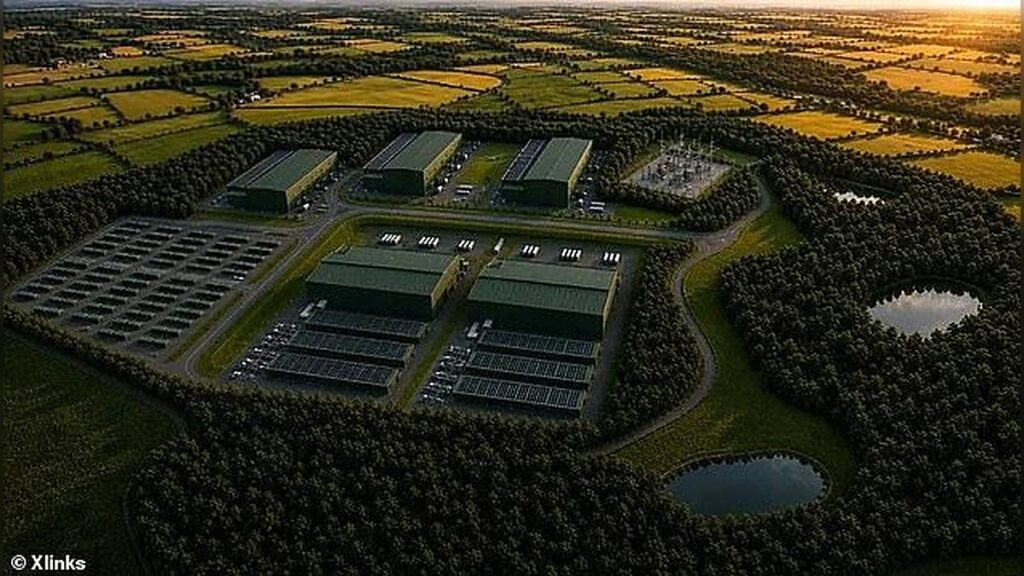
A proposed artificial intelligence data centre campus in North Devon has sparked fierce opposition among residents who fear the development could transform the character of one of Devon’s most picturesque rural areas.
The planned facility, backed by technology company Xlinks, could occupy land spanning up to 850 acres between Great Torrington, Huntshaw and Weare Gifford.
Locals have described the project as an industrial development on a scale that would overwhelm the surrounding countryside and dramatically alter the landscape.
The site, located around one mile from Great Torrington, would include thousands of battery storage units and supporting infrastructure as part of what Xlinks describes as a major AI-focused campus.
Community Group Leads Growing Campaign Against Development
Opposition to the project has quickly gathered momentum, with campaign group Leave Devon Alone launching a petition calling for the plans to be abandoned.
More than 25,500 people have signed the petition, while campaigners say their message has reached hundreds of thousands of people.
The group has also collected hundreds of written statements from residents outlining concerns about the impact on farmland, wildlife, roads and the identity of local communities.
Niamh Shearing, co-founder of Leave Devon Alone, said residents were alarmed by the scale of the proposal and believed a development of this size would have a lasting effect on North Devon.
She said the proposed AI campus and battery energy storage system would represent one of the largest industrial projects ever considered in the region.
Locals Question the Scale and Accuracy of Project Images
Former Torrington Town Hall trustee Matt Whittaker has become one of the leading voices opposing the scheme, arguing that the public has not been given an accurate picture of the true size of the development.
Speaking after a community meeting on June 25, Whittaker claimed that early images released by Xlinks failed to represent the scale of the proposed campus.
“There’s 112 containers in the image,” he said, arguing that the final project could involve far more battery units than shown in the illustrations.
He questioned whether residents could trust a company behind such a major project after what he described as inaccuracies in early plans.
Whittaker also raised concerns after initial mapping appeared to include land belonging to a farmer who had not been contacted by the company.




Although Xlinks later amended the proposed site map, he said the error had damaged confidence in the project.
Concerns Grow Over Noise, Water Use and Environmental Damage
Residents have expressed fears that the development could create noise pollution, affect wildlife habitats and place additional pressure on local infrastructure.
Whittaker claimed the battery units could create significant noise issues, particularly because of cooling systems required for the facility.
Environmental concerns have also been raised by Andrew Giles, chairman of the Torrington Conservators, who manages common land in the area.
Although he said the project would not directly affect Torrington Commons, Giles warned about possible consequences for the River Torridge if water management systems were not carefully handled.
He also questioned whether the employment benefits promoted by Xlinks would be as significant as claimed, arguing that automation within data centres could limit long-term job opportunities.
Xlinks Defends Plans and Highlights Economic Benefits
Xlinks has defended the proposed development, saying the campus would provide major economic benefits for the region and the wider UK economy.
The company claims the project could create between 600 and 1,200 permanent jobs, alongside thousands of construction roles and additional employment opportunities through supply chains.
It also estimates the development could contribute around £3.6 billion to the UK economy.
The company said the current land option covers up to 850 acres, but the planned layout would use only around a third of that area.
The remaining land, it said, would largely be dedicated to environmental improvements, woodland and public open spaces.
Company Responds to Battery and Noise Concerns
Xlinks rejected claims that the project would create unacceptable levels of noise, saying strict limits would be established through the planning process.
The company said the final number and arrangement of battery containers would be determined during detailed design, with current plans including 1,720 containerised battery units.
A spokesperson said early AI-generated images of the development were clearly labelled as illustrative examples and were not intended to show the final design.
The company also insisted the facility would not discharge water into local rivers, explaining that the site would use a self-contained system that recirculates water and relies on collected rainwater.
Public Consultation Delay Fuels Further Anger
Residents were initially expecting public consultation events to take place in July, but Xlinks postponed the sessions for three months.
Campaigners criticised the decision, saying the delay had increased frustration among residents who were prepared to challenge the proposals directly.
Shearing described the postponement as disappointing and said locals remained determined to ensure their concerns were heard during the consultation process.
Xlinks said the extension was intended to allow more informal discussions with residents and provide additional opportunities for people to raise questions about the project.
Battle Over Devon’s Future Continues
As debate over the AI campus intensifies, Great Torrington residents remain divided from Xlinks over the future of the proposed site.
While the company presents the development as an opportunity for investment, jobs and technological growth, opponents argue that the environmental and social costs could permanently change the character of the Devon countryside.
The next stage of the planning process is expected to determine whether the controversial project moves forward or whether mounting local resistance forces a rethink.
