
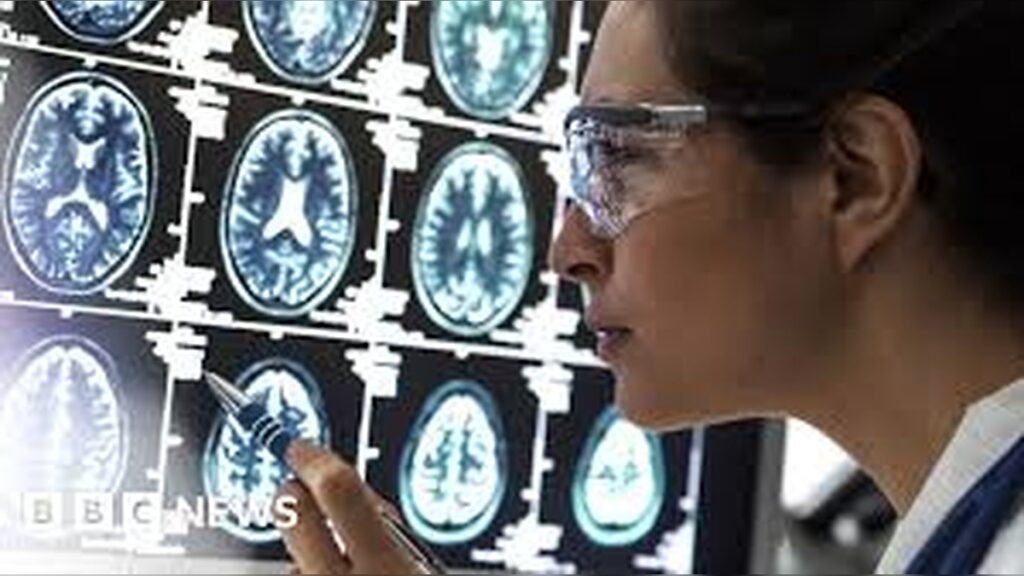
A wave of new research is changing how scientists think about Alzheimer’s disease, suggesting that the condition may be detectable many years before the first memory lapses or confusion begin.
Two major studies published in The Lancet point to powerful advances in both blood testing and brain imaging.
Researchers believe these tools could reshape how dementia is diagnosed and managed, especially for conditions like Alzheimer’s, the most common form of dementia.
The findings arrive at a critical moment.
Alzheimer’s already affects more than 500,000 people in the UK alone and remains the leading cause of death in the country.
Blood Tests That Can Spot Hidden Brain Changes Early
One of the biggest developments comes from a study exploring simple blood tests that detect early biological signs of Alzheimer’s.
Scientists focused on key proteins linked to brain damage, especially amyloid-beta plaques and phosphorylated tau.
These biomarkers build up long before symptoms like memory loss or confusion appear.
Researchers studied around 1,350 adults in the United States with an average age of 61, all of whom showed no dementia symptoms at the start.
What they found was striking: people with higher levels of these proteins performed worse in cognitive tests and showed early signs of memory decline.
This supports the growing belief that Alzheimer’s begins silently, sometimes decades before diagnosis.
Experts say this could open the door to screening middle-aged adults long before serious brain decline starts.
A version of this blood test has already been approved in the United States by the Food and Drug Administration (FDA), though it is not yet part of routine healthcare in the UK.
Brain Scans Reveal Earlier Signs Than Before
The second study focused on advanced brain imaging techniques designed to detect tau proteins, another major marker of Alzheimer’s disease.
Researchers compared a new imaging tracer called MK6240 with an older method known as Flortaucipir.




The study included 682 participants from the US and Canada.
The results showed that the newer scan identified more than twice as many early tau deposits in healthy individuals compared to existing technology.
It also detected significantly higher levels of tau in people already showing mild cognitive problems.
This suggests that many early cases of Alzheimer’s-related brain changes may currently go unnoticed using standard scanning methods.
Experts believe this could transform early diagnosis and improve how patients are selected for clinical trials.
Why These Findings Matter for Treatment and Drugs
Early detection is not just about knowing sooner—it could change how Alzheimer’s is treated entirely.
Two drugs, donanemab and lecanemab, developed by Eli Lilly and Company and Eisai, have already shown they can slow disease progression in early-stage Alzheimer’s patients.
However, UK regulators previously rejected their NHS use, arguing the benefits were too small compared to their cost.
If blood tests and scans allow doctors to identify patients earlier, these treatments could become more effective and potentially harder to dismiss.
Expert Reactions: Hope With Caution
Medical experts have welcomed the progress but warn against overinterpretation.
Specialists from institutions like Alzheimer’s Society say blood-based testing is promising because it is cheaper, easier, and less invasive than brain scans or spinal taps.
However, neurologists stress an important point: abnormal test results do not automatically mean a person will develop dementia.
Researchers also emphasize that much of the current data comes from controlled studies, and more testing is needed in broader and more diverse populations before these tools can be used in everyday healthcare.
What This Means for Patients and Families
For now, Alzheimer’s remains a condition without a cure, but early detection is increasingly seen as the most powerful tool available.
Being able to identify the disease earlier could help patients access treatment sooner, plan for the future, and potentially slow progression of symptoms like memory loss, mood changes, and difficulty communicating.
The research also highlights a growing shift in medicine—from treating disease after symptoms appear to identifying it long before it becomes visible.
Impact and Consequences
These breakthroughs could significantly change how healthcare systems approach dementia screening. If blood tests and advanced scans become widely available, millions of people could be diagnosed earlier than ever before.
That early warning system may increase demand for new treatments, accelerate drug development, and reshape how hospitals manage neurological care.
At the same time, it could raise ethical and emotional challenges, especially for people who test positive for biomarkers but never develop full dementia.
What’s Next?
Researchers now need larger and longer-term studies to confirm how reliable these tests are across different populations.
Health regulators in the UK and other countries will also need to decide whether to approve blood-based screening and new imaging methods for public use.
If progress continues, the next few years could see Alzheimer’s diagnosis shift from late-stage detection to early prediction, potentially decades before symptoms begin.
Summary
New studies published in The Lancet show that Alzheimer’s disease may be detectable years before symptoms appear using blood tests and advanced brain scans. While still not ready for routine clinical use, these breakthroughs could transform early diagnosis, improve treatment effectiveness, and reshape global dementia care.
Bulleted Takeaways
- Two major studies highlight earlier detection of Alzheimer’s disease
- Blood tests can detect amyloid-beta and tau proteins linked to brain decline
- Study involved 1,350 symptom-free adults showing early cognitive links
- New brain scans detected over twice as many early tau cases as older methods
- Research was published in The Lancet
- Drugs from Eli Lilly and Eisai may benefit from earlier diagnosis
- Alzheimer’s Society and other experts welcome progress but urge caution
- Tests are not yet part of routine UK healthcare
- Early diagnosis could improve treatment timing and care planning
- Further research is needed before widespread clinical adoption

