
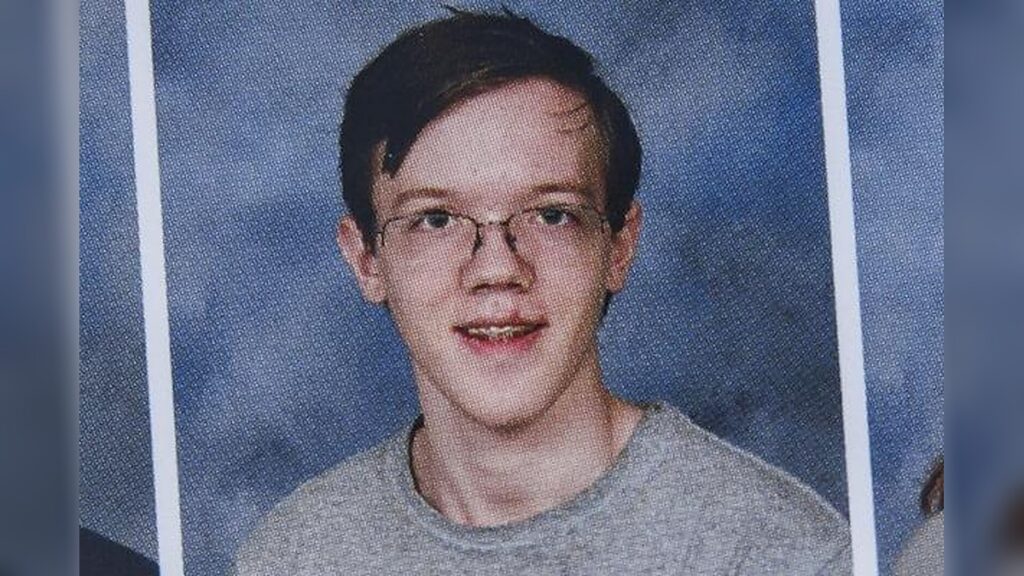
Newly released FBI interview records are shedding fresh light on the life of Thomas Crooks, the 20-year-old who attempted to assassinate Donald Trump at a campaign rally in Butler, Pennsylvania, in July 2024.
The documents, provided to Senate Judiciary Committee Chairman Chuck Grassley as part of his investigation into the shooting, include interviews with Crooks’ father, Matthew.
His account portrays a young man who was unusually withdrawn from childhood and whose family did not recognize any clear warning signs before the attack.
Crooks opened fire from a nearby rooftop during the July 13, 2024, rally, firing eight rounds toward Trump.
The then-presidential candidate was struck in the ear, while rally attendee Corey Comperatore was killed and two other people were wounded.
Father Describes Son as Emotionally Distant
Matthew told investigators that Thomas had been exceptionally quiet almost from the moment he was born.
According to the FBI notes, Matthew recalled that his son did not cry immediately after birth and remained unusually quiet throughout his childhood.
He and his wife, Mary, at one point wondered whether Thomas could have ADHD.
Matthew also acknowledged that he and his son never developed a particularly close relationship.
He described Thomas as someone who rarely laughed, was difficult to understand and displayed little emotion.
In one childhood incident, Matthew became frustrated after Thomas emptied an entire container of fish food into his sister’s aquarium during an argument.
The father said he eventually pushed Thomas emotionally until the boy cried.
His Withdrawal Became More Noticeable in School
Thomas reportedly became somewhat more animated during elementary school, although his father believed much of that behavior stemmed from boredom.
At one point, he damaged a school desk and briefly associated with a group of children Matthew considered a bad influence.
By high school, however, his withdrawal reportedly intensified.
Matthew said Thomas became increasingly quiet, sometimes talked to himself and struggled to communicate with teachers.
The FBI records also state that Thomas showed little interest in dating and repeatedly denied accusations that he was gay.
Despite those difficulties, his academic ability was strong.
Matthew said his son put considerable pressure on himself when applying to college and eventually scored 1500 on the SAT despite not studying for the test.
His Future Plans Were Often Uncertain
Matthew told investigators that Thomas rarely appeared to have a firm plan for his future.
One possibility he considered was joining the military and working aboard nuclear submarines, although his father characterized the idea as something Thomas simply thought would be interesting rather than a serious career commitment.
Matthew later expressed regret that his work schedule had limited the amount of time he could spend with his son.
He suggested that greater involvement in Thomas’ extracurricular interests might have helped them develop a stronger relationship.
Firearms Became a Major Interest
One area where Thomas did appear to develop a sustained interest was firearms.
Matthew said his son joined a gun club around the beginning of the COVID-19 pandemic.
Initially, Thomas struggled to hit paper targets, but over the next four or five years he became a capable shooter.
His father recalled that Thomas increasingly challenged himself to shoot from greater distances and was particularly interested in discovering how far he could hit targets using basic sights.




Thomas also began asking questions about family firearms, including whether he would need a background check to purchase his father’s Glock and whether he could obtain guns belonging to his grandfather.
Matthew described those conversations as unusual.
A Pseudonym Raised Questions
Investigators also learned that Thomas purchased large quantities of rifle components, tools and other equipment online.
According to the FBI interview notes, he used the name of former senator and presidential candidate Bob Dole as a pseudonym when making some purchases.
Matthew said Thomas had become concerned about the possibility of his financial accounts being hacked after his father experienced a hacking incident himself.
Thomas reportedly taught his father how to use software designed to conceal a person’s identity online, explaining that doing so could make them less vulnerable to outside actors.
He also experimented with 3D printing.
On one occasion, he produced a Glock 19-style firearm but discarded it after firing a single round because he feared the printed frame could explode.
Politics Did Not Fit a Simple Ideological Profile
Another individual interviewed by investigators, whose identity was redacted, discussed Crooks’ political interests.
Matthew described his son as a history enthusiast who could discuss politics without appearing particularly passionate about partisan politics.
Thomas reportedly referred to himself as a Republican and opposed the welfare state and what he called “woke” ideology.
However, his father said he never fully embraced traditional Republican ideology and frequently made jokes about politicians from both parties.
Thomas also reportedly talked about Trump and Joe Biden and repeatedly mentioned Marco Rubio.
Matthew said Thomas did not believe the 2020 presidential election had been stolen and was shocked by the January 6, 2021, Capitol riot.
The father was also surprised to discover that Thomas had made a small donation to the Progressive Turnout Project, a Democratic organization, in 2021.
Investigators Found No Obvious Warning Sign at Home
Despite the increasingly detailed picture emerging from the interviews, Matthew maintained that nobody in the family believed Thomas was preparing to commit an act of political violence.
The father repeatedly emphasized that his son had not displayed obvious behavior that suggested something was seriously wrong in the period immediately before the shooting.
That assessment has become one of the more striking elements of the newly released material because investigators have continued examining Crooks’ activities, firearms interests and online presence.
His Vehicle Contained More Weapons and an Explosive
Investigators recovered additional ammunition and equipment from Crooks’ vehicle following the shooting.
The vehicle reportedly contained 22 unfired rounds, additional magazines and a ballistic vest.
Authorities also discovered an explosive device equipped with a receiver capable of remote activation.
The device was switched off, meaning it could not be remotely detonated in that condition.
Crooks was ultimately killed by a Secret Service sniper after opening fire from the rooftop.
Trump survived the attack and, while being surrounded by agents, raised his fist toward the crowd and repeatedly shouted, “Fight, fight, fight.”
Questions About Crooks’ Online Activity Remain
The FBI’s handling of Crooks’ digital footprint has also remained a contentious part of the investigation.
The bureau initially portrayed the shooter as having very little online presence.
That characterization came under renewed scrutiny in November 2025 following the release of Tucker Carlson’s documentary Who Is Thomas Crooks?
The documentary presented material purported to show a much more extensive online history, including references to an individual using the name “Willy Tepes.”
The FBI subsequently said it had examined nearly 500,000 digital files from 13 seized devices.
The bureau also launched what it called an “FBI Rapid Response” effort on X to address claims surrounding the case, arguing that it had never said Crooks had no online footprint.
The Mysterious ‘Willy Tepes’ Connection
One of the disputed issues concerns Crooks’ alleged online interactions with the person known as Willy Tepes.
An FBI statement released in November 2025 said Tepes had mentioned Crooks in four YouTube comments but maintained that Crooks had never directly communicated with him.
That account was later challenged by the discovery of a YouTube comment dated August 5, 2020, which appeared to show Crooks responding directly to Tepes.
The comment contained references to political violence and assassination, raising further questions about what investigators knew about Crooks’ online activity and when they knew it.
An online investigative group known as Citizens Commission subsequently published material examining Tepes’ digital history and claimed to have recovered thousands of Telegram messages associated with him.
The group said many of those messages promoted political violence and assassination.
Comperatore’s Widow Continues to Challenge the Official Account
The controversy has also been echoed by Helen Comperatore, the widow of Corey Comperatore, who was killed during the Butler shooting.
In an interview with the Daily Mail, Helen rejected the idea that Crooks simply decided on his own to attack the rally without a deeper explanation.
She has argued that people in senior positions within the federal government may have played a role in events surrounding the attack and said she intends to continue seeking answers about her husband’s death.
The newly released FBI interviews provide additional details about Crooks’ childhood, family relationships, firearms interests and political views, while also leaving unresolved questions surrounding his online activity and the circumstances that preceded the Butler shooting.
