
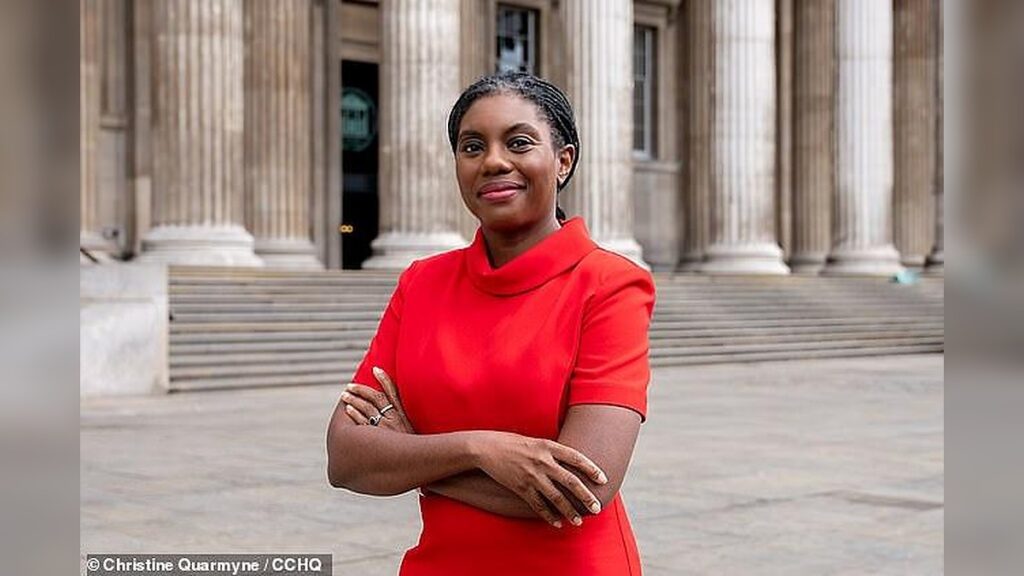
Conservative leader Kemi Badenoch has confirmed that her party is exploring ways to abolish inheritance tax, arguing that the levy unfairly penalises families who spend decades working, saving and building assets for their children.
The move represents a fresh attempt by the Conservatives to position themselves as the party of wealth-building for ordinary households, while also opening up a clear policy divide with Reform UK over which taxes should be cut first.
Badenoch said her team had been instructed to identify “fiscally responsible ways” of reducing what she described as the burden imposed by inheritance tax.
Badenoch Says Middle-Class Families Bear the Burden
The Conservative leader argued that inheritance tax increasingly affects homeowners and small-business owners rather than only the ultra-rich.
She pointed to rising property prices, long-term saving and family-owned businesses as reasons why more middle-class households can find themselves exposed to the tax.
“The people caught by inheritance tax are mostly home-owning middle-class families due to house price inflation, diligent savers, and small-business owners,” Badenoch said.
She contrasted those families with the wealthiest individuals, arguing that billionaires have greater access to trusts, complex tax arrangements and the option of moving their wealth overseas.
Her comments come amid expectations that she could unveil a detailed inheritance tax policy at the Conservative Party conference in Birmingham next month.
Tory Leadership Doubles Down on Tax-Cutting Approach
Badenoch’s position builds on her earlier promise to abolish stamp duty if the Conservatives return to government.
That pledge generated considerable attention at last year’s party conference and was credited with giving fresh momentum to her leadership.
New Shadow Chancellor Andrew Griffith has also identified inheritance tax as the levy he would most like to eliminate, strengthening speculation that the policy could become a central part of the party’s economic platform.
However, Badenoch has stressed that no announcement will be made until the Conservatives have established how abolition could be funded responsibly.
“We won’t make any announcement till there’s a clear plan,” she said.
Reform’s Jenrick Challenges Conservative Priorities
The issue has created a sharp disagreement between the Conservatives and Reform UK.




Robert Jenrick, Badenoch’s former Conservative leadership rival who is now a prominent Reform figure, argued that abolishing inheritance tax should not take precedence over reducing income tax for lower earners.
Jenrick said it would be “morally wrong” to prioritise removing inheritance tax when public finances are under severe pressure.
His argument is that cutting inheritance tax would primarily benefit wealthier households, whereas raising the tax-free personal allowance would provide broader relief.
“We can all agree inheritance tax is a bad tax,” Jenrick said.
“But the question is, when you have to choose what to cut first, given the appalling state of the public finances, what do you pick?”
Badenoch Accuses Reform of Missing the Point
Badenoch responded by framing the debate in terms of fairness and the right of families to pass on what they have accumulated through years of work.
She said Reform’s position amounted to punishing people who had acted responsibly by working, saving and investing in their homes or businesses.
“Reform says abolishing inheritance tax is ‘morally wrong’,” she wrote.
“I think it is morally wrong to punish people for doing the right thing – spending a lifetime working, saving, building up a business or a home to pass on to the next generation.”
The Conservative leader acknowledged that some wealthy people support her party but insisted that its argument extends well beyond Britain’s richest households.
She said millions of people had “paid their dues” and wanted the wealth they had created to benefit their children or their communities.
Political Funding Row Enters the Debate
Badenoch also used the dispute to attack Reform’s wealthy political backers, including cryptocurrency businessman Christopher Harborne.
Harborne is one of two crypto entrepreneurs linked to the record £72 million in donations that have become the focus of a wider argument over political funding.
Badenoch argued that people with substantial wealth held in cryptocurrency or overseas would not face the same concerns about conventional inheritance tax planning as ordinary families.
Her comments add an unusual political dimension to the tax debate, with the Conservatives seeking to distinguish between inherited wealth held by wealthy individuals and assets accumulated by families over generations.
Jenrick Pitches Reform’s Alternative
Jenrick maintained that Reform’s priority should instead be raising the income tax personal allowance to £15,000.
He claimed the measure would benefit 97 per cent of workers, contrasting it with inheritance tax abolition, which he said would mainly assist the wealthiest five per cent.
The disagreement exposes competing approaches among parties seeking support from voters on the political right: the Conservatives are presenting inheritance tax as an unfair penalty on family wealth, while Reform is arguing that immediate tax relief for workers should take precedence.
Labour’s Own Tax Debate Looms
The wider argument over taxation also comes as Labour faces speculation about its own approach to raising revenue.
Although Andy Burnham has ruled out an early general election, some Westminster figures believe he could eventually seek a mandate that would give him greater freedom from Keir Starmer’s existing manifesto commitments and tax red lines.
Burnham is also associated with proposals for a different form of inheritance-related levy, including a potential 10 per cent charge on the estates of most households to help finance social care.
The competing proposals mean inheritance taxation is emerging as one of the clearest dividing lines in the broader political debate over how Britain should tax wealth, work and family assets.
