
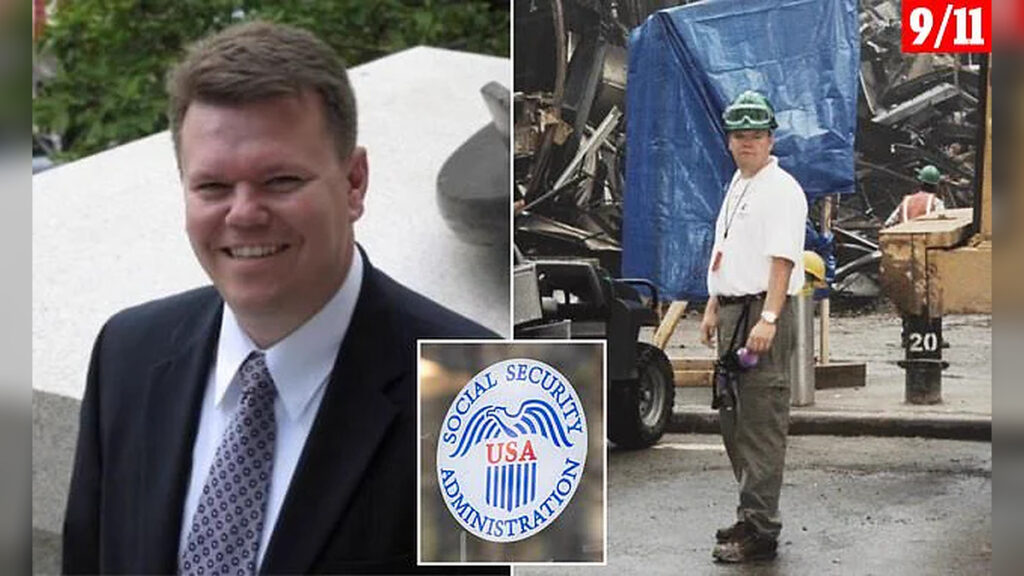
Mike Forgy, a 57-year-old former federal employee who responded to the World Trade Center disaster, says a disputed $30,000 Social Security overpayment has upended his plans for retirement.
Forgy, who is based in the Washington-Baltimore area, had spent more than two decades working for the federal government and accepted an early retirement offer in early 2025.
He expected the move to give him more time to focus on life outside work as he continued dealing with medical conditions linked to his 9/11 response.
Instead, he says a long-dormant Social Security issue resurfaced just as he was preparing to leave the workforce.
Treasury Garnishment Arrived Alongside Retirement Notice
Forgy said the debt came to his attention when he received confirmation of his federal pension payment from the Office of Personnel Management.
On the same day, he said, the Department of the Treasury notified him that his retirement income would be subject to garnishment over an alleged Social Security overpayment of about $30,000.
“I received a note from the Office of Personnel Management confirming my monthly pension payout, and the same day I received a note from the Department of the Treasury saying they would garnish my retirement because I owed $30,000 from an overpayment,” Forgy told the Daily Mail.
The alleged overpayment dates back roughly a decade, to a period when Forgy was unemployed and had temporarily received disability benefits while taking time away from work to address health problems connected to his World Trade Center service.
Forgy Says He Told Social Security to Stop the Payments
According to Forgy, the central issue is not simply that he received disability payments, but that he says he repeatedly notified the Social Security Administration when he returned to employment.
“I told the Social Security Administration multiple times, by phone and in person, not to send me any more money,” he said.
Forgy maintains that the payments nevertheless continued and that the matter was never properly resolved at the time.
He said he now believes the government should have addressed the alleged overpayment when he first reported his return to work rather than allowing the issue to remain unresolved for years.
Retirement Plans Disrupted by Old Debt
The former federal employee said the timing of the collection action has left him reconsidering his retirement plans.
He had secured another job after leaving government service, but said it pays about half of what he previously earned.
Had he known that the $30,000 claim was still outstanding, Forgy said, he would have remained in his federal position.
“I will have to keep working to help pay off this debt, even as my health deteriorates,” he said.
Forgy said he believes the debt could take many years to resolve.
“For me, I’ll keep working and by the time this is all settled, it’s going to be something like 15-plus years since they made the mistake,” he said.




Congressman’s Office Seeks Answers
After learning about the debt, Forgy contacted the office of Congressman James Walkinshaw, whose staff then reached out to Social Security seeking an explanation.
Walkinshaw has also cosponsored H.R. 2142, the Social Security Overpayment Relief Act.
The Senate version, S. 1023, was introduced with the same objective of changing how Social Security overpayments are handled.
Forgy said he has personally met with Social Security officials but has not yet been able to resolve the dispute.
He recalled being questioned about why he had not simply kept the money and repaid it later.
“They have stated they sent letters, but letters sent do not constitute letters received, or read,” he said.
“It obviously wasn’t that important for the last 10 years.”
How Social Security Overpayments Happen
Social Security overpayments occur when the agency determines that a beneficiary received more money than they were entitled to receive.
Such situations can arise for several reasons, including changes in employment, income or eligibility.
Administrative errors can also contribute to an overpayment.
Once an overpayment has been established, the Social Security Administration can pursue recovery through deductions from benefits and other collection mechanisms.
Beneficiaries who dispute an overpayment determination can appeal it, while people who believe they were not at fault or that repayment would create financial hardship may be able to request a waiver, depending on their circumstances.
9/11-Related Health Problems Add to Forgy’s Concerns
Forgy responded to the World Trade Center disaster in the days following the September 11 attacks and says he has several government-certified medical conditions related to that service.
He identifies severe post-traumatic stress disorder as one of his major World Trade Center-related conditions and said the dispute has intensified the psychological strain he was already experiencing.
“The mental stress of suddenly having a $30,000 bill dropped in your lap when you had planned to be retired is taxing,” he said. “It’s depressing, exhausting and stressful.”
The former federal employee said the situation has also made the anniversary of the attacks more difficult to process.
Forgy Questions Why the Debt Took Years to Surface
Forgy argues that the long delay is at the heart of his frustration.
“If the SSA had stopped payments when I requested them or contacted me immediately after their overpayment error, I believe this issue could have been resolved well before now,” he said.
“Instead, they waited until I retired and are threatening to pull the pension I have worked for over 20 years to establish.”
He said the Treasury has already taken his tax refund and begun garnishing his pension.
“They believe everyone is at fault when it’s them who made the error,” Forgy said.
He Warns That Others Could Face Similar Bills
Forgy, who lives alone and has never married or had children, said his experience has made him concerned about beneficiaries who may lack the ability to return large sums of money years after receiving them.
“For people who cannot work anymore, they suddenly owe the government something equivalent to the price of a new car and they had no idea,” he said.
As the 25th anniversary of September 11 approaches, Forgy said he finds it particularly difficult that an old government benefits dispute has become intertwined with memories of his service.
“Here we were on the 25th anniversary of September 11th, and now, on top of everything else, I associate it with this enormous bill they are demanding I pay back immediately,” he said.
He said his broader concern is accountability for how government benefit programs are administered.
“Their failure to manage their own programs is the issue,” Forgy said.
“Instead of working to solve the problems, they have kicked the can down the road until they could jump on someone, which seems to be when they retire. Just frustrating.”
