
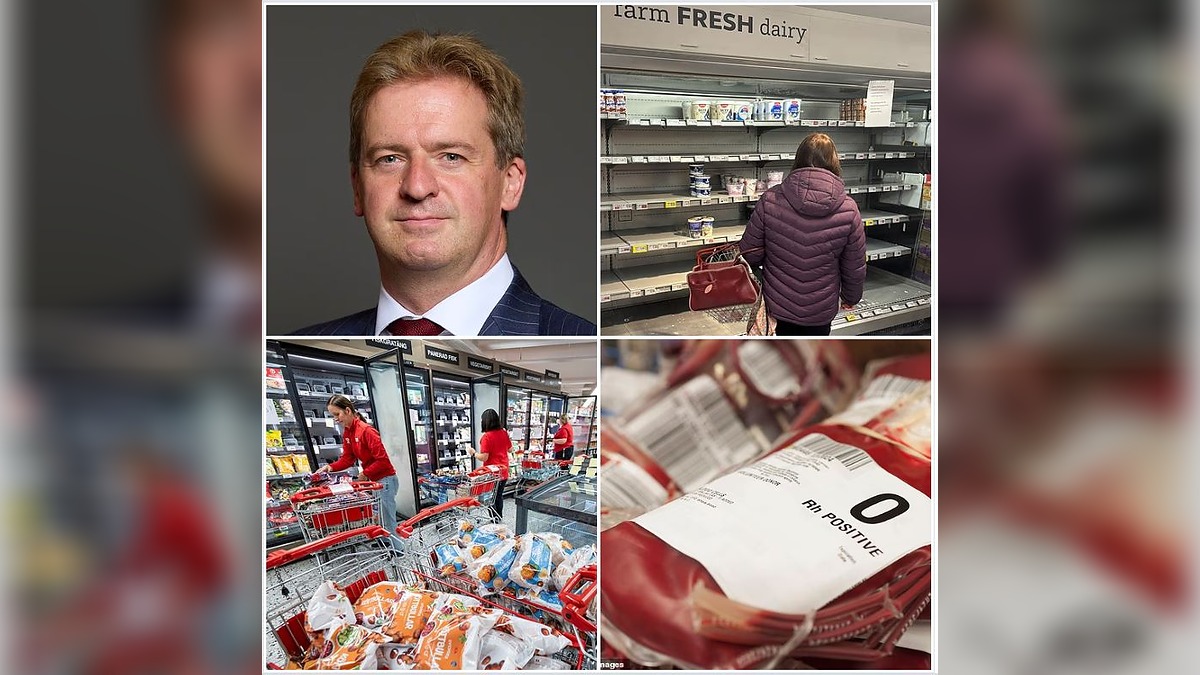
NHS hospitals have been urged to review the security of their connected refrigeration equipment after hackers interfered with temperature controls at three blood-storage facilities in France.
Graeme Downie, Labour MP and chair of the Coalition on Secure Technology, warned that British blood banks, vaccine reserves and medicine storage facilities could face similar attacks.
He called on NHS trusts to make security checks of their refrigeration systems a priority, warning that technology connected to mobile networks could allow criminals to manipulate storage conditions remotely.
Downie said the incident in France demonstrated how hackers could interfere with refrigeration equipment holding essential medical supplies.
He urged hospitals to audit their connected devices and called on the Government to introduce security standards for medical technology linked to external networks.
Hackers Raise Temperatures at Three French Plasma Storage Sites
The warning followed an incident reported by the French Blood Establishment (EFS), which said temperature and defrosting thresholds had been raised to extremely high levels at three of its plasma storage sites on Monday.
The agency confirmed that no health consequences had been identified and no blood products were lost.
The affected facilities held bags of plasma intended for transfusions, as well as plasma used in the manufacture of medicines.
According to the EFS, monitoring and alarm systems detected the unusual changes, allowing staff to respond before any products or samples were compromised.
Some of the stored products were transferred to other locations, while others were secured at the affected facilities.
The agency said blood collection and distribution continued without interruption, ensuring that hospitals and other healthcare providers could maintain services for patients.




Downie Warns Britain Could Face Similar Attacks
Downie said the incident highlighted vulnerabilities in refrigeration systems used by the NHS to store blood, vaccines and medicines.
He warned that connected components could potentially be accessed and manipulated remotely through mobile networks.
The MP called for immediate checks across NHS trusts, arguing that security standards should be established before British medical facilities experience a similar incident.
His warning came amid a series of attacks involving refrigeration and freezer systems at supermarkets across Europe.
Supermarket Freezers Targeted in Several European Countries
Supermarkets in Sweden, Luxembourg and Belgium have also reported cyber incidents affecting their refrigeration systems, resulting in food being discarded after temperatures rose.
Retail groups affected included Ahold Delhaize and Colruyt in Belgium and Luxembourg, as well as Swedish supermarket chains ICA and Coop.
At least one IKEA store was also affected.
Approximately 40 Delhaize supermarkets in Belgium and Luxembourg experienced problems, while a smaller number of stores were affected in Sweden, Ireland, the Netherlands, Estonia and Finland.
The incidents forced retailers to remove frozen and refrigerated products that could no longer be sold.
Swedish Supermarket Reports Freezers Reaching 50 Degrees
Engla Ingwall, a sales manager at an ICA franchise store in Stockholm, described the damage after visiting the premises on Monday.
She told Reuters that the attack happened at approximately 2am but was not discovered until several hours later.
Ingwall said the store’s freezers had reached temperatures of 50 degrees Celsius, leaving the frozen goods unusable.
An ICA spokesperson confirmed that the company was aware of an overnight incident affecting refrigeration and freezer systems at a limited number of its stores.
Earlier Attacks Also Disrupted Supermarkets in France
The latest incidents follow an attack in France last month in which hackers reportedly gained control of cooling units at hundreds of supermarkets.
Police said the interference caused fires and food losses at affected locations.
Ahold also reported a cyber-security incident to police during the previous month.
The attacks on supermarket refrigeration systems and the interference at French blood-storage facilities have prompted concerns about the potential consequences of cyber criminals gaining access to temperature-control equipment.
