
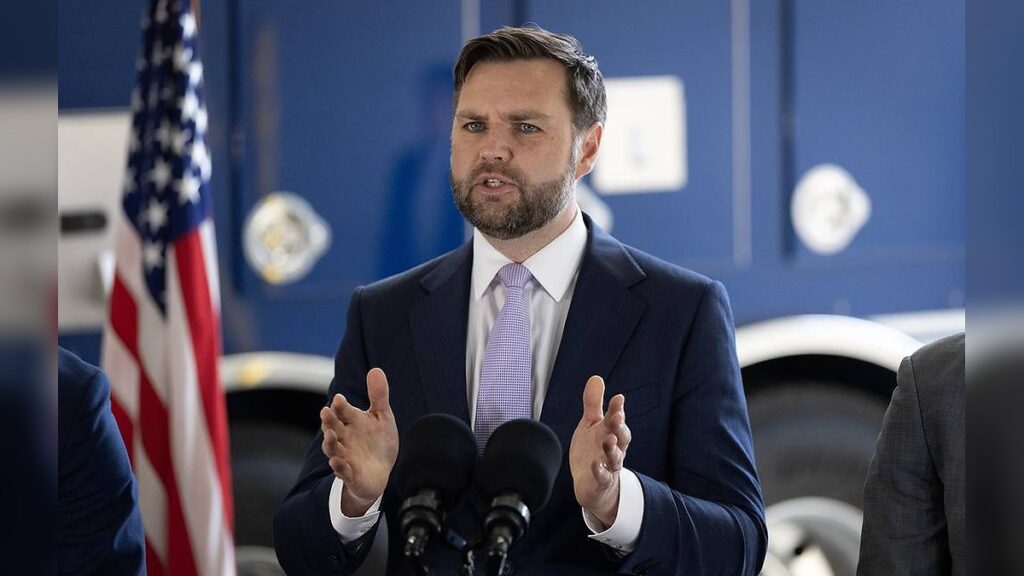
US Vice President JD Vance has said the ongoing confrontation between the United States and Iran could move into a significantly different phase over the next several months, as the Trump administration weighs the future direction of the conflict.
Speaking in an interview with the New York Post published on September 15, Vance said the future remained difficult to predict but indicated that he agreed with President Donald Trump’s expectation that the nature of the conflict could soon change.
Vice President Points to Completion of Initial US Objectives
Vance described the earlier stage of the American campaign as being focused on severely weakening Iran’s nuclear and conventional military capabilities.
According to the vice president, the United States has already accomplished what he characterized as the first phase of the campaign, including efforts aimed at destroying Iran’s nuclear program and degrading its conventional forces.
Those statements represent the Trump administration’s assessment of the results of US military operations. The extent of the damage to Iran’s capabilities and its ability to rebuild remain important questions surrounding the conflict.
Washington Signals Possible Change in Military Approach
Vance’s remarks suggest that Washington does not necessarily expect the current pattern of military activity to continue indefinitely.




He told the New York Post that he believed Trump was correct in anticipating a substantially different phase within a couple of months. The vice president did not provide a detailed description of exactly what that next stage would involve.
The administration has continued to combine military pressure with measures intended to prevent Iran from rebuilding capabilities that Washington says have already been significantly degraded.
Trump Connects Timeline to November Midterm Elections
Vance’s comments come days after Trump publicly linked his expectations for the conflict’s conclusion to the November 3 US congressional midterm elections.
Trump said on September 9 that he expected the war to end immediately after the elections, arguing that Iran would eventually be unable to withstand continued economic pressure. He also left open the possibility of negotiations, although he said diplomacy was not the administration’s preferred option at that point.
Trump has therefore presented a more specific public timeline than Vance, whose latest comments emphasize that the course of the confrontation cannot be predicted with certainty.
Uncertainty Remains Over How and When Conflict Could End
Despite the administration’s statements about Iran’s weakened military capabilities, there is still considerable uncertainty over the duration and eventual outcome of the confrontation.
Reuters reported earlier that senior administration officials had privately warned Trump that the conflict could potentially continue much longer than his publicly stated timeline, underscoring the difficulty of forecasting how Tehran will respond to sustained American pressure.
For now, Vance’s comments indicate that Washington expects the character of the US-Iran confrontation to evolve in the coming months, even as questions remain over whether that transition will ultimately involve further military action, reduced hostilities or renewed diplomacy.

