
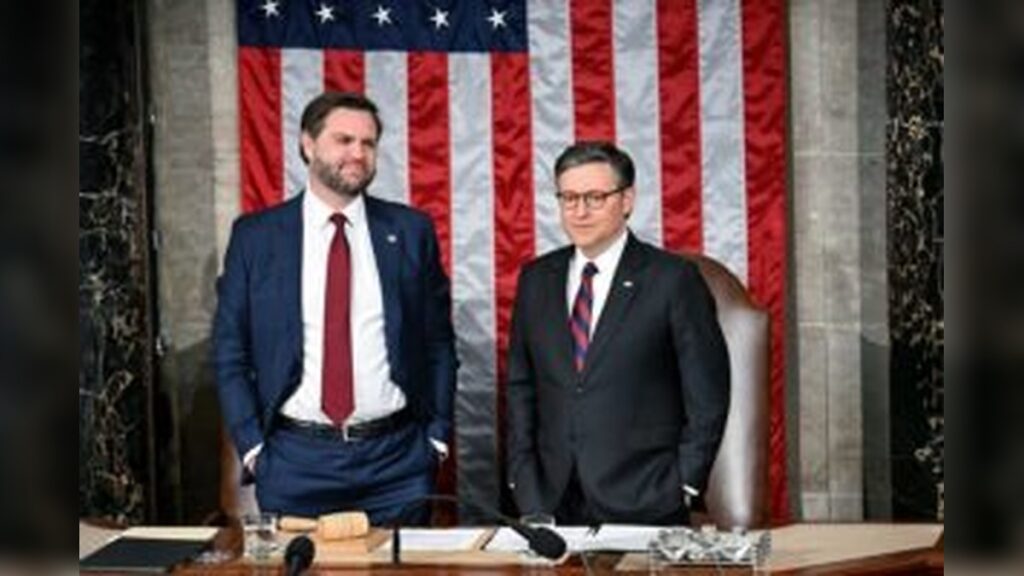
Vice President JD Vance is facing a growing wave of criticism from some conservative voices online, but his supporters insist the campaign has done little to dent his popularity among Republican voters.
As speculation about the 2028 presidential race continues to build, those close to Vance argue the attacks are part of an organized effort to weaken the leading contender long before primary voting begins.
Online Campaign Targets Vance Ahead of 2028
Over the past several days, social media platforms have been flooded with posts from critics accusing Vance of being unsuited for the vice presidency.
Much of the criticism has focused on his approach to foreign policy, particularly his support for pursuing diplomatic efforts with Iran.
Other posts have claimed, without presenting evidence, that Vance has drifted away from President Donald Trump’s political agenda.
Some critics have gone even further, drawing comparisons between Vance and figures such as former President Barack Obama and Senator Bernie Sanders, despite their vastly different political backgrounds.
Allies Say Digital Attacks Don’t Reflect Republican Voters
While the online criticism has attracted attention, Vance’s political allies argue it represents only a vocal minority rather than the broader Republican electorate.
According to people familiar with his political operation, many of the negative posts appear to be coordinated rather than spontaneous.
Those close to the vice president believe internet activists have become increasingly influential in shaping political conversations online, but they maintain that the campaign has not translated into meaningful changes in public opinion among Republican voters.
Polls Continue to Favor Vance
Despite the social media backlash, early polling for the 2028 Republican presidential nomination continues to place Vance at the front of the field.
Surveys indicate his approval among Republican voters remains closely aligned with President Trump’s own standing.
Secretary of State Marco Rubio has also gained support, particularly among more traditional and business-focused conservatives, but he has publicly stated that he would support Vance should the vice president decide to run for the White House.
Vance’s advisers argue that continued attacks from establishment Republicans and foreign policy hawks could actually strengthen his image among voters who favor the America First movement.
Conservative Voices Defend the Vice President
Several conservative commentators have dismissed the online campaign as disconnected from the priorities of everyday Republican voters.
Conservative strategist Steve Cortes argued that loud voices within Washington and on social media should not be mistaken for the broader GOP base, suggesting the online criticism exaggerates divisions within the party.




Supporters also point out that resistance to Vance did not begin recently.
Before Trump selected him as his running mate, several influential Republican donors, foreign policy advocates and conservative media personalities had reportedly encouraged the president to choose Rubio or former North Dakota Governor Doug Burgum instead.
Foreign Policy Remains the Main Flashpoint
Much of the criticism directed at Vance centers on his foreign policy positions, particularly regarding the Middle East.
Earlier controversies emerged after critics accused him of antisemitism over comments expressing sympathy for Americans who questioned aspects of the U.S.-Israel relationship.
His supporters rejected those accusations, saying his position reflects a broader America First foreign policy rather than hostility toward Israel.
The latest round of criticism intensified following Vance’s nearly three-hour interview on Joe Rogan’s podcast on July 15.
Rogan Interview Fuels Fresh Debate
During the lengthy conversation, Vance described himself as a “reasonable moderate” when discussing U.S.-Israel policy.
He also referred to a recent report alleging that a pro-Israel online influence campaign had targeted him through paid social media efforts.
Vance said he would not allow online pressure campaigns to influence his decisions, stressing that his responsibility is to put American interests first regardless of criticism from political activists or commentators.
His remarks quickly sparked another wave of criticism from several prominent conservative commentators and influential social media personalities.
Critics Increase Pressure on Social Media
Analysis of activity on X showed a noticeable increase in posts criticizing the vice president immediately after the podcast appearance.
Among those voicing concerns were commentator Ben Shapiro, columnist Marc Thiessen and journalist Batya Ungar-Sargon, along with numerous conservative influencers.
Some social media accounts promoting support for Rubio over Vance in the 2028 race also appeared, based on publicly available profiles, to be operated by users outside the United States.
People close to Vance contend that the coordinated nature of many of the posts raises questions about how representative the criticism truly is.
Vance Team Sees Little Political Impact
According to allies, the surge in online criticism has not produced any measurable decline in Vance’s support among Republican voters.
They argue that if the campaign reflected genuine grassroots dissatisfaction, public opinion surveys would already show a significant drop in his favorability.
Instead, polling has remained largely stable over recent months.
A spokesperson for the vice president said Vance remains focused on advancing President Trump’s agenda and securing policy victories rather than responding to social media criticism.
Supporters Push Back Against the Narrative
Vance supporters have also begun challenging the online campaign publicly.
Jon Schweppe, a senior adviser with the American Principles Project and a former Federal Trade Commission official during the Trump administration, recently shared polling data on X showing Vance’s Republican favorability had remained steady despite what he described as an organized anti-Vance effort.
Schweppe said his post quickly attracted an unusually large number of critical responses from accounts that had not previously interacted with him, reinforcing his belief that the backlash was coordinated rather than organic.
As discussions about the Republican Party’s future continue to intensify, Vance’s allies remain confident that online campaigns alone are unlikely to determine the outcome of the 2028 presidential nomination contest.

