
The recent confrontation surrounding a Gaza-bound flotilla didn’t stay a narrow maritime or security story for long.
It quickly turned into a global political flashpoint, largely because of how the incident was handled once the vessels were intercepted.
The flotilla itself was not unexpected in form or intent.
Organizers have long used maritime convoys as a symbolic way to draw attention to the situation in Gaza, aiming to create highly visible moments that pressure Israel diplomatically and emotionally on the world stage.
This time was no different in design—what changed was the political response waiting on shore.
When Politics Meets Security Operations
Once the detained activists were brought to Ashdod Port, attention shifted sharply to Israel’s National Security Minister Itamar Ben-Gvir.
His presence at the detention site and his conduct there became the central issue, overshadowing the original security operation.
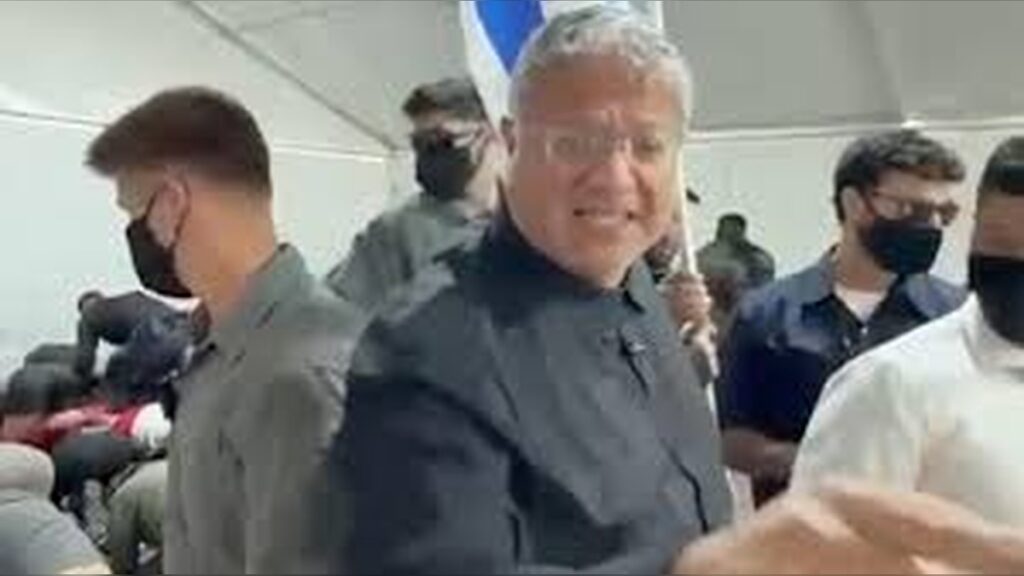
Videos circulating online showed Ben-Gvir interacting directly with detained activists, at moments appearing to mock or taunt them.
In other clips, he is seen standing near individuals who were restrained, while making inflammatory remarks and gestures, including waving Israeli flags and delivering provocative statements in Hebrew.
One particularly controversial scene shows an activist being forced to the ground after chanting “free Palestine,” an image that quickly spread across international media platforms and social networks.
The Message That Reached Far Beyond Israel
What might have remained a contained security episode instead became global political fuel.
Critics argue that the imagery and tone of the minister’s appearance gave opponents of Israel highly shareable material that reinforced existing narratives about the country’s conduct during the ongoing war that began after October 7, 2023.
Foreign governments and diplomats responded quickly.
Among the most vocal was U.S. Ambassador to Israel Mike Huckabee, who publicly stated that Ben-Gvir had “betrayed the dignity” of Israel.
European reactions followed rapidly. Israeli envoys were reportedly summoned for clarification in several capitals, including France, Italy, Canada, the Netherlands, and the United Kingdom.
France went further by joining Italy in announcing entry restrictions against Ben-Gvir, with French Foreign Minister Jean-Noel Barrot urging broader EU alignment.
Internal Political Shockwaves in Israel
Inside Israel, the reaction was unusually blunt.
Foreign Minister Gideon Sa’ar publicly criticized the minister’s conduct, describing it as damaging and irresponsible at a sensitive diplomatic moment.
Even Prime Minister Benjamin Netanyahu issued a rare rebuke in both Hebrew and English, emphasizing that the actions seen in the footage did not reflect Israel’s expected standards in handling detainees or managing international incidents.
Despite this criticism, no immediate political consequences followed.
Netanyahu has not moved to dismiss Ben-Gvir, a decision widely interpreted through the lens of coalition politics.



His government relies on fragile alliances, and Ben-Gvir’s faction remains an important component of maintaining parliamentary stability.
A Pattern That Goes Beyond a Single Incident
For many observers, this episode did not feel isolated.
Ben-Gvir’s tenure as national security minister has repeatedly been marked by controversies that blur the line between political messaging and operational security responsibilities.
Supporters argue he represents a hardline security approach aligned with his voter base.
Critics, however, say his actions frequently turn sensitive security operations into political theater—moments designed for social media impact rather than diplomatic caution.
That tension becomes especially significant during periods of heightened international scrutiny, such as the ongoing war following October 7, when every public image can quickly become part of a broader global narrative about Israel’s conduct.
Flotillas, Symbolism, and Strategic Communication
Maritime flotillas like this one are not new in the Israel–Gaza context.
They are typically organized with the expectation of interception, and their broader goal is often symbolic rather than logistical.
That symbolism depends heavily on how the aftermath is perceived.
In this case, critics argue that the confrontation handed organizers exactly the kind of footage they seek: tightly framed images of detained activists, confrontational political statements, and emotionally charged exchanges.
Combined with rapid digital dissemination, such moments can shape international perception far beyond the immediate event.
Political Utility vs Diplomatic Cost
The domestic political calculus is complicated.
Netanyahu’s coalition depends on maintaining support from multiple right-wing factions, including those aligned with Ben-Gvir’s Otzma Yehudit party. Removing him could destabilize the government, especially ahead of future elections.
At the same time, Israel’s diplomatic corps faces growing pressure abroad.
The tension between coalition survival and international relations has become a recurring challenge, and this incident intensified that contradiction in a highly visible way.
Impact and Consequences
The immediate impact was diplomatic rather than military.
Several countries summoned Israeli envoys, and at least two European states moved toward restricting Ben-Gvir’s entry.
The incident also added strain to Israel’s already difficult international positioning during an ongoing multi-front war.
Beyond formal diplomacy, the broader consequence is reputational.
Images and statements from the incident circulated widely, becoming part of a larger global debate about Israel’s conduct since the war began.
For critics, it reinforced existing arguments. For Israel’s defenders, it created an avoidable communications setback at a sensitive moment.
Domestically, the incident deepened political tension within the governing coalition, exposing disagreement even among senior ministers.
What’s next?
The most immediate question is whether further diplomatic action will follow from European Union members or other allied states.
If entry bans expand, the issue could escalate from a bilateral dispute into a wider EU–Israel diplomatic friction point.
Inside Israel, attention will turn to whether Netanyahu maintains his current stance or eventually recalibrates under pressure.
Coalition politics suggest short-term stability may take priority, but repeated incidents of this kind increase internal strain.
For Ben-Gvir, continued political visibility is likely, but so is continued international scrutiny.
Each new episode risks compounding diplomatic costs.
Summary
A Gaza-bound flotilla interception turned into a global political controversy after National Security Minister Itamar Ben-Gvir’s actions at Ashdod Port were widely circulated online.
The footage triggered swift international criticism, including rare public rebukes from allies and diplomatic summoning of Israeli representatives abroad.
While Israel’s leadership condemned the conduct, internal coalition politics have so far prevented any direct political consequences.
Bulleted Takeaways
- The flotilla interception became a global controversy after ministerial involvement at the detention site
- Videos of confrontational behavior sparked rapid international circulation and backlash
- U.S. and European officials criticized the conduct, with some countries imposing restrictions
- Israeli foreign and prime ministers publicly condemned the actions
- Coalition politics make dismissal of Ben-Gvir politically difficult despite controversy
- The incident intensified ongoing debates about Israel’s global image during the Gaza war
- Diplomatic and reputational consequences now extend beyond the immediate security event

