
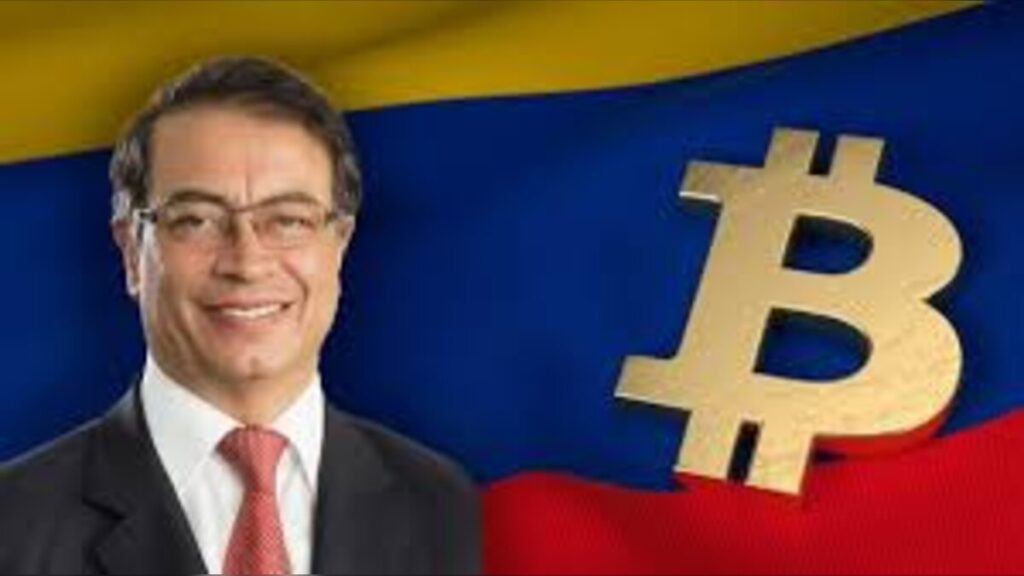
Gustavo Petro has sparked fresh debate by suggesting that Colombia’s Caribbean coast could evolve into a major Bitcoin mining hub.
His pitch isn’t about hype—it’s about electricity, geography, and unused renewable power sitting in plain sight.
In a social media post, he pointed to cities like Barranquilla, Santa Marta, and Riohacha as potential locations where mining farms could operate, powered largely by clean energy resources already available in the region.
Why the Caribbean Coast Is Being Talked About
The idea is tied to Colombia’s energy mix. A large share of the country’s electricity already comes from renewable sources such as hydro, wind, and solar.
That surplus, according to Petro, could be redirected into digital infrastructure instead of going unused.
He also referenced how countries like Paraguay have used hydroelectric power to attract Bitcoin miners, turning excess electricity into exportable digital value.
Similar patterns have been seen in parts of Venezuela as well.
Analysts in the mining sector have long argued that regions with cheap or stranded electricity tend to become attractive hotspots for mining operations—especially as competition for power increases globally.
Indigenous Inclusion in the Proposal
One of the more unusual parts of Petro’s suggestion is the role of the Wayúu people, the largest Indigenous community in the region.
He proposed that they could become co-owners in any future mining development, framing the idea not just as an energy project but also as a social and economic inclusion model.
Environmental Angle Behind the Push
Petro has been consistent in linking crypto mining with environmental responsibility.
His concern is that Bitcoin mining powered by fossil fuels worsens global warming.




By contrast, Colombia’s renewable-heavy grid—estimated at around three-quarters clean energy—could, in theory, make mining less carbon-intensive if properly structured.
Still, experts often caution that even renewable-heavy grids require careful planning, since mining operations can quickly consume large amounts of electricity.
Industry Context and Global Competition
The timing of Petro’s remarks also reflects a broader global shift.
Mining operations in the US and other major hubs are increasingly diversifying into artificial intelligence and high-performance computing, chasing higher margins.
That opens a window for emerging economies with lower energy costs to capture more of the Bitcoin network’s hashrate, similar to what Paraguay has recently achieved after expanding hydro-powered mining activity.
Impact and Consequences
If even partially developed, the idea could reshape how Colombia’s Caribbean region is viewed economically.
It could attract foreign investment into energy and tech infrastructure while creating new revenue streams from otherwise underused electricity.
However, there are trade-offs. Large-scale mining could strain local grids if not carefully managed.
There are also regulatory uncertainties, since Colombia does not yet have a clear national framework for crypto mining operations.
Politically, the proposal also adds pressure as Petro’s presidential term is nearing its end, meaning any long-term plan would depend heavily on the next administration.
What’s next?
Petro’s presidency runs until August, and he is not seeking re-election due to constitutional limits.
That means this idea may not progress far unless it is picked up by future leaders.
Colombia’s upcoming political landscape is still forming, and leading candidates have not taken firm public positions on cryptocurrency or mining policy yet.
For now, the proposal remains more of a strategic vision than a confirmed policy direction.
Summary
Gustavo Petro has proposed turning Colombia’s Caribbean coast into a Bitcoin mining hub powered by renewable energy.
The idea focuses on cities like Barranquilla, Santa Marta, and Riohacha, and includes potential participation from the Wayúu Indigenous community.
While it highlights economic and environmental opportunities, it remains an early-stage vision without formal implementation plans.
Bulleted Takeaways
- Colombia’s president suggests using renewable energy for Bitcoin mining
- Caribbean cities like Barranquilla, Santa Marta, and Riohacha are central to the idea
- Proposal includes possible co-ownership for the Wayúu Indigenous community
- The plan is inspired by mining growth in countries like Paraguay and Venezuela
- Colombia generates a high share of electricity from renewable sources
- No official mining policy, contracts, or timelines have been announced
- Petro’s term ends soon, limiting his ability to implement the proposal
- Future of the plan depends on incoming government decisions

