
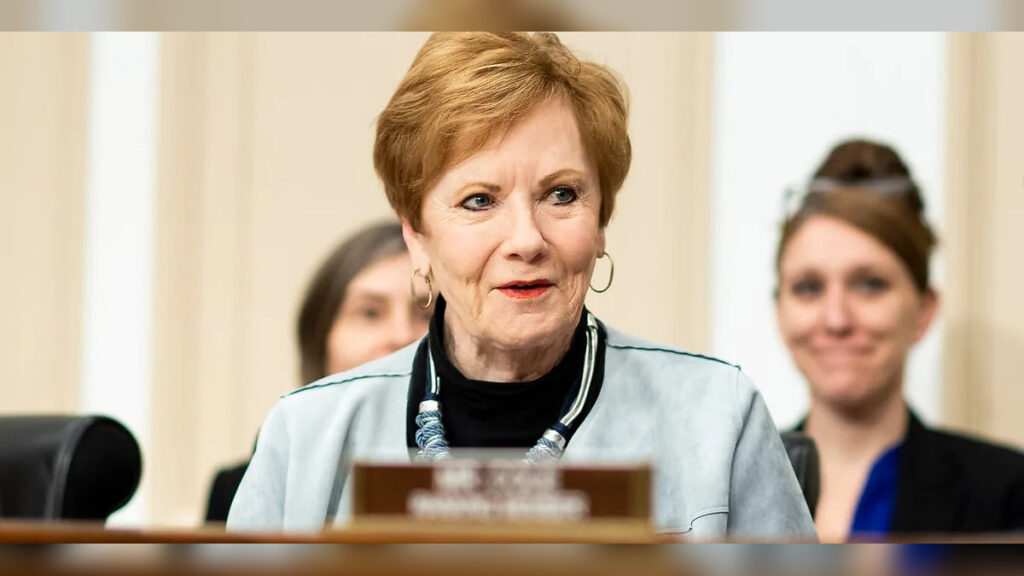
Former Texas Congresswoman Kay Granger, a pioneering Republican politician who broke multiple barriers during her decades in public office, has died at the age of 83.
Her death was confirmed Sunday evening by public officials and family representatives.
According to a spokeswoman speaking on behalf of Granger and her son, the former lawmaker was living in an independent living community at the time of her death.
No official cause of death has been announced.
Health Challenges Became Public in Recent Years
Granger had gradually stepped back from public life after experiencing health problems that affected her ability to travel and perform her congressional duties.
In 2025, her son, Brandon Granger, disclosed that she had been dealing with dementia-related issues during the later part of the previous year.
Earlier, Granger had acknowledged that unforeseen health complications had worsened, making regular trips to Washington, D.C., increasingly difficult.
Despite her absence, she praised her congressional staff for continuing to provide constituent services throughout her final months in office.
Her son also confirmed that she had been residing at Tradition Senior Living in Fort Worth, noting that she lived in the facility’s independent living section rather than its memory care unit.
Congressional Leaders Pay Tribute
U.S. House Speaker Mike Johnson honored Granger’s decades of service, describing her as a dedicated public servant whose career spanned education, business, local government, and nearly three decades in Congress.




Johnson highlighted her groundbreaking achievements, noting that she became the first woman elected mayor of Fort Worth, the first Republican woman from Texas elected to the U.S. House of Representatives, and the first Republican woman to lead the House Appropriations Committee.
He also extended condolences to her family and the Fort Worth community, describing her as a valued friend whose legacy would endure.
Texas Officials Remember a Trailblazer
Texas Senator Ted Cruz also expressed sorrow following news of Granger’s passing, praising her record of historic accomplishments and her commitment to North Texas, the U.S. military, and national defense.
Cruz emphasized that Granger’s career was defined by a series of firsts for women in Republican politics and public service, offering prayers for her family and those mourning her loss.
Distinguished Career in Public Service
Born in Greenville, Texas, Granger graduated from Texas Wesleyan University in 1965 before beginning her professional life as a schoolteacher and businesswoman.
Her political career started with service on the Fort Worth Zoning Commission between 1981 and 1989.
She later joined the Fort Worth City Council before making history in 1991 by becoming the city’s first female mayor, a position she held until 1995.
In January 1997, Granger entered the U.S. House of Representatives, where she represented Texas for nearly 28 years.
During her congressional tenure, she rose to become chair of the influential House Appropriations Committee, another milestone for Republican women.
Retirement Marked the End of a Long Congressional Career
Granger announced in 2023 that she would not seek another term in Congress, officially retiring in January 2025 after citing worsening health concerns.
Throughout her final years in office, she remained respected by colleagues across Texas and Washington.
During her 2020 reelection campaign, she received an endorsement from President Donald Trump, although she had also distinguished herself by being among a small group of House Republicans who opposed Trump’s impeachment.
Honors and Lasting Legacy
Even after leaving office, Granger’s influence continued to be recognized.
In 2025, Fort Worth Inc. named her its Person of the Year in recognition of her groundbreaking leadership and decades of public service.
Granger is survived by her three children and five grandchildren.
Her career remains one of the most significant in Texas political history, remembered for expanding opportunities for women in government while shaping local, state, and national policy over more than three decades.
