
There’s a quiet but noticeable shift happening in global diplomacy.
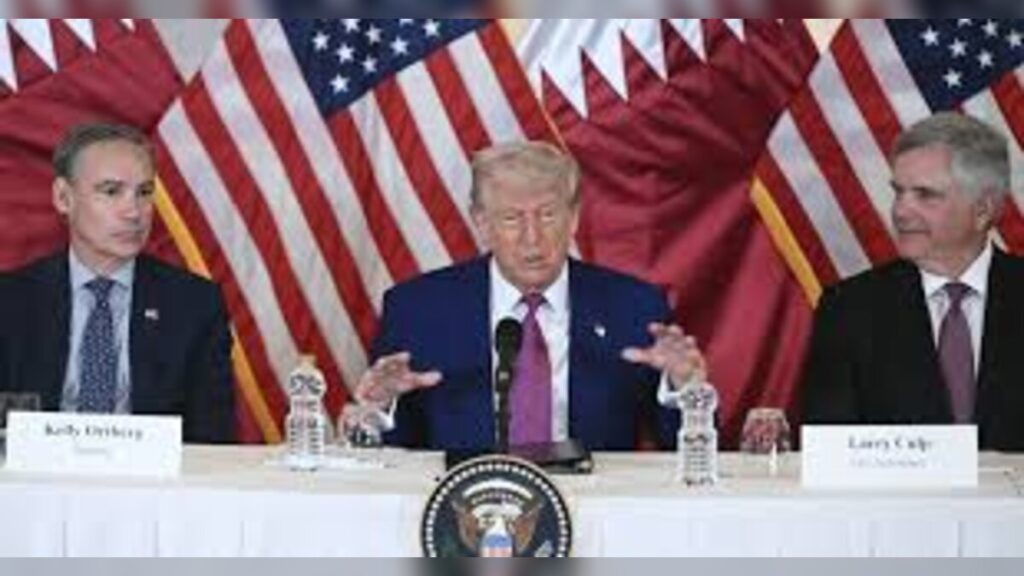
According to Donald Trump, talks between the United States and Iran could restart within days.
Speaking in a recent interview, Trump hinted that both sides may be inching back toward the negotiating table—something that, not long ago, seemed unlikely.
The tone wasn’t overly optimistic, but it suggested movement, which in diplomacy often matters more than certainty.
Pakistan Quietly Steps Into the Spotlight
Interestingly, one of the biggest drivers behind this renewed push isn’t Washington or Tehran—but Pakistan.
Trump specifically pointed to Asim Munir, the country’s field marshal, as playing a key role in encouraging both sides to re-engage.
That’s a notable development. Pakistan has historically maintained relationships with both nations, but stepping into an active mediator role raises its diplomatic profile significantly.
There’s even talk that the next round of discussions could happen in neutral venues like Turkey, Geneva, or Islamabad—where tensions might be easier to manage.
No Date Yet, But Doors Are Open
While there’s no confirmed date, officials suggest the window for talks could be as soon as the end of the week.
Behind the scenes, delegations are reportedly keeping their schedules flexible, leaving room for a last-minute breakthrough.
Still, flexibility doesn’t equal agreement. Sources involved in the process say major differences remain unresolved, and no one is pretending this will be easy.
The Core Issue Still Divides Both Sides
At the heart of the standoff lies one stubborn issue: Iran’s nuclear ambitions.




The United States has made its position clear—it wants control over Iran’s enriched uranium stockpile and guarantees that enrichment activities will stop.
From Washington’s perspective, anything less leaves the door open for future escalation.
Iran, on the other hand, has been unwilling to fully abandon its program, which it insists is for peaceful purposes.
That fundamental disagreement continues to stall progress.
Signs of Progress in Other Areas
Despite the tension, it’s not all deadlock.
Negotiators have reportedly made headway on more technical topics, including:
- Security around the Strait of Hormuz
- Sanctions tied to Iranian oil exports
- Broader regional stability concerns
These smaller wins might not grab headlines, but they often lay the groundwork for bigger agreements later.
Pressure Builds From Multiple Directions
Inside the US administration, figures like JD Vance have made it clear that the next move belongs to Iran.
He suggested that while progress was made in earlier discussions, talks ultimately stalled because Tehran hesitated to commit.
Meanwhile, Israel Katz reinforced a hardline stance from Israel, insisting that removing nuclear material from Iran is essential before any broader resolution can be considered.
Military Planning Continues in the Background
Even as diplomatic channels reopen, military preparations haven’t slowed.
Brad Cooper recently met with senior Israeli officials, including Eyal Zamir, to discuss contingency plans.
That dual-track approach—talking peace while preparing for conflict—is a familiar pattern in high-stakes international disputes.
Impact and Consequences
- Global tension remains high: Even the possibility of talks affects markets and geopolitical calculations
- Energy markets on edge: Any disruption around the Strait of Hormuz could impact global oil supply
- Diplomatic reshuffling: Pakistan’s involvement could shift alliances and influence
- Security concerns persist: Military planning signals that conflict is still a real possibility
- Public perception: Mixed signals from leaders create uncertainty about the true direction of events
What’s Next?
All eyes are now on whether both sides will actually sit down again.
If talks resume, the early focus will likely be on narrowing the biggest gaps—especially around nuclear policy.
Expect more behind-the-scenes negotiations, last-minute venue decisions, and cautious public statements. Even if meetings happen, a final agreement is still a long way off.
Summary
The possibility of renewed talks between the United States and Iran signals a fragile but important opening.
While deep divisions remain—particularly over nuclear issues—there are signs that both sides see value in continuing the conversation.
With Pakistan stepping in as a mediator and military planning continuing in parallel, the situation remains complex, delicate, and far from resolved.
Bulleted Takeaways
- US and Iran may resume talks within days, according to Donald Trump
- Pakistan and Asim Munir are playing a key mediation role
- No official date set, but schedules remain flexible for a meeting
- Nuclear weapons program remains the biggest obstacle
- Some progress has been made on technical and regional issues
- Military coordination between US and Israel is ongoing
- Outcome remains uncertain as diplomacy and defense strategies unfold simultaneously

