
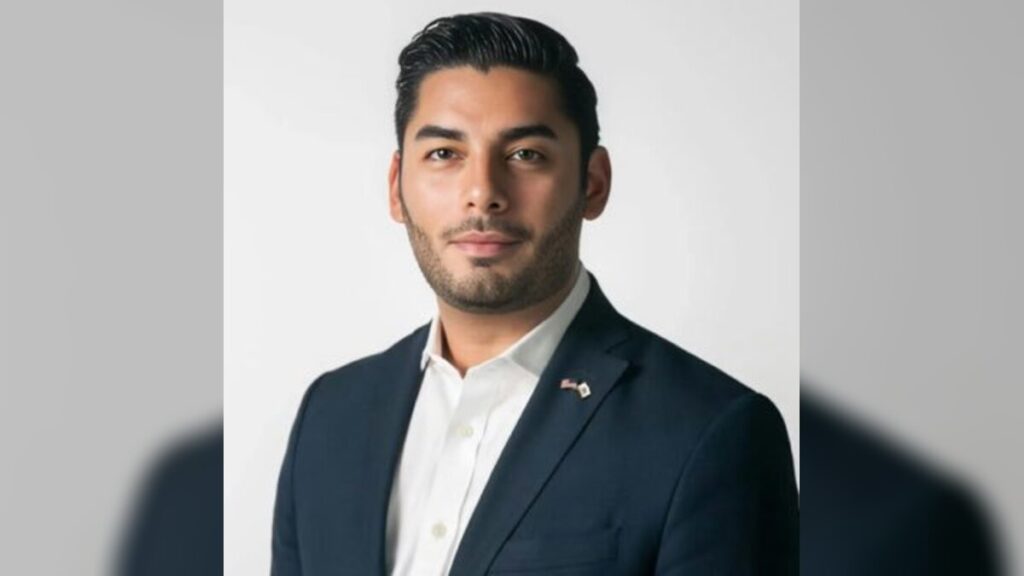
A resurfaced and now-deleted social media post by congressional candidate Ammar Campa-Najjar has triggered fresh political controversy, after critics highlighted his past description of a controversial family figure as a “legend and hero.”
The post has reignited debate about family legacy, political identity, and how candidates are judged in high-stakes U.S. elections.
Who Is at the Center of the Storm?
Ammar Campa-Najjar, a Christian raised in San Diego and currently running for Congress, is also known for his relationship with U.S. Representative Sara Jacobs.
He has previously publicly rejected extremist violence associated with parts of his family history, insisting he does not share those beliefs or values.
The Deleted Post That Sparked Outrage
The controversy stems from a now-deleted online post in which Campa-Najjar referred to his grandfather, Muhammad Youssef al-Najjar, as a “legend and a hero.”
Al-Najjar has been widely described in historical reporting as a senior figure linked to the planning of the 1972 Munich Olympic attack, in which 11 Israeli athletes and coaches were killed by militants.
In the same post, Campa-Najjar also reflected on personal family struggles, including criticism of his father’s career path and emotional references to disappointment within his family.
Political Fallout Over Family Legacy
Critics argue the resurfaced message contradicts Campa-Najjar’s earlier public statements distancing himself from his grandfather’s actions.
Supporters, however, say he should not be politically defined by ancestral ties, especially given his later condemnations of political violence.




The renewed scrutiny has reopened a sensitive debate over inherited identity versus individual accountability.
A Candidate Already Tested in a Bitter Campaign
This is not the first time Campa-Najjar has been pulled into controversy during a congressional race.
In 2018, he ran in a competitive San Diego-area district against former Congressman Duncan Hunter, a Republican who himself faced federal corruption charges involving campaign funds.
During that campaign, Hunter accused Campa-Najjar of being a “national security risk” and questioned his loyalty based on ancestry claims, accusations that drew criticism from religious leaders and civil rights advocates.
Election Result and Aftermath
The race ultimately ended with Hunter winning 54.3% of the vote to Campa-Najjar’s 45.7%, in what was widely viewed as a politically charged contest during a polarized national climate.
Hunter later framed his victory as part of broader Republican alignment during the Trump-era political landscape.
Renewed Scrutiny in a New Political Cycle
Now back in electoral politics, Campa-Najjar is once again facing questions about past statements and online activity.
Critics argue the deleted post raises concerns about judgment and consistency, while supporters insist it is being weaponized to discredit a candidate with a complex family background.
Impact and Consequences
The resurfacing of the post has intensified scrutiny on Campa-Najjar’s campaign and could shape how voters interpret his personal narrative.
It also highlights how historical family ties and digital footprints continue to influence modern political races.
What’s Next?
The controversy is expected to remain part of the campaign conversation as opponents and supporters continue to debate its relevance.
Further statements from Campa-Najjar or his campaign may be required to clarify his position and address voter concerns.
Summary
A deleted post describing a controversial family figure as a “legend and hero” has resurfaced, placing congressional candidate Ammar Campa-Najjar under renewed political scrutiny amid an already sensitive election narrative.
Bulleted Takeaways
- Deleted post resurfaced showing “legend and hero” reference
- Figure referenced is linked historically to 1972 Munich attack claims
- Campa-Najjar is a San Diego congressional candidate and Christian
- He has previously rejected extremist violence tied to family history
- Critics say post undermines his public distancing from grandfather
- Supporters argue candidates shouldn’t be judged by relatives
- Controversy revives tensions from his 2018 congressional race
- Issue now shaping current campaign narrative and voter perception
