
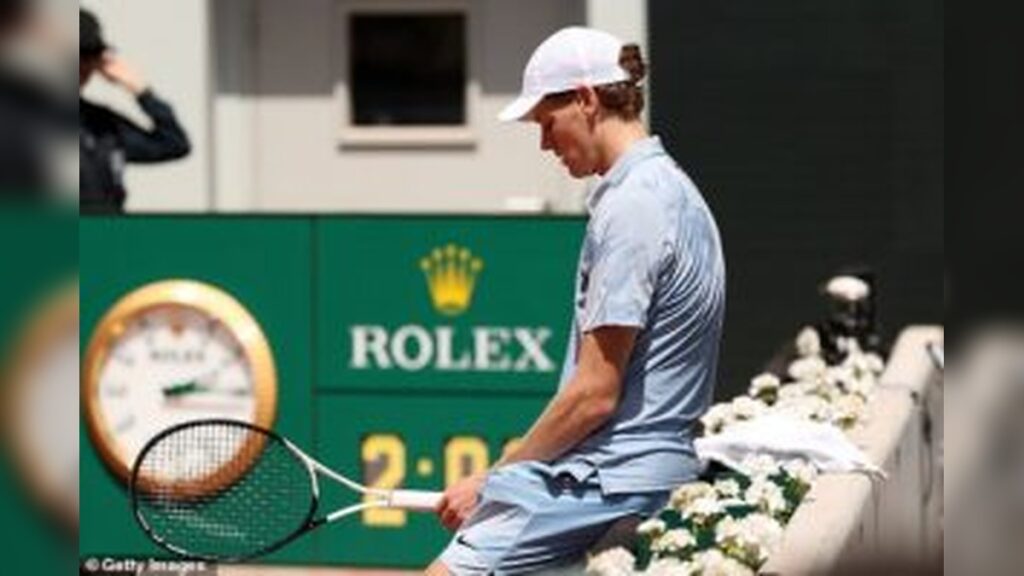
Boris Becker has suggested that Jannik Sinner’s dramatic exit from the French Open was driven less by physical exhaustion and more by psychological strain, after the world number one suffered a stunning five-set defeat to Juan Manuel Cerúndolo in the second round.
Sinner had looked completely in control for large stretches of the match in sweltering Paris conditions, only to suffer one of the most unexpected collapses of his career.
A Commanding Lead That Unravelled
At 24, Jannik Sinner appeared to be cruising into the third round after taking the opening two sets comfortably and even moving within touching distance of victory in the third.
But the match flipped abruptly as temperatures soared beyond 30°C, with Sinner serving for the match before suddenly losing momentum at the crucial moment.
What followed was a dramatic swing: he dropped 18 of the next 20 games and eventually lost in five sets to Juan Manuel Cerúndolo.
The Italian later explained that illness, rather than heat alone, contributed to his breakdown, saying he felt he had “hit a wall” physically during the contest.
Becker Points to Pressure Over Physical Limits
Becker, however, was unconvinced that sickness or weather alone explained the turnaround.
He argued that Sinner’s mindset may have played a decisive role as the match slipped away.
In his view, the collapse pointed to internal pressure rather than external conditions, questioning how much stress Sinner may be placing on himself.
He also noted that Sinner had admitted to sleeping poorly before the match, suggesting nerves and overthinking could have contributed to the fatigue seen on court.
Becker emphasized that elite tennis often comes down to mental resilience in key moments, especially when matches reach tight finishes at Grand Slam level.




Weather, Workload and Growing Fatigue Concerns
Sinner entered the tournament as the standout favourite, especially after a dominant clay-court run in Monte Carlo, Madrid, and Rome.
His 30-match winning streak had positioned him as the man to beat in Paris.
But Becker highlighted the cumulative toll of a packed season, noting that Sinner had been constantly competing across multiple continents since early spring.
In his assessment, that relentless schedule may have left the Italian mentally and physically depleted.
He also pointed to the extreme Paris conditions as a recurring challenge for the world number one, suggesting that hot environments have previously exposed vulnerabilities when matches extend deep into physical territory.
Heated Debate Over Medical Break and Cramp Rules
The match also reignited debate around player welfare and in-match medical intervention.
Former Grand Slam champion Jim Courier criticized the situation, arguing that allowing extended treatment breaks raised fairness concerns for Cerúndolo.
Courier suggested that what appeared to be cramping should not have resulted in procedural pauses, adding that rules should be applied consistently rather than adjusted mid-match.
Under current regulations, players are not permitted to take medical timeouts specifically for cramping, adding further scrutiny to how Sinner’s situation was handled on court.
A Draw Opens for Djokovic as Giants Fall Early
Sinner’s defeat has significantly reshaped the men’s draw at Roland Garros.
With both Sinner and Carlos Alcaraz absent from the latter stages, the path has opened for veteran dominance.
That shift immediately places renewed attention on Novak Djokovic, who now finds himself in a far more favorable position to chase a record-extending 25th Grand Slam title.
The development also marks the first major final picture without either Sinner or Alcaraz since the 2023 US Open, which Djokovic ultimately won.
A Match Defined by Momentum and Collapse
Sinner’s final breakdown came after he lost 15 consecutive points while serving at 5–4 in the third set, a sequence that effectively ended his control of the match.
From there, Cerúndolo capitalized as the momentum completely shifted.
What had begun as a routine victory for the world number one ended instead as one of the tournament’s most striking reversals—fueling debate about pressure, endurance, and the fine margins separating dominance from defeat at the highest level of tennis.

