
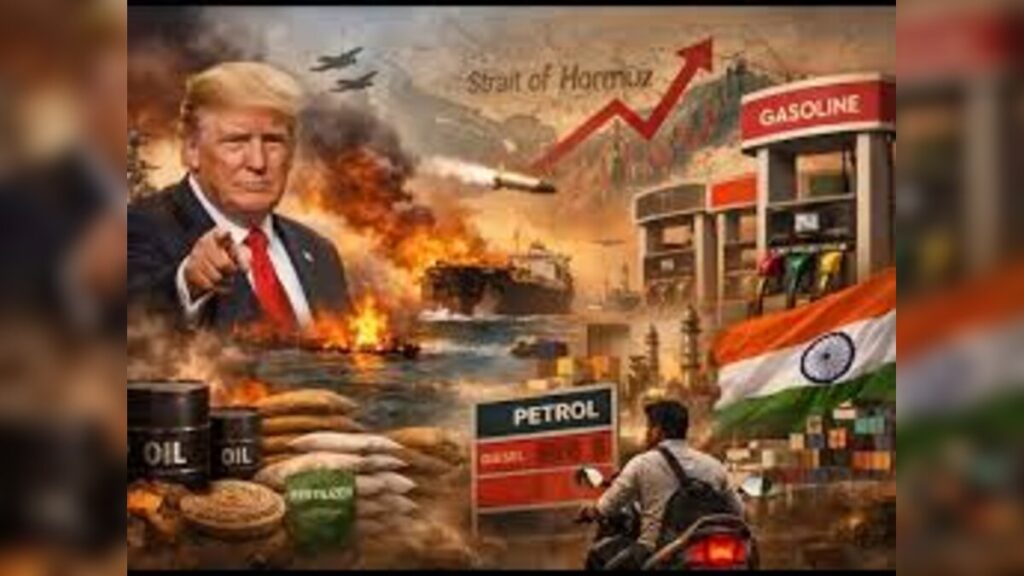
Tensions across the Middle East are once again spilling into global markets, with Saudi Arabia reportedly growing increasingly concerned that Iran could escalate its response to recent US military moves in the region.
The unease follows Donald Trump’s decision to enforce a naval blockade around the Strait of Hormuz, a critical chokepoint for global energy shipments.
According to diplomatic concerns circulating in Gulf capitals, Riyadh fears the conflict could quickly extend beyond Hormuz and ignite disruption in other maritime corridors that keep global trade moving.
Bab al-Mandeb Becomes the Next Pressure Point
One of the biggest worries centers on the Bab al-Mandeb Strait, a narrow but vital waterway linking the Red Sea to the Gulf of Aden.
Through this route flows roughly 10 percent of global trade, including major shipments heading toward Europe via the Suez Canal.
Saudi officials fear that Iran could lean on its Houthi allies in Yemen to destabilize the corridor, effectively turning another global shipping lane into a pressure point.
That possibility has already rattled shipping firms, insurers, and energy traders.
Iranian Officials Add Fuel to the Fire
Warnings from Tehran have only intensified those fears.
Senior Iranian figures, including adviser to the Supreme Leader Ali Akbar Velayati, have suggested that any expansion of US restrictions could be met with retaliatory disruption of key maritime routes.
Similarly, parliament speaker Mohammad Bagher Ghalibaf has publicly questioned the vulnerability of global trade through Bab al-Mandeb, hinting that Iran understands exactly where pressure can be applied.
These statements are being interpreted in Gulf capitals as strategic signaling rather than rhetoric.
Why the Strait Matters So Much
Bab al-Mandeb is only about 18 miles wide at its narrowest point, yet its importance is outsized.
It serves as the gateway between Asian energy exporters and European markets, making it a lifeline for global supply chains.




At its peak in 2023, more than 9 million barrels of oil per day passed through the strait, according to the US Energy Information Administration.
That figure already dropped sharply during earlier Houthi attacks in 2023–24, when disruptions forced major shipping firms like Maersk to reroute vessels around Africa’s Cape of Good Hope.
A full closure would effectively choke one of the world’s busiest energy arteries.
Trump’s Hormuz Blockade Adds New Volatility
The situation escalated further after Trump imposed restrictions on the Strait of Hormuz, another critical passageway for global oil flows.
The move has already shaken energy markets, pushing oil prices above $100 per barrel and driving US gas prices past $4 nationally.
The blockade followed collapsed negotiations involving US and Iranian officials, including talks mediated in Pakistan that failed to produce a long-term nuclear agreement.
With both Hormuz and Bab al-Mandeb now under pressure, global energy stability is facing a rare dual chokepoint risk.
Markets React as Inflation Pressure Builds
The economic ripple effects are already visible.
Rising energy prices have pushed US wholesale inflation higher, complicating the Federal Reserve’s policy decisions.
The latest data shows producer prices rising at their fastest annual pace in more than three years, driven largely by energy costs.
Consumer inflation has also climbed, with gasoline prices leading the surge.
Economists warn that sustained disruption in Middle East shipping routes could deepen inflationary pressures globally, especially in energy-importing economies.
Impact and Consequences
If tensions continue to escalate, the consequences could extend far beyond the region:
- Global oil prices could remain above $100 per barrel
- Shipping costs may spike due to longer rerouted journeys
- Insurance premiums for Red Sea and Gulf routes could surge
- Inflation could intensify across US, Europe, and Asia
- Supply chains for food, fuel, and fertilizers may face delays
At the geopolitical level, the risk is a widening confrontation involving multiple maritime chokepoints, which would mark a significant escalation in global energy security risks.
What’s Next?
Diplomatic efforts are reportedly being revived, with Gulf states pushing both Washington and Tehran back toward negotiations.
There are indications that talks could resume in Pakistan later this week, although trust between the parties remains fragile.
For now, markets are watching three key developments:
- Whether the Hormuz restrictions are eased or expanded
- Iran’s next strategic response in the Red Sea region
- Stability of shipping traffic through Bab al-Mandeb
Any escalation in any of these areas could trigger immediate global market reactions.
Summary
Saudi Arabia is increasingly alarmed that tensions triggered by US actions in the Strait of Hormuz could spill into the Bab al-Mandeb Strait, threatening two of the world’s most important shipping corridors.
With Iran issuing warnings and global markets already reacting, fears of a broader energy and trade shock are rising.
Bulleted Takeaways
- Saudi Arabia fears Iran may expand retaliation beyond the Strait of Hormuz
- Bab al-Mandeb Strait seen as potential second disruption point
- Iran officials warned US actions could destabilize global trade routes
- Trump’s Hormuz blockade has already pushed oil above $100 per barrel
- Shipping disruptions could worsen inflation worldwide
- Past Houthi attacks already reduced Red Sea oil flows significantly
- Diplomatic talks may resume, but tensions remain extremely high

