
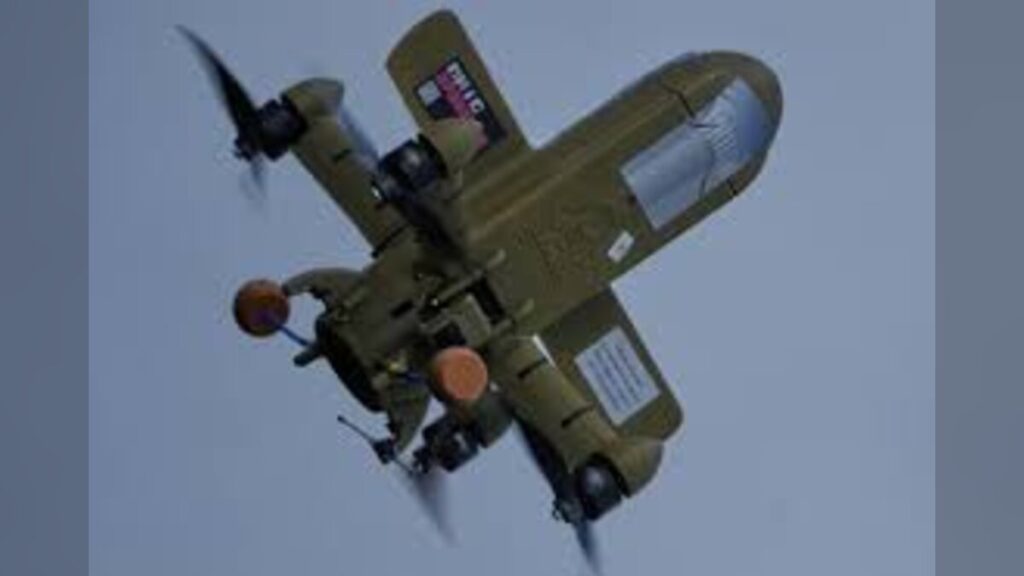
War in Ukraine is no longer just about tanks, trenches, and infantry advances.
It is increasingly becoming a test lab for machines.
On April 13, Ukrainian President Volodymyr Zelenskyy revealed a striking claim: Ukrainian forces had, for the first time in this war, captured an enemy position using only unmanned systems—no soldiers on the ground.
That means drones in the air and robotic vehicles on land did what once required entire infantry units.
According to the statement, the operation ended with enemy troops surrendering, while Ukrainian forces suffered no casualties.
How Ukraine Turned Necessity Into Innovation
Ukraine’s shift toward unmanned warfare didn’t happen by choice—it happened out of necessity.
Facing a much larger military opponent in Russia, Ukraine had to rethink how to hold a long, stretched frontline with limited manpower.
Drones became the first big breakthrough. Small aerial systems started out as surveillance tools, then quickly evolved into strike weapons and frontline support units.
Over time, Ukraine didn’t just use drones—it built an entire military ecosystem around them.
What’s happening now is the next stage: combining aerial drones with ground-based robotic platforms that can fight, transport supplies, and even evacuate wounded soldiers.
Ground Robots Enter the Frontline
The newest development is the use of unmanned ground vehicles—small robotic systems designed to operate in high-risk zones.
These machines are being used for several roles:
- Delivering ammunition and supplies under fire
- Scouting minefields and dangerous terrain
- Supporting infantry positions remotely
- Evacuating injured soldiers from exposed areas
Systems with names like Ratel, TerMIT, and others have reportedly already completed tens of thousands of missions within months, according to Ukrainian military leadership.
In simple terms, these robots are replacing humans in the most dangerous tasks—where survival chances are lowest.
A War Where Machines Do the Fighting
Modern battlefield conditions in Ukraine have made traditional combat extremely risky.
Surveillance drones can spot movement instantly, and loitering munitions can strike within seconds.
As a result, unmanned systems are no longer “support tools”—they are becoming core combat units.
This includes:




- FPV attack drones used for precision strikes
- Long-range unmanned weapons capable of hitting targets far behind the front
- Naval drones operating in the Black Sea
Ukraine’s leadership has even suggested its systems can reach targets up to roughly 1,750 km away, showing how rapidly the technology is evolving.
Lessons From the Black Sea and Beyond
Ukraine’s innovation is not limited to land warfare.
It has also reshaped naval conflict in the Black Sea.
Unmanned naval drones such as Sea Baby and Magura have been used to challenge a traditionally stronger fleet presence.
These systems are designed to strike ships, disrupt logistics, and operate without risking naval crews.
This has made Ukraine one of the most closely watched military innovators in modern maritime warfare.
Why Israel Is Part of the Same Story
Ukraine is not alone in this technological shift.
Another key reference point is Israel, which has spent decades developing unmanned systems and precision strike technologies.
Both countries show how modern conflict is evolving:
- Smaller, mobile drones replacing large weapons platforms
- Increased use of loitering munitions
- Heavy reliance on real-time battlefield intelligence
However, the contexts differ. Israel often faces irregular warfare against non-state groups, while Ukraine is engaged in a large-scale conventional war against a state military force.
Still, both environments push innovation forward at rapid speed.
The Bigger Picture: A Military Revolution in Real Time
What is happening in Ukraine is not just battlefield adaptation—it is a structural shift in warfare.
Defense analysts note that Ukraine entered the war with a relatively strong industrial base and quickly adapted it for mass production of unmanned systems.
Unlike peacetime development cycles that take years, Ukraine is iterating weapons in real time under combat pressure.
That has led to faster deployment, faster upgrades, and faster experimentation than almost anywhere else in the world.
Impact and Consequences
The rise of unmanned warfare is already reshaping military strategy worldwide.
For Ukraine, it reduces soldier casualties and extends operational reach.
For adversaries, it increases unpredictability and forces constant adaptation.
Globally, it signals a shift where wars may increasingly be fought by machines first, with humans supervising rather than directly engaging.
It also raises new ethical and legal questions about autonomous systems making battlefield decisions.
What’s Next?
The next phase is likely integration. Ukraine is expected to link drones, ground robots, and naval systems into unified battlefield networks where machines coordinate in real time.
There is also growing interest in scaling production, improving autonomy, and expanding export potential of these systems once the war stabilizes.
At the same time, other militaries are watching closely—and rapidly developing their own versions of similar technologies.
Summary
Ukraine is transforming warfare through rapid adoption of drones and robotic systems across air, land, and sea.
A reported unmanned-only assault marks a symbolic milestone in this shift.
Driven by necessity, the country has built one of the world’s most advanced battlefield drone ecosystems while reshaping modern military doctrine in real time.
Bulleted Takeaways
- Ukraine claims first-ever battlefield capture using only unmanned systems
- President Volodymyr Zelenskyy highlighted major advances in drone warfare
- Ground robots now perform logistics, evacuation, and combat support roles
- Ukrainian systems reportedly completed tens of thousands of missions in months
- Naval drones are reshaping conflict in the Black Sea
- Long-range drones may reach targets up to 1,750 km away
- Israel and Ukraine are both accelerating unmanned warfare innovation
- Warfare is shifting toward machine-driven operations with reduced human exposure

