
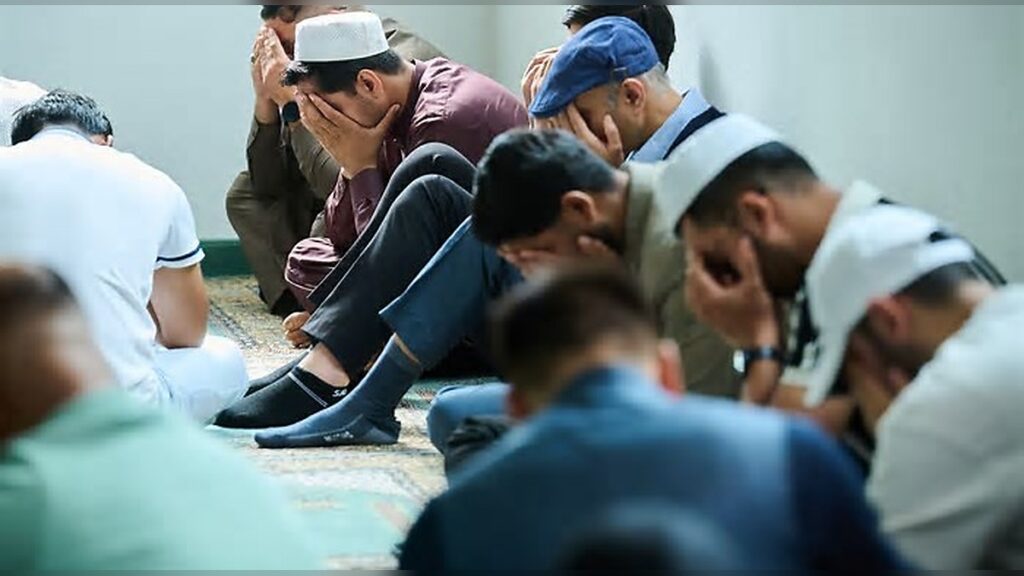
A new debate over religion, identity, and public space is unfolding in Denmark after the country’s immigration minister announced plans to explore whether the Islamic call to prayer could be prohibited across the nation.
The proposal has reignited discussions about the place of religious expression in Danish society and is expected to spark both political controversy and legal scrutiny in the months ahead.
Immigration Minister Says Call to Prayer Does Not Belong in Denmark
Danish Immigration Minister Morten Bødskov has said the government will reopen an investigation into the possibility of banning the Adhan, the Islamic call to prayer that is traditionally broadcast from mosques several times a day.
Speaking to Danish news agency Ritzau, Bødskov argued that public calls to prayer represent a growing form of what he described as “Islamisation” in public life.
He stated that the practice should not be audible across Danish communities and insisted that Denmark should maintain a distinctly Danish public atmosphere.
According to the minister, residents should not feel as though they have entered “a suburb of Islamabad” while walking through Danish towns and cities.
Third Attempt to Create a Legal Framework
The latest initiative marks the third effort by a Danish immigration minister to establish a legal basis for restricting or banning the practice nationwide.
Previous attempts were launched in 2020 and again in 2025, but neither resulted in a national prohibition.
This time, officials intend to examine whether a ban could be introduced without violating constitutional protections that guarantee freedom of religion and worship.
Existing Restrictions Already Limit Broadcasts
Although Denmark does not currently have a nationwide ban, some municipalities already impose restrictions that make public calls to prayer difficult.
In the capital, Copenhagen, local noise regulations effectively prevent mosques from broadcasting the Adhan through loudspeakers.



As a result, outdoor calls to prayer are already uncommon in several areas.
One notable example is the Grand Mosque of Copenhagen, which does not conduct outdoor calls to prayer under an arrangement with local authorities.
Debate Emerges Amid Tough Immigration Policies
The proposal arrives as Denmark continues to enforce some of Europe’s most restrictive immigration measures under Prime Minister Mette Frederiksen.
Over recent years, the government has introduced policies aimed at encouraging integration and limiting migration.
Among the most controversial are so-called “ghetto” laws, which allow authorities to intervene in neighborhoods considered to have high concentrations of non-Western residents.
Denmark has also attracted international attention for policies requiring some asylum seekers to contribute financially toward their accommodation costs by surrendering valuables above certain thresholds.
During the 2015 migration crisis, the country accepted significantly fewer asylum seekers than several neighboring European nations.
Legal Challenges Could Follow Any Ban
Legal experts expect that any nationwide prohibition on the Islamic call to prayer would likely face court challenges.
Denmark’s constitution protects public worship and religious freedom, although the country already places restrictions on activities such as anti-democratic preaching and support for organizations that have been banned by authorities.
The government investigation will therefore focus on whether a ban could withstand constitutional scrutiny while balancing concerns about public order and noise.
Similar Restrictions Exist Elsewhere in Europe
Denmark would not be alone in regulating mosque loudspeaker broadcasts if additional restrictions were introduced.
Several European countries, including United Kingdom and Germany, already regulate when calls to prayer may be broadcast and how loud they can be, often with the goal of minimizing disturbance to nearby residents.
These measures generally focus on noise control rather than outright bans.
Muslim Community Remains a Small but Significant Minority
Denmark is home to an estimated 270,000 Muslims within a national population of approximately six million people.
The country is believed to have around 100 mosques, many of which operate without broadcasting outdoor calls to prayer.
As the government revisits the issue, the debate is likely to raise broader questions about religious freedom, cultural identity, integration, and the limits of public religious expression in modern Danish society.
