
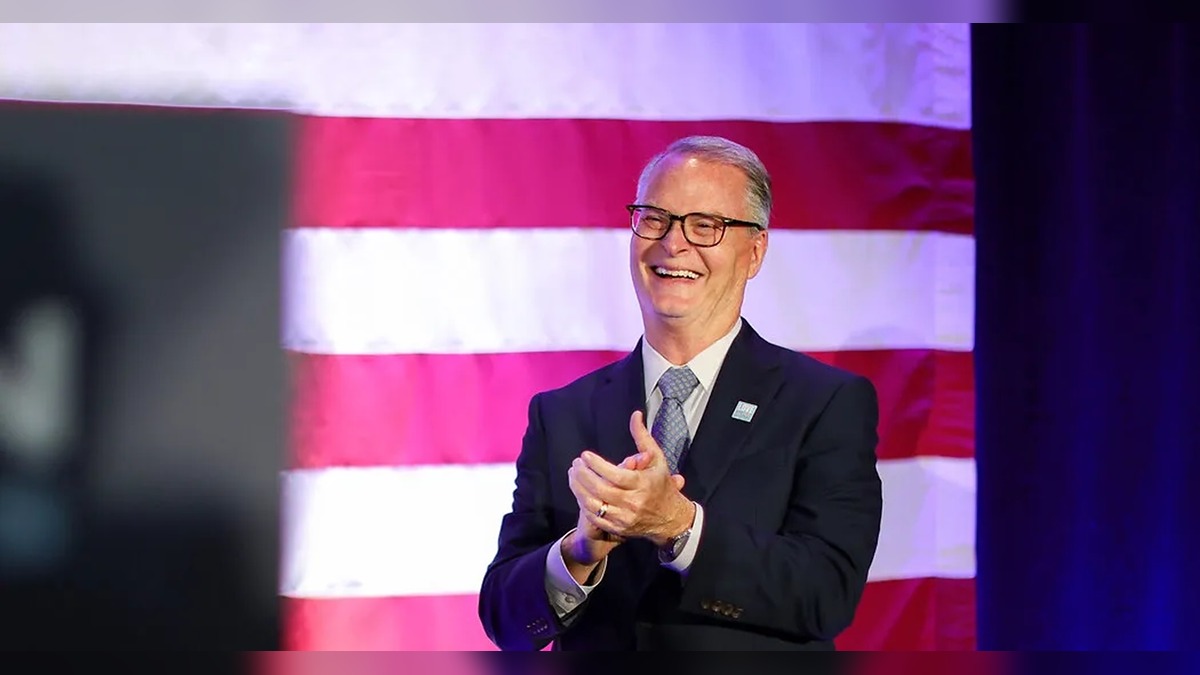
Adam Hamilton has secured a historic victory in Kansas, becoming the first Democrat elected to the U.S. Senate from the state since 1932.
His election ends a nearly century-long period of Republican dominance in the state’s Senate representation.
However, Hamilton said his victory was driven less by party loyalty and more by voters‘ dissatisfaction with the state of American politics.
Speaking to NPR’s Michel Martin, Hamilton said concerns about the economy, international affairs and the conduct of political leaders played important roles in shaping the election outcome.
Rising Costs and Iran War Influenced Voters
Hamilton identified increasing living expenses, the introduction of tariffs and the ongoing war in Iran as some of the major issues that influenced voters’ decisions.
He also pointed to growing frustration with the political atmosphere in Washington, saying many constituents were unhappy with the way the government was operating.




According to Hamilton, these concerns extended beyond traditional party divisions, with voters increasingly questioning the tone and conduct of political leadership.
Republican Voters Also Backed Hamilton
The newly elected senator described encounters with voters whose political histories demonstrated the extent of dissatisfaction with Washington.
He recalled speaking with a Republican who had participated in 46 elections without ever voting for a Democratic candidate.
However, the voter decided to support Hamilton, citing what he considered cruelty and a lack of decency in Washington.
Hamilton said such conversations reflected the broader concerns that contributed to his victory.
Hamilton Promises Cooperation With Republican Senator
Despite his historic Democratic victory, Hamilton said his approach to the Senate would focus on cooperation rather than increasing partisan divisions.
He specifically expressed his intention to establish a strong working relationship with Kansas Republican Senator Jerry Moran.
Hamilton said he wanted to become Moran’s “best friend in Washington,” highlighting his commitment to working across party lines.
His remarks indicate that he intends to prioritise bipartisan relationships as he takes up the Senate seat previously held by a Republican.
