
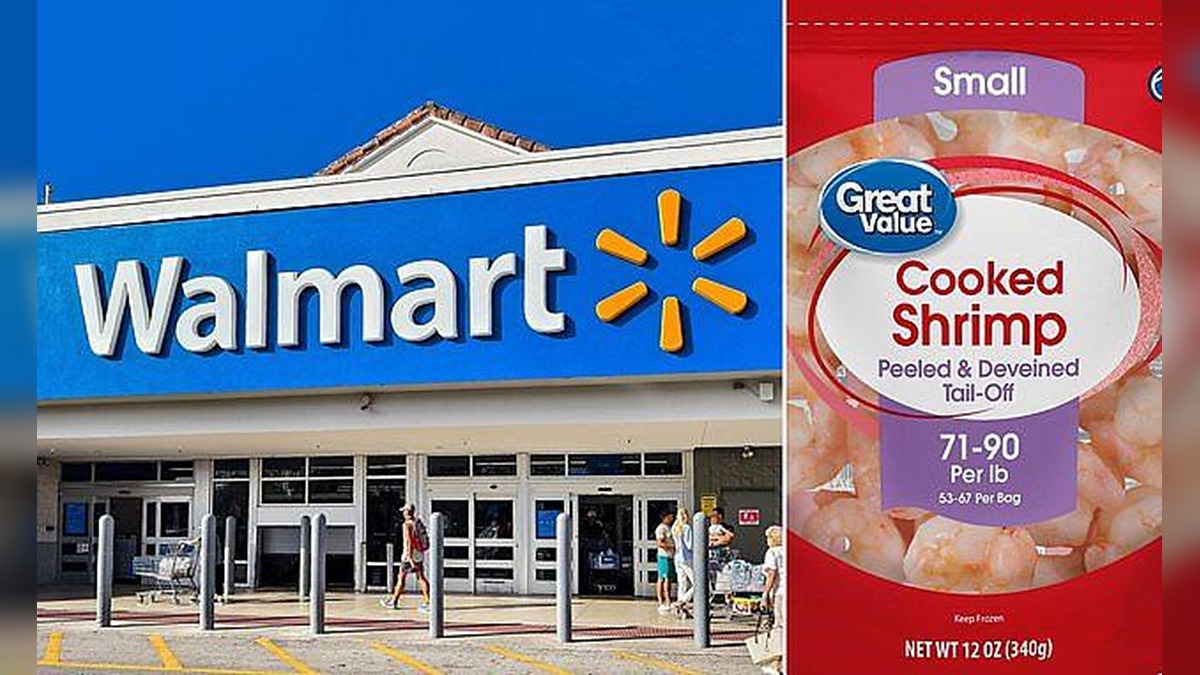
Walmart is facing a proposed class-action lawsuit over allegations that its Great Value frozen shrimp products contain less seafood than the quantities stated on their packaging.
The case was brought by Illinois resident Elijah Baptist, who claims that some bags contain up to 11 per cent less shrimp than advertised once the protective ice coating is removed.
Baptist alleges that he purchased the frozen shrimp regularly for approximately three years before discovering the alleged weight discrepancy.
His concerns reportedly intensified in June when he bought the product for a party he was hosting.
Lawsuit Challenges the Weight of Walmart’s Frozen Shrimp
The complaint focuses on Walmart’s jumbo bags of raw, tail-on Great Value shrimp, which reportedly sell for approximately $16 for two pounds.
The packaging advertises between 21 and 25 shrimp per pound.
However, Baptist claims that a substantial portion of the stated weight comes from the ice coating surrounding the seafood rather than the shrimp itself.
According to the lawsuit, the protective glaze accounts for approximately 10 to 11 per cent of the product’s advertised weight.
The complaint argues that customers are effectively paying for frozen water instead of receiving the full quantity of seafood they expect when purchasing the product.
FDA Rules on Ice Coatings Feature in the Dispute
The lawsuit centres on a seafood preservation technique known as glazing, in which manufacturers apply a thin layer of ice to frozen shrimp to protect the product from freezer burn.



Although the practice is permitted, the US Food and Drug Administration requires that the weight of the protective ice coating be excluded when calculating the net weight of seafood.
Baptist alleges that Walmart’s Great Value shrimp does not comply with these requirements because the advertised weight includes the ice coating.
The complaint estimates that someone purchasing six pounds of the shrimp for a seafood meal serving 10 people could receive approximately 15 fewer shrimp than expected, representing about $5 worth of missing seafood.
Baptist maintains that he would not have purchased the product, or would have paid less for it, if he had known the actual quantity of shrimp contained in the bags.
Walmart Responds to Allegations
Walmart has disputed suggestions that it is deliberately providing customers with less seafood than advertised.
A company spokesperson told the Daily Mail that Walmart has procedures designed to ensure suppliers provide products with accurate labelling.
The spokesperson added that the retailer was reviewing the complaint and would respond to the allegations in court.
Previous $45 Million Settlement Involved Food Weight Claims
The latest lawsuit comes after Walmart previously faced another class-action case concerning the advertised weights of certain food products.
In that case, the retailer agreed to pay $45 million to settle allegations involving inaccurate weights on meat, poultry and seafood products.
Walmart did not admit wrongdoing as part of that settlement.
Plaintiff Seeks Compensation and Changes to Walmart’s Practices
Baptist is seeking to represent Illinois consumers who purchased the Great Value frozen shrimp products covered by the complaint.
The lawsuit requests damages, restitution and a court order requiring Walmart to change its practices concerning the sale and labelling of the shrimp.
He has also requested a jury trial.
The allegations have not been established in court, and there has been no finding that Walmart intentionally included the weight of excess ice in the advertised quantities of its frozen shrimp.
