
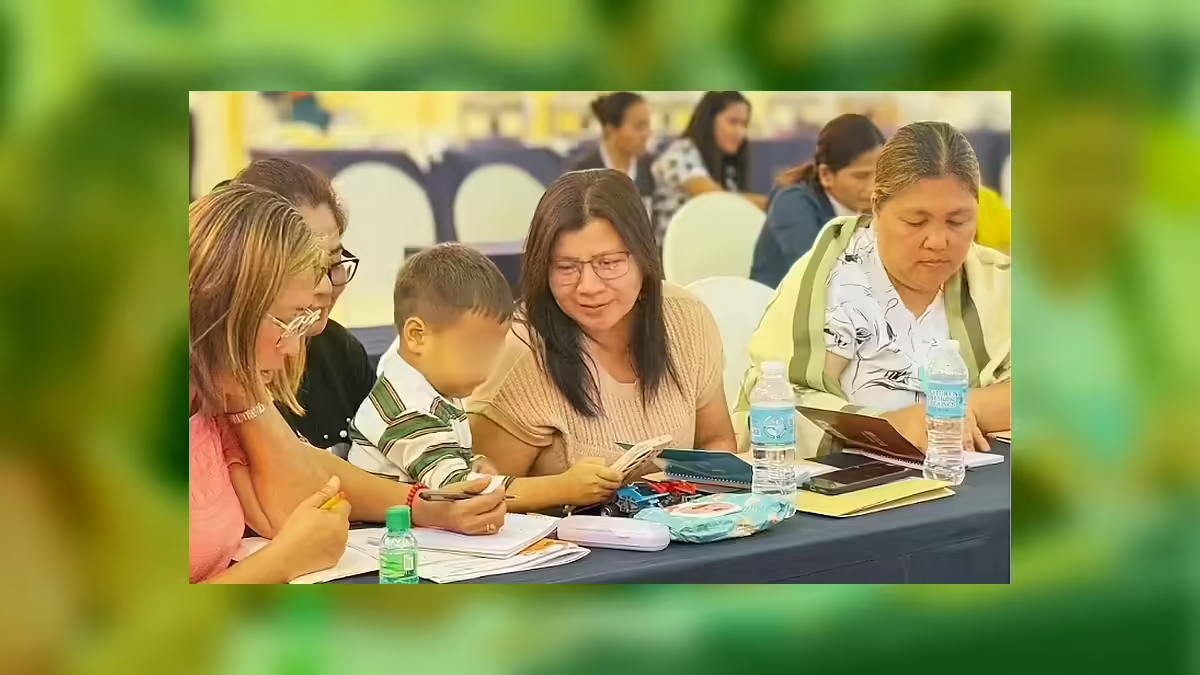
The Regional Alternative Child Care Office (RACCO)-Davao is appealing for more residents to become licensed foster parents as the region faces a shortage of available caregivers for children in the foster care system.
Current figures show that 56 licensed foster parents are caring for 60 children. The office has also highlighted the need for more families willing to support children with special needs.
Kenneth Joyce Cordova, a registered social worker and Social Welfare Officer I in RACCO-Davao’s Family Development Section, made the appeal during the “Serbisyo Dabawenyo” programme broadcast on October 26.
Government Provides Monthly Financial Assistance
Licensed foster parents receive a government subsidy to help cover the needs of children placed in their care.
The monthly allowance is P8,000 for children without special needs and P10,000 for infants and children with disabilities or other special needs. The funds are deposited directly into the foster parent’s account.
Foster parents must submit monthly liquidation reports to RACCO-Davao to account for how the money is spent. Cordova said foster care is a voluntary service and the subsidy is intended to meet the child’s needs rather than provide income for the foster family.
Financial assistance generally continues until a child turns 18. For children with special needs, support may be extended beyond that age, depending on their individual circumstances.
Foster Care Provides Temporary Support for Vulnerable Children
The programme covers minors who have been abandoned, neglected, abused or exploited, as well as children whose parents have died or are temporarily unable to provide financial or emotional support.
Eligible children range from newborns and foundlings to teenagers aged 17.
RACCO-Davao prioritises placement with licensed foster families rather than residential care facilities, allowing children to receive individual attention in a family environment.



Foster care differs from adoption because it provides temporary parental care without establishing a permanent legal parent-child relationship.
Young People Receive Support to Prepare for Independent Living
As children in foster care approach adulthood, they receive assistance to prepare for life independently.
Preparation may include counselling and vocational training through programmes offered by the Technical Education and Skills Development Authority (TESDA).
The level and duration of support depend on the child’s circumstances, with additional assistance potentially available for those with special needs.
Single Applicants and LGBTQIA+ Individuals Can Apply
RACCO-Davao accepts applications from a broad range of prospective foster parents, including single individuals and members of the LGBTQIA+ community. Under the programme’s guidelines, eligibility is not restricted by marital or civil status.
Applicants must generally be at least 16 years older than the child they intend to foster, although an exception applies to relatives.
Families are normally limited to three foster children. Exceptions may be considered when siblings need to remain together, subject to a social worker’s assessment.
Households with children aged 10 or older must also obtain their consent before a foster child is placed with the family.
Applications Undergo Professional Assessment
All applications are reviewed and approved by the Regional Child Placement Committee, which consists of five independent professionals. The committee also oversees the process of matching children with suitable foster families.
Interested residents can register through RACCO-Davao’s official Facebook page and are required to attend an adoption and foster care forum.
In-person forums take place every third Wednesday of the month, while online sessions are held on the last Friday of each month.
Residents of Davao City may also seek assistance through the City Social Welfare and Development Office (CSWDO). Applicants living in other parts of the region can coordinate with their respective local government units.
Programme Operates Under the Foster Care Act of 2012
The foster care programme is governed by Republic Act No. 10165, known as the Foster Care Act of 2012.
RACCO-Davao is encouraging more eligible residents to apply as it seeks to increase the number of licensed foster parents available to care for vulnerable children, particularly those with special needs.

