
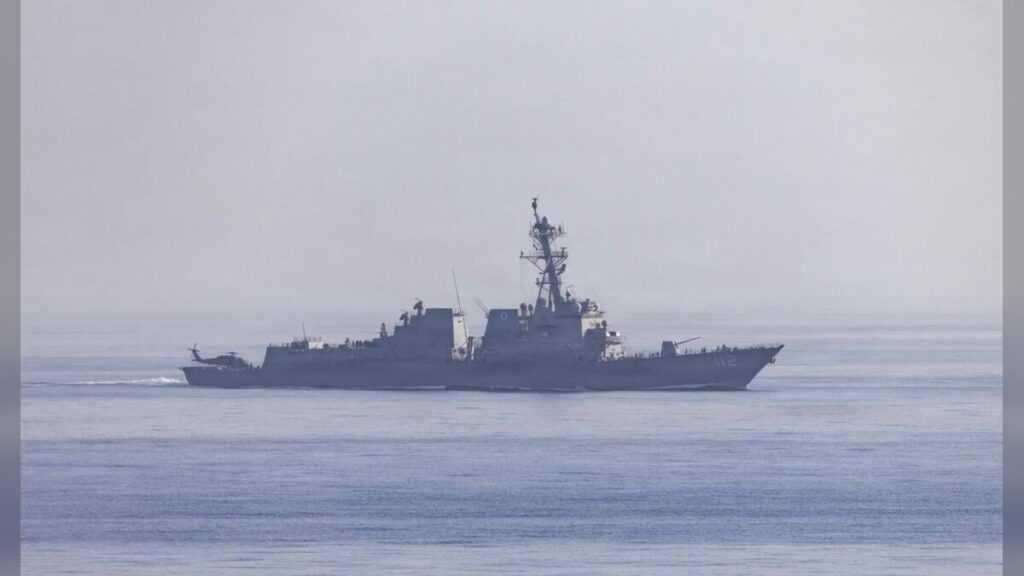
The United States has widened the scope of its blockade enforcement against Iran, warning that it may stop and search a broader range of ships suspected of carrying banned goods.
A new notice to mariners issued by U.S. Central Command says American forces can inspect Iranian vessels, sanctioned ships, and any other vessel believed to be transporting contraband linked to Iran.
Washington Defines What It Sees as Contraband
Under the updated guidance, outright contraband includes items such as weapons, ammunition, explosives, and military equipment.
The notice also outlines what it calls “conditional contraband” — goods that may support Iran’s military operations even if they are not weapons themselves. That category includes crude oil, nuclear material, metals, and machinery.
The expanded definition signals that the U.S. is not just targeting direct arms shipments, but also materials and cargo it believes could strengthen Iran’s broader war-making capacity.
U.S. Says It Will Chase Ships Beyond Its Immediate Zone
Speaking to reporters on Thursday, Chairman of the Joint Chiefs of Staff Gen. Dan Caine said the U.S. is prepared to pursue vessels even outside U.S. Central Command’s direct response area.
That suggests the blockade is being enforced with a wider reach than just waters immediately surrounding Iran.
The message appears designed to show that Washington is willing to extend its maritime pressure campaign wherever it believes suspicious shipping activity is taking place.
Oil Sanctions Add to the Pressure
The tougher blockade posture comes as a U.S. waiver tied to Russian oil sanctions expired on Thursday, while a similar waiver for Iranian oil is due to run out on Sunday.
Those overlapping deadlines could add further strain to global shipping and energy markets, particularly as enforcement intensifies.
The timing also raises the stakes for vessels moving through the region, especially those linked to sanctioned oil flows.
Shipping Traffic in Hormuz Shows Signs of Disruption
Analysts say traffic through the Strait of Hormuz dropped after the U.S. announced the blockade on Monday.
Richard Meade of Lloyd’s List said mainstream shipping companies have largely been left watching developments closely, while sanctioned and shadow-fleet vessels have been testing how far the U.S. is willing to go to enforce the new restrictions.
Even so, the picture remains mixed. Some Iranian-linked ships reportedly paused or reversed course, but others still passed through the Strait and reached Iranian ports.
Conflicting Figures Emerge Over Enforcement
Lloyd’s List reported that eight ships crossed the blockade and were sailing through the Strait of Hormuz toward Iranian ports. At the same time, Gen. Caine said 13 ships had turned around to avoid the blockade.




Separate Lloyd’s tracking found seven ships reversed course after the blockade was announced, though four of those later continued their voyages. That suggests the blockade is influencing shipping decisions, but not stopping all movement entirely.
Shadow Fleet Activity Remains a Major Concern
Shipping intelligence data points to a large number of shadow-fleet vessels still operating in key areas linked to Iranian crude transfers.
According to Lloyd’s List Intelligence, 109 such ships were located in the Gulf of Oman and another 77 were off the coast of Malaysia. Both areas are known as hubs for the transfer of Iranian oil.
These vessels often use deceptive tactics to avoid detection, making them especially difficult to monitor and track.
More Ships Are Heading West Than East
Maritime analysts say shipping patterns have shifted since the blockade began. This week, more vessels have been traveling westbound than eastbound, a reversal of the usual pattern seen since the conflict started.
The Joint Maritime Information Center reported that six vessels — including two cargo ships and four tankers — passed through the Strait on Wednesday, with four heading west and two traveling east.
Lloyd’s List Intelligence tracked 27 transits since Monday, most of them westbound, and said 15 of those used Iranian routes.
Some Vessels Are Trying to Mask Their Movements
Analysts also say some ships are now attempting to disguise their destinations through automatic identification system spoofing.
Instead of naming a precise port, some vessels are reportedly listing vague destinations such as “PG port” or simply “Persian Gulf port.”
Even so, experts say this tactic is unlikely to seriously weaken CENTCOM’s ability to enforce the blockade.
Oil Market Pressure Continues to Build
The developments are being closely watched because the Strait of Hormuz carries around one-fifth of the world’s oil supply. Brent crude was trading at $114.93 a barrel on Thursday, up sharply from $71.32 on Feb. 27.
That price jump reflects mounting fears that prolonged maritime disruption in the Gulf could have major consequences for global energy flows.
Impact and Consequences
The expanded U.S. search authority could significantly raise tension across one of the world’s most important shipping corridors.
By broadening the definition of contraband and signaling a willingness to pursue ships beyond its immediate zone, Washington is increasing both the reach and the risk of the blockade.
For the global economy, the consequences could be serious. Higher shipping uncertainty, disrupted oil flows, and rising energy prices may affect not only the Gulf region but also markets far beyond it.
The shadow fleet’s continued movement also suggests enforcement will remain a difficult and fast-evolving challenge.
What’s next?
The immediate focus will be on whether more ships try to test the blockade and how aggressively the U.S. acts on its expanded inspection powers.
Attention will also turn to the expiration of the Iranian oil waiver on Sunday, which could tighten pressure even further.
Shipping analysts, traders, and governments will be watching closely to see whether vessel traffic continues to decline, whether more ships reverse course, and whether the standoff leads to a wider disruption in the Strait of Hormuz.
Summary
The U.S. has widened its blockade enforcement against Iran by reserving the right to search Iranian, sanctioned, and suspicious vessels carrying both direct and indirect military-related cargo.
The move comes as shipping patterns shift in the Strait of Hormuz, shadow-fleet activity remains high, and oil prices continue to rise.
While some ships have turned back, others are still reaching Iranian ports, showing that the blockade is having a major impact without completely shutting maritime traffic down.
Bulleted Takeaways:
- The U.S. says it can now search Iranian vessels, sanctioned ships, and other suspicious vessels.
- Contraband includes weapons, ammunition, explosives, and military equipment.
- “Conditional contraband” includes crude oil, nuclear material, metals, and machinery.
- Gen. Dan Caine said the U.S. may pursue ships outside CENTCOM’s immediate response area.
- Traffic through the Strait of Hormuz fell after the blockade was announced.
- Lloyd’s List reported that some Iranian-linked ships still crossed the blockade and reached Iranian ports.
- U.S. officials said 13 ships turned around to avoid the blockade.
- Shadow-fleet vessels remain active in the Gulf of Oman and near Malaysia.
- Analysts say more ships are now traveling westbound than eastbound through the Strait.
- Brent crude oil has climbed sharply as tensions around Hormuz continue to grow.
