
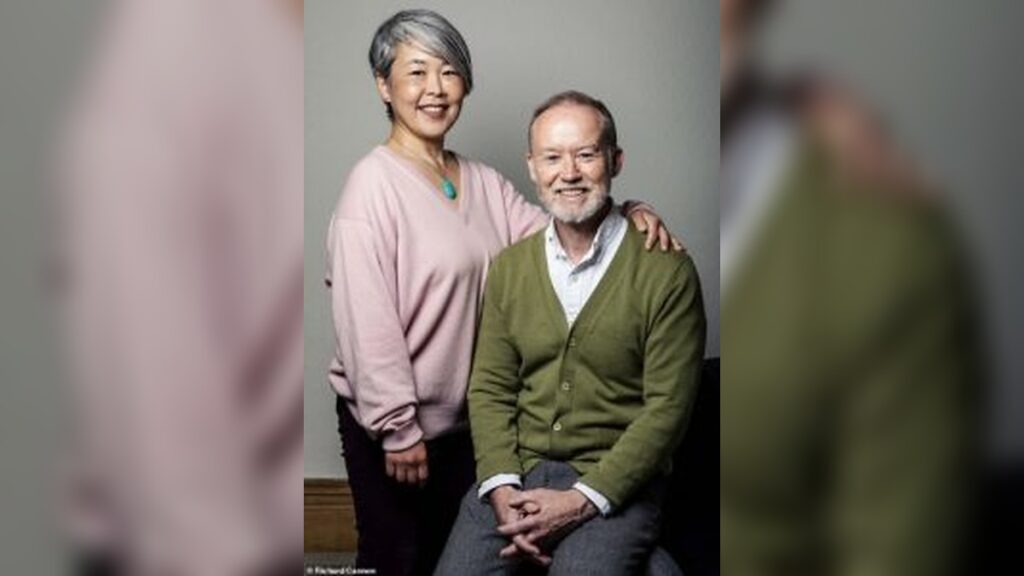
A family celebration in Tokyo was meant to mark a career-defining achievement.
Surrounded by his wife and two young daughters, Michael Handford had just been promoted to professor of intercultural communication at the University of Tokyo, a distinction he attained at the age of 42 after years of academic work.
As candles flickered atop a specially made cake, his children sang a playful version of a congratulatory song in honor of his new title.
Yet beneath the joyful atmosphere, Handford was carrying a secret that transformed the occasion into something far more complex.
Only days earlier, doctors had delivered a shocking diagnosis: stage 4 throat cancer.
A Healthy Lifestyle Made the News Hard to Believe
The diagnosis seemed almost impossible to reconcile with Handford’s everyday reality.
He was active, regularly playing football with younger teammates, maintaining strong fitness levels, and receiving excellent results during routine health examinations.
The only warning sign had been a swelling on one side of his neck, roughly the size of a grape.
Encouraged by his wife, Mayu, he sought medical advice.
Further testing revealed a large tumor hidden behind his tonsils measuring 5.5 centimeters.
Cancer had already spread to nearby lymph nodes and had begun affecting additional glands in his neck and chest.
Doctors delivered a grim assessment. His chances of surviving beyond five years were estimated at around 20 percent.
A Grueling Treatment Plan Offered Little Comfort
Because the disease had advanced significantly, surgery was ruled out as an option.
Instead, doctors proposed an aggressive treatment strategy involving intensive chemotherapy followed by 35 sessions of radiotherapy.
The medical team warned that the process would be physically punishing and potentially leave lasting effects.
Among the predicted consequences were dramatic weight loss, chronic fatigue, severe pain, loss of taste, damage to salivary glands, depression, cognitive difficulties, and even the possibility of secondary cancers caused by radiation exposure.
The chemotherapy itself carried risks, including potentially fatal allergic reactions.
Faced with these prospects, Handford felt overwhelmed by the uncertainty surrounding both his survival and his future quality of life.
Choosing Preparation Over Immediate Treatment
Rather than beginning treatment immediately, Handford made a decision that surprised some of his doctors.
At the suggestion of a friend who taught yoga, he requested a two-week delay to prepare physically and mentally for the ordeal ahead.
The approach, known as prehabilitation or “prehab,” focuses on strengthening a patient before treatment begins.
After discussion, doctors agreed that a short postponement would not significantly affect his prognosis.
For Handford and his family, the extra time felt worthwhile.
With no guarantees about the future, they believed preparation offered the best chance of facing what lay ahead.
Transforming Body and Mind Before the Battle
The two-week period became an intense effort to improve his overall wellbeing.
Handford immersed himself in daily exercise, including running, swimming, and weight training.
His diet underwent a complete overhaul under his wife’s guidance.
Processed foods, alcohol, sweets, and refined carbohydrates were replaced with plant-based meals, whole grains, juices, tofu, and nutrient-rich supplements.
He also committed to daily yoga and reflexology sessions. The reflexology treatments, administered by his wife, were particularly painful, focusing on pressure points believed to correspond with various parts of the body.
Meanwhile, yoga sessions emphasized acceptance rather than resistance.




Through meditation and controlled breathing, Handford gradually found emotional stability and a renewed sense of hope.
What had initially felt like a death sentence began to feel like a challenge he could confront.
Finding Strength Through Acceptance
Beyond the physical benefits, the preparation period helped him regain a sense of control.
A close friend later recalled seeing fear and despair in Handford’s eyes immediately after the diagnosis.
Over the following weeks, that despair slowly gave way to determination.
Handford says the experience taught him to accept his condition emotionally rather than constantly fight against the reality of it.
That shift in mindset became a crucial source of strength as treatment approached.
He also lost excess weight and entered chemotherapy feeling healthier and more focused than he had immediately after learning of his cancer.
The Pain of Telling His Children
Among all the challenges he faced, informing his daughters about his illness remains one of the most difficult memories.
His conversation with his eldest daughter, Julia, left a particularly deep mark.
Sitting together in her bedroom, he struggled through tears as he explained that he had cancer.
Her immediate question—whether he was going to die—captured the fear confronting the entire family.
Handford recalls feeling shattered by the conversation.
Until then, he had always tried to shield his children from suffering.
Suddenly, he was forced to acknowledge that he could not protect them from this uncertainty.
Although explaining the situation to his younger daughter was somewhat easier due to her age, the experience was equally heartbreaking.
Becoming a Patient Who Asked Questions
As treatment began, Handford adopted another strategy he believes played an important role in his journey: refusing to surrender all decision-making to the medical system.
He describes himself as becoming a “disagreeable patient,” not in the sense of creating conflict, but by asking questions and challenging assumptions when something did not feel right.
Following his first week-long chemotherapy cycle, he felt better than expected and noticed a dramatic reduction in swelling.
He questioned whether a second round of chemotherapy was necessary before conducting further scans.
However, treatment protocols favored completing the established regimen.
Despite his concerns, the plan moved forward.
A Serious Reaction Changes the Course of Treatment
His instincts appeared to be validated when he suffered a severe allergic reaction during the second chemotherapy cycle.
The episode was frightening and chaotic, involving emergency intervention from multiple doctors and nurses.
The treatment was immediately halted.
Subsequent scans revealed remarkable progress.
Tumors within his lymph nodes had nearly disappeared, while the primary tumor had shrunk dramatically.
According to Handford, his doctors expressed surprise at the extent of the response, describing it as one of the most impressive treatment outcomes they had seen.
Radiotherapy Delivers a Heavy Toll
Although chemotherapy had been cut short, radiotherapy still awaited.
The treatment ultimately eradicated the cancer, but the process was devastating.
Within weeks, Handford lost around one-fifth of his body weight.
Eating became agonizingly painful, and his physical strength deteriorated significantly.
By the end, the cancer was gone, but the experience left lasting scars.
He believes that maintaining healthy habits, staying active whenever possible, and preserving a sense of personal agency helped reduce some of the physical and emotional costs associated with treatment.
Growing Recognition of Prehabilitation
Since Handford’s experience 15 years ago, interest in prehabilitation has expanded significantly.
Research has increasingly suggested that improving fitness, nutrition, mental wellbeing, and lifestyle habits before major medical treatment can enhance recovery and resilience.
A 2019 study published in Clinical Medicine highlighted the potential of prehabilitation to help patients better withstand medical interventions and reduce complications.
Organizations including the NHS and cancer charity Macmillan have also promoted programs focusing on exercise, nutrition, smoking cessation, alcohol reduction, and mental health support before treatment.
Life After Cancer
Today, Handford lives in Cardiff and continues his academic career. Although cancer-free, he acknowledges that the experience permanently changed him.
He tires more easily than before and has become more selective about the demands he places on himself.
Rather than constantly pushing toward new achievements, he now prioritizes balance, family, and long-term wellbeing.
Looking back, he credits modern cancer treatments with saving his life.
Yet he also believes that preparing his body and mind before treatment, questioning decisions when necessary, and staying actively involved in his care helped him navigate one of the most difficult periods imaginable.
Fifteen years after being told he had only a modest chance of survival, he remains healthy, active, and deeply grateful for the second chance he was given.

