
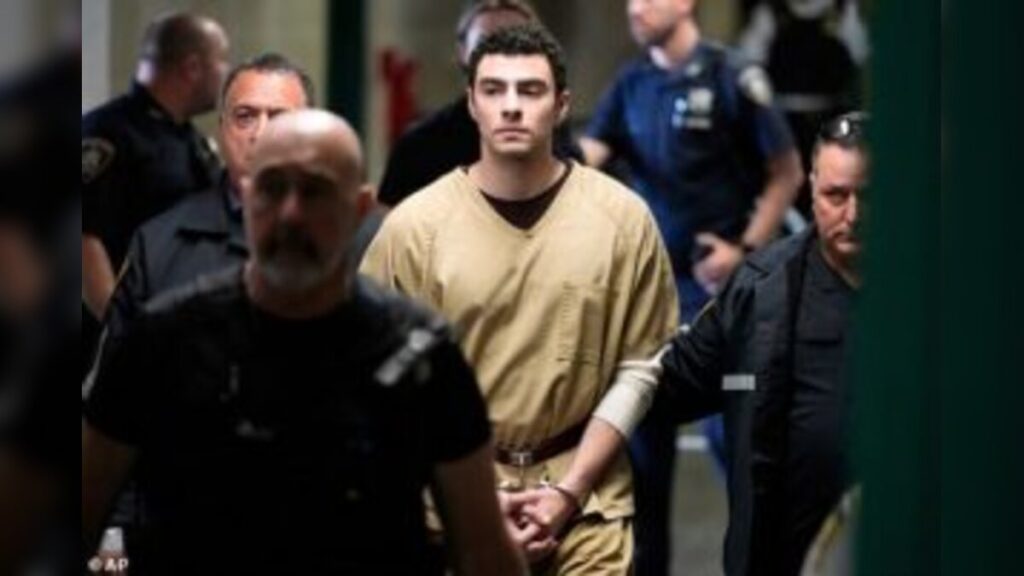
A disturbing case in San Francisco has pushed the already heated conversation around artificial intelligence into darker territory.
A 20-year-old Texas college student, identified as Daniel Moreno-Gama, is accused of throwing a Molotov cocktail at the home of Sam Altman, a move investigators say was followed by a separate threat targeting OpenAI’s headquarters.
What makes the case more complex is not just the alleged attack itself, but the ideological trail behind it—an online world of “AI doom” beliefs, extreme rhetoric, and growing anxiety about the future of artificial intelligence.
From AI Enthusiast to “AI Doomer” Mindset
According to interviews and podcast appearances, Moreno-Gama once saw AI tools like ChatGPT as useful and even “fun,” especially during his high school years.
But over time, he began consuming more alarmist arguments about artificial intelligence risks.
He reportedly engaged with writings from prominent AI critics, including discussions warning that advanced systems could pose existential threats to humanity.
These ideas, often circulated in online “AI safety” communities, helped shape what prosecutors and media outlets now describe as a “doomer” worldview.
At one point, he joined online spaces such as PauseAI, a group advocating for slowing down or halting certain forms of AI development, reflecting a growing global subculture worried about uncontrolled machine intelligence.
Online Rhetoric, Real-World Consequences
Investigators say Moreno-Gama’s online activity included increasingly extreme statements.
While some posts reportedly emphasized non-violence, others referenced troubling language about targeting tech executives.
In earlier podcast interviews, he mentioned frustration with growing public support for violent responses after high-profile incidents involving corporate leaders, while still stating that violence was not “practical” or “worth it.”
However, authorities allege that his later actions crossed a line into real-world aggression, including the attempted firebombing of Altman’s residence in the early hours of the morning, followed by a reported threat at OpenAI’s office shortly after.
Police say he was quickly identified and taken into custody without injuries reported.
A Digital Trail That Became Central to the Case
A key part of the investigation involves Moreno-Gama’s alleged online writings, including posts under pseudonyms and a longer document described by reports as a manifesto-style text.
That material reportedly referenced AI executives and contained disturbing hypothetical scenarios.
It also included a message directed at Altman, suggesting moral or ideological justification tied to AI concerns.




While defense attorneys argue these writings are being overstated, prosecutors view them as evidence of escalating intent.
Defense Pushes Back, Citing Mental Health and Overcharging
Moreno-Gama’s legal team has argued that the case is being inflated due to the high-profile nature of the target.
His public defender, Diamond Ward, has described the incident as closer to a property crime than an attempted violent attack.
The defense has also pointed to mental health concerns, saying the defendant has a history of autism and emotional distress.
His family has echoed those concerns, describing him as a previously nonviolent student who had been balancing work and college life.
They argue that his behavior reflects a crisis rather than a coordinated intent to harm.
Sam Altman Responds With Concern Over Escalating Rhetoric
Following the incident, Sam Altman publicly addressed the situation, acknowledging widespread fears about AI but warning against violent responses.
He also emphasized the broader issue: public narratives around technology can shape behavior in unpredictable ways.
Altman’s comments reflected a growing tension in Silicon Valley—balancing legitimate concern about AI risks with the danger of extreme reactions.
He described the incident as unsettling and called for calmer discourse around artificial intelligence development.
AI Fear Movements and a Growing Global Debate
The case has also drawn attention to online communities that advocate for slowing or pausing AI development, often referred to as “AI safety” or “AI doomer” groups.
Some of these communities argue that advanced AI systems could eventually become uncontrollable, while others focus on regulation and transparency.
In rare cases, rhetoric within these spaces has drifted toward extreme interpretations, raising concerns among policymakers and tech leaders.
Experts have long warned that online radicalization can occur even in intellectual or policy-driven communities when fear narratives intensify without clear grounding or oversight.
Impact and Consequences
This case is likely to intensify scrutiny of how AI-related fear spreads online and how it translates into real-world behavior.
For tech companies, it increases pressure to address safety concerns while also managing security risks for executives.
For policymakers, it raises questions about how to distinguish between legitimate activism and harmful escalation.
It may also complicate public dialogue around AI safety, as serious ethical debate becomes entangled with incidents of alleged violence.
What’s Next?
The legal process will now determine how prosecutors classify the charges—whether as attempted arson, terrorism-related conduct, or property destruction tied to ideological motivation.
At the same time, there is likely to be:
- Increased security measures for tech executives
- More monitoring of extremist rhetoric in AI-related communities
- Ongoing debate over regulation of AI development timelines
- Potential policy discussions on online radicalization pathways
The case may also influence how universities, tech platforms, and AI safety groups moderate discussions around existential risk.
Summary
A Texas college student, Daniel Moreno-Gama, has been accused of attacking the home of Sam Altman amid concerns about artificial intelligence risks and online “AI doomer” ideology.
The incident has sparked broader debate about how fear-driven narratives about AI can escalate, the responsibility of online communities, and the growing tension between innovation and public anxiety.
Bulleted Takeaways
- Daniel Moreno-Gama accused of firebombing Sam Altman’s home in San Francisco
- Police say he also made a separate threat at OpenAI headquarters
- The suspect was reportedly influenced by “AI doomer” ideology online
- He previously discussed AI risks on podcasts under a pseudonym
- Defense argues the case is overcharged and linked to mental health issues
- Sam Altman called for reduced rhetoric and warned against violence
- Online AI safety communities are under renewed scrutiny
- Case raises concerns about radicalization tied to technology fears
- Security around tech executives is expected to increase
- Debate over AI development safety and public communication is likely to intensify

