
Britain has reinforced NATO’s security posture in the North Atlantic and Arctic by deploying its Carrier Strike Group to support air policing operations from the aircraft carrier HMS Prince of Wales.
The mission marks a historic milestone, as NATO fighter patrols are being launched from a European aircraft carrier for the first time, strengthening allied deterrence in the strategically important High North.
F-35 Operations Mark Historic NATO First
The deployment places UK F-35 Lightning fighter jets at the forefront of NATO’s air policing mission over Iceland and the surrounding High North.
Operating directly from the flight deck of HMS Prince of Wales, the aircraft are conducting patrols designed to safeguard allied airspace amid heightened regional tensions and increased Russian military activity.
The operation represents a new chapter for NATO’s collective defence strategy by demonstrating the Alliance’s ability to project air power from a European carrier platform while maintaining a persistent presence in one of Europe’s most strategically sensitive regions.
Defence Secretary Visits Deployed Personnel
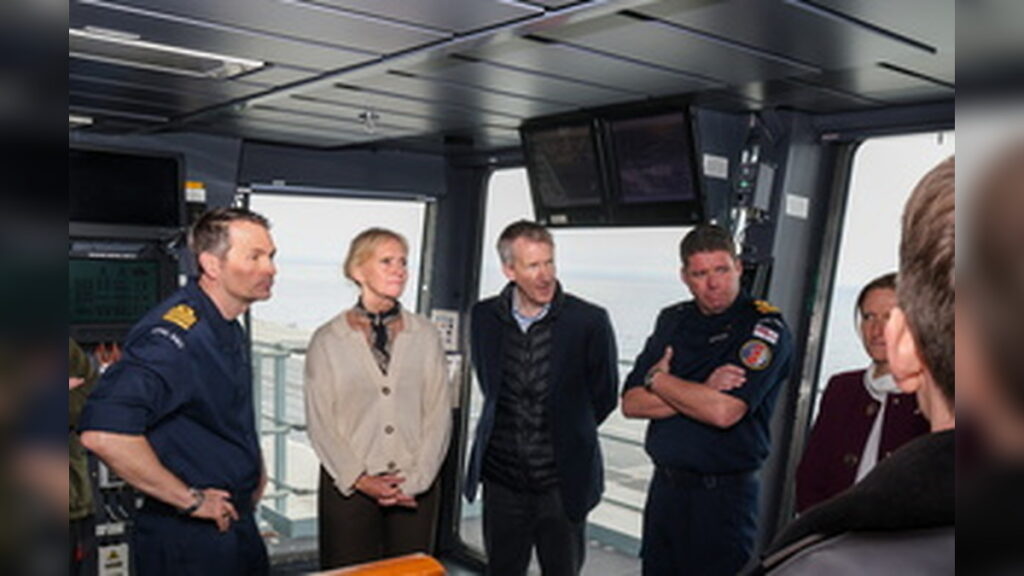
Defence Secretary Dan Jarvis travelled to HMS Prince of Wales during its deployment off the coast of Iceland, accompanied by Icelandic Foreign Minister Þorgerður Katrín Gunnarsdóttir.
The visit highlighted the close defence partnership between the United Kingdom and Iceland, whose geographic position makes it a critical hub for NATO operations across the North Atlantic.
Jarvis praised the service personnel supporting the deployment, describing their work as essential to protecting both the United Kingdom and allied nations during a period of growing international uncertainty.
He said stronger cooperation with NATO partners, including Iceland, is helping reinforce deterrence and collective security across Europe.
He also pointed to the government’s commitment to invest £298 billion over the next four years to improve military readiness while equipping British forces with advanced technology and modern capabilities.
Iceland Reaffirms Commitment to Allied Security
Foreign Minister Þorgerður Katrín Gunnarsdóttir described the arrival of the UK Carrier Strike Group as clear evidence of NATO’s strengthened presence across the North Atlantic and Arctic.
She said Iceland remains committed to supporting Alliance operations and noted that multinational activities, including Arctic Sentry, demonstrate the unity and determination of NATO members to safeguard the region against evolving security challenges.




Thousands of British Personnel Support North Atlantic Deployment
More than 1,500 British service members are participating in the current Carrier Strike Group mission.
Alongside HMS Prince of Wales, the deployment includes the Type 45 destroyer HMS Duncan and the Royal Fleet Auxiliary tanker RFA Tidespring, providing protection, logistics and operational support throughout the North Atlantic mission.
The deployment forms part of the UK’s wider contribution to NATO’s ongoing efforts to strengthen collective defence and maintain a credible military presence across the Alliance’s northern flank.
UK Takes Command of Key NATO Rapid Response Forces
The carrier deployment coincides with the United Kingdom assuming leadership of several important NATO high-readiness formations.
From 1 July, Britain’s Special Operations Forces officially took command of the Special Operations Component Command within NATO’s Allied Reaction Force (ARF), placing UK elite troops at the head of the Alliance’s rapidly deployable special operations capability for the first time. The force is designed to respond to crises anywhere in the world within days.
The UK has also assumed command of the ARF’s maritime component under Rear Admiral Mark Anderson. Later this year, HMS Queen Elizabeth, following completion of an extensive refit in Rosyth, will serve as the maritime headquarters for the force.
Defence Investment Supports Future Carrier Capabilities
The deployment comes alongside continued investment in expanding Britain’s naval aviation capabilities.
Under the recently announced Defence Investment Plan, £240 million has been allocated to develop a new Hybrid Carrier Air Wing.
The programme includes advanced jet-powered drones that will eventually operate alongside F-35 fighter aircraft, extending the operational reach and flexibility of Royal Navy carrier strike missions.
The investment reflects the UK’s broader strategy of combining traditional military assets with emerging technologies to enhance future combat effectiveness.
Britain Strengthens NATO Presence Across Europe
The High North deployment forms part of the UK’s wider contribution to NATO operations across multiple regions.
More than 1,000 British military personnel currently serve within NATO headquarters and command structures, while the UK leads the Allied Rapid Reaction Corps from its headquarters in Gloucestershire, supported by over 400 permanent staff representing 20 NATO member nations.
British forces also continue to maintain frontline commitments across the Alliance.
These include the 800-strong UK battlegroup stationed in Estonia, RAF Typhoon fighter aircraft supporting NATO air policing over Romania, and RAF P-8 Poseidon maritime patrol aircraft alongside Rivet Joint surveillance aircraft conducting intelligence missions over the Baltic Sea.
Long-Term Commitment to NATO Collective Defence
Britain continues to play a leading role within NATO’s defence architecture beyond conventional military deployments.
The UK remains the only European NATO member to assign its entire independent nuclear deterrent to the Alliance.
The government has also confirmed plans for the Royal Air Force to join NATO’s Dual Capable Aircraft nuclear mission using F-35A fighter aircraft.
On land, the British Army’s 4th Brigade Combat Team remains on high readiness in the United Kingdom, prepared to deploy thousands of troops rapidly in support of NATO’s Forward Land Forces in Estonia if required.
Meanwhile, RAF Quick Reaction Alert squadrons remain on constant standby around the clock, integrated into NATO’s wider air defence network to respond rapidly to potential threats and help protect the Alliance’s northern airspace.
