
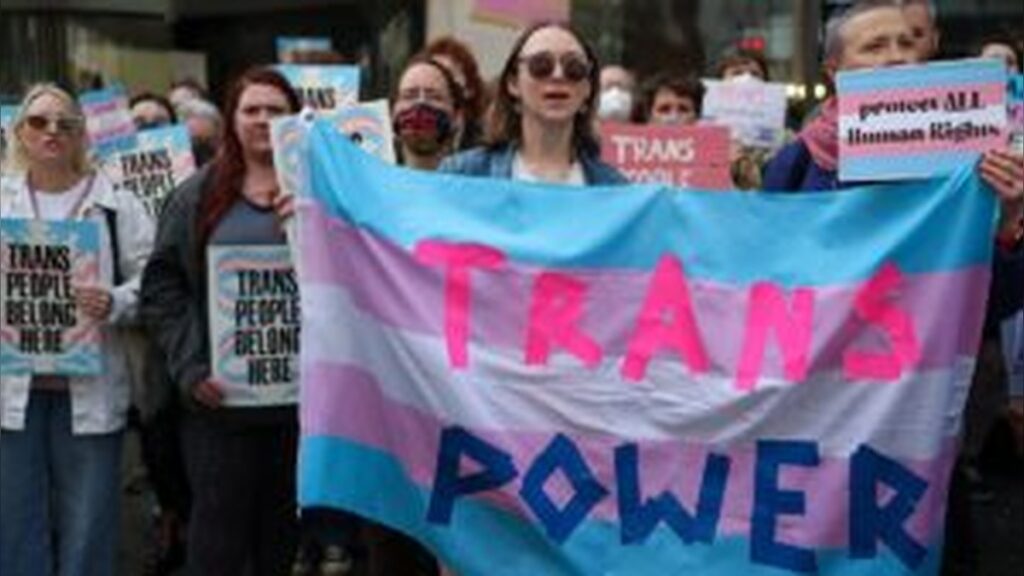
Britain’s trade union movement has stepped up its opposition to new guidance governing single-sex spaces, with several major organisations warning that they will challenge the rules in workplaces and educational institutions.
Eight representative groups, including Unison, Unite and the National Union of Students, have criticised the approach adopted by the Equality and Human Rights Commission (EHRC), arguing that the guidance could create practical difficulties and undermine existing protections for transgender people.
The dispute follows the introduction of a new statutory code under the Equality Act 2010 earlier this month.
New Rules Put Biological Sex at the Centre
Under the updated guidance, facilities designated as single-sex spaces, including toilets, changing rooms, hospital wards and refuges, are expected to be organised according to biological sex.
The change follows a landmark Supreme Court judgment in April, which ruled that the legal definition of “woman” under the Equality Act is based on biological sex rather than gender identity.
The EHRC subsequently produced guidance intended to explain how organisations should apply the ruling in practical situations.
The issue has quickly become one of the most contentious equality debates facing employers, public bodies and institutions.
Unison Says Members Are Already Reporting Problems
Unison, which represents around 1.3 million members, has emerged as one of the strongest union critics of the new guidance.
General secretary Andrea Egan said hundreds of members had contacted the organisation with examples that they believed demonstrated how the updated rules could be difficult to implement.
According to Egan, more than 600 members have raised concerns with Unison.
She also claimed that some employers had responded by withdrawing workplace policies designed to support transgender employees.
Egan said the union would continue campaigning for trans-inclusive workplaces and pledged to take its opposition directly into workplaces.
Student Union Encourages Campus Activism
The National Union of Students has also rejected the EHRC’s approach.
The organisation, which represents students through hundreds of student associations, has encouraged activists to campaign against the new guidance.
Suggested forms of activism include displaying trans-rights posters in toilets, creating inclusive sports teams and making opposition to the guidance visible on university and college campuses.
NUS vice-president for liberation and equality Avery Greatorex accused the EHRC of producing guidance that the union believes reflects ideological rather than impartial legal considerations.
The comments underline the extent of the disagreement between representative organisations and the equality regulator.
Other Major Unions Join the Opposition
Unison and the NUS are not alone in criticising the changes.




The GMB, British Medical Association and University and College Union have also publicly expressed concerns, alongside Equity, which represents workers in the performing arts, and the PCS, which represents civil servants.
Their opposition means the debate now reaches across a wide range of sectors, including healthcare, education, the civil service and the creative industries.
The unions argue that employers will need clearer ways of reconciling the new interpretation of single-sex spaces with existing workplace equality policies.
Women’s Rights Groups Welcome the Guidance
The unions’ position has prompted an equally forceful response from organisations campaigning around sex-based rights.
Fiona McAnena of Sex Matters accused trade unions of failing to adequately consider the interests of female workers.
She argued that women should be able to access single-sex facilities where safety and dignity are important considerations, particularly in workplaces.
Her comments reflect the opposing argument that the new guidance is necessary to protect sex-based rights and provide greater legal certainty following the Supreme Court ruling.
Government Says Trans People Remain Protected
The Government has sought to stress that the new interpretation of single-sex spaces does not remove legal protections for transgender people.
Bridget Phillipson, the minister for women and equalities, said earlier this month that transgender people remain protected under the Equality Act.
Speaking on BBC Radio 4’s Today programme, Phillipson said there should be appropriate single-sex services in settings such as women’s refuges and rape crisis centres, particularly where women who have experienced male violence require a safe environment.
At the same time, she emphasised that transgender people remain protected against discrimination, intimidation and harassment.
A Wider Battle Over Equality Law
The dispute highlights the difficult balance organisations now face following the Supreme Court judgment.
Employers and public bodies must interpret the new guidance while considering the rights and protections available to different groups under the Equality Act.
For trade unions, the central concern is whether the guidance can be implemented without undermining transgender workers or forcing employers to abandon existing inclusion policies.
For sex-based rights campaigners, the priority is ensuring that women retain meaningful access to spaces designed specifically for them.
EHRC Warns of Enforcement Action
The EHRC has indicated that it will monitor whether organisations comply with the law.
A spokesperson previously said the commission would take enforcement action where it considered such action proportionate and necessary.
That warning could increase pressure on employers and public institutions to review their existing policies and procedures.
It also means the dispute may eventually move beyond political campaigning and workplace arguments into formal legal challenges and enforcement decisions.
What Happens Next?
The immediate focus will be on how employers, universities, hospitals, public bodies and other organisations put the new guidance into practice.
Trade unions have made clear that they intend to campaign against aspects of the rules, while women’s rights organisations are likely to continue pushing for strict implementation of the Supreme Court’s interpretation of sex-based rights.
The Government and EHRC will consequently face continued pressure from both sides as organisations attempt to establish workable policies.
Summary
A major dispute has erupted between several British trade unions and the Equality and Human Rights Commission over new guidance on single-sex spaces.
Unison, the NUS, Unite and other organisations have criticised the rules, with unions promising to campaign for trans-inclusive workplaces and campuses.
Supporters of the guidance argue that it provides greater clarity following the Supreme Court’s ruling that the legal definition of “woman” under the Equality Act is based on biological sex.
The Government has stressed that transgender people continue to have protection against discrimination, while the EHRC has warned that it could take enforcement action where necessary.
The battle now moves into workplaces and public institutions, where the competing rights and responsibilities set out in the law will face their most practical test.

