
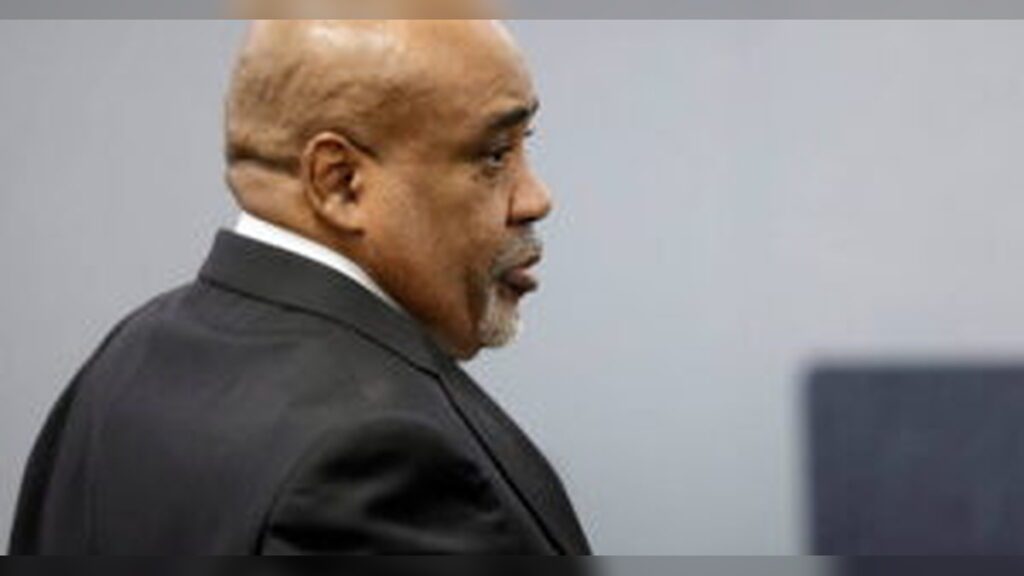
Jurors in the trial of Duane “Keffe D” Davis have heard a recorded 2008 interview in which he told detectives that his late nephew, Orlando “Baby Lane” Anderson, was the person who fired the shots that killed Tupac Shakur.
Davis, now 63, is accused of orchestrating the 1996 killing of the 25-year-old rapper in Las Vegas.
He has pleaded not guilty and denies the allegations.
The recording provides prosecutors with one of their most significant pieces of evidence because Davis described being inside the vehicle from which the fatal shots were fired.
Davis Describes the Moments Before the Shooting
During the interview, Davis told investigators that he and Anderson were travelling in a white Cadillac alongside two other men when they came across Shakur’s vehicle.
Shakur was riding in a black BMW with Marion “Suge” Knight, the head of Death Row Records.
Davis explained that he initially had a gun and intended to use it if the positioning of the vehicles had allowed him to fire.
He said the Cadillac was not positioned on his side of Knight’s vehicle, so he passed the weapon to Deandre “Big Dre” Smith.
According to Davis, Smith declined to take it.
Anderson, who was sitting in the back of the Cadillac, then took the gun.
Anderson Allegedly Opened Fire
Davis told detectives that Anderson was the person who ultimately fired at Shakur’s vehicle.
The account was played to jurors through a transcript of the audio recording, with members of the jury occasionally taking notes as the details of the shooting were read aloud.
Davis also indicated that he initially believed Knight had been killed in the attack.
Anderson died in 1998, meaning he cannot testify or face charges in connection with the shooting.
Prosecutors Rely on Davis’ Own Words
The 2008 interview has become central to the prosecution’s case.
Prosecutors have told jurors that they intend to rely heavily on statements Davis has made over the years about Shakur’s killing, including interviews, podcast appearances and a 2019 memoir he co-authored, Compton Street Legend.
Their argument is that Davis repeatedly placed himself within the group responsible for the shooting and provided details that prosecutors say connect him directly to the crime.
Davis Has Given Conflicting Accounts
The defence has highlighted inconsistencies in Davis’ accounts over the years.
At another point, Davis told the FBI that Anderson was not involved in Shakur’s killing.
He also speculated that Knight or Sean “Diddy” Combs could have been connected to the shooting.
Davis’ lawyer has argued that his client exaggerated or fabricated stories about his involvement and that investigators knew his claims were unreliable.
The defence has characterised the prosecution’s case as “fiction” and argued that authorities failed to independently corroborate Davis’ statements with sufficient evidence.
Police Originally Questioned Davis About Another Murder
The circumstances surrounding the 2008 interview have also become a major issue at trial.
Los Angeles police detectives were not initially questioning Davis specifically about Shakur’s death.


Their investigation was focused on the 1997 killing of Christopher Wallace, better known as the Notorious B.I.G.
Davis had briefly been considered a suspect in that case before investigators ruled him out.
Former Los Angeles Police Department detective Daryn Dupree told the court that virtually everyone was considered a suspect during the investigation.
Detectives Promised Confidentiality
During the recorded discussion, investigators told Davis that the conversation was confidential.
Detective Greg Kading, who participated in the interview alongside Dupree and later wrote about it in a book, told Davis that his statements would not be used against him.
The recording included assurances that nothing said during the discussion would leave the room.
That promise has now become an important point of dispute.
Prosecutors Say Davis Later Broke the Understanding
Prosecutors argue that Davis effectively abandoned any protection he had been offered by later publicly discussing the killing.
They point to the interviews, podcasts and memoir in which Davis discussed the events surrounding Shakur’s death.
The state contends that his subsequent decision to speak publicly undermines any agreement that may have protected statements made during earlier conversations with investigators.
The defence, however, is expected to challenge the reliability and legal significance of those statements.
The Alleged Motive Goes Back to the MGM Grand
Prosecutors say the shooting was motivated by an earlier confrontation involving Anderson and members of Shakur’s entourage.
Earlier that evening, Davis and Anderson had been at the MGM Grand following a Mike Tyson boxing match.
Investigators allege that Shakur’s associates attacked Anderson during a confrontation at the casino.
Davis was present at the fight but was not alleged to have participated in the brawl.
Prosecutors say the later shooting was carried out as retaliation.
The Fatal Encounter in Las Vegas
Later that night, according to Davis’ account, the group was travelling in the Cadillac when they spotted Shakur and others.
Shakur was reportedly visible in a black BMW, with people calling out his name.
The vehicles came alongside each other before the shooting took place.
Davis’ account places him inside the Cadillac during the encounter and identifies Anderson as the person who fired the weapon.
A Case Decades in the Making
Shakur was 25 when he was fatally shot in Las Vegas in September 1996.
The killing remained unsolved for decades before Davis was arrested and charged.
The case has continued to attract enormous public attention because of Shakur’s status as one of the most influential figures in hip-hop history.
His career was still expanding at the time of his death, with his music reaching a global audience while his work as an actor was also gaining momentum.
Tupac’s Legacy Remains Central to the Trial
Almost three decades after his death, Shakur remains a defining figure in popular culture.
His music, films and public persona have continued to influence generations of artists, while theories surrounding his murder have persisted for years.
The trial is now providing jurors with an opportunity to examine one of the most consequential accounts ever given by a person alleged to have been inside the vehicle involved in the shooting.
What Comes Next?
Jurors will continue hearing evidence as prosecutors seek to establish their case against Davis.
A central question will be whether his various statements over the years are sufficiently credible and supported by other evidence to establish his alleged role in the killing.
The defence is expected to focus on contradictions in Davis’ accounts, his history of making public claims about the case and the absence of Anderson, who died years before Davis was charged.
Summary
Jurors have heard a 2008 recording in which Duane “Keffe D” Davis told Los Angeles detectives that his nephew Orlando “Baby Lane” Anderson fired the shots that killed Tupac Shakur in Las Vegas in 1996.
Davis said he was inside the white Cadillac with Anderson and two other men when they pulled alongside Shakur’s vehicle.
He described passing a gun before Anderson allegedly took it and opened fire.
Prosecutors are using Davis’ statements as a key part of their case, while his defence argues that he has repeatedly exaggerated or fabricated stories and that investigators failed to corroborate his claims.
Davis has pleaded not guilty to the charge, and the trial continues.

