
Ofsted’s renewed inspection framework is beginning to show encouraging results, with early findings suggesting that schools and further education providers are responding positively to a more transparent and collaborative approach.
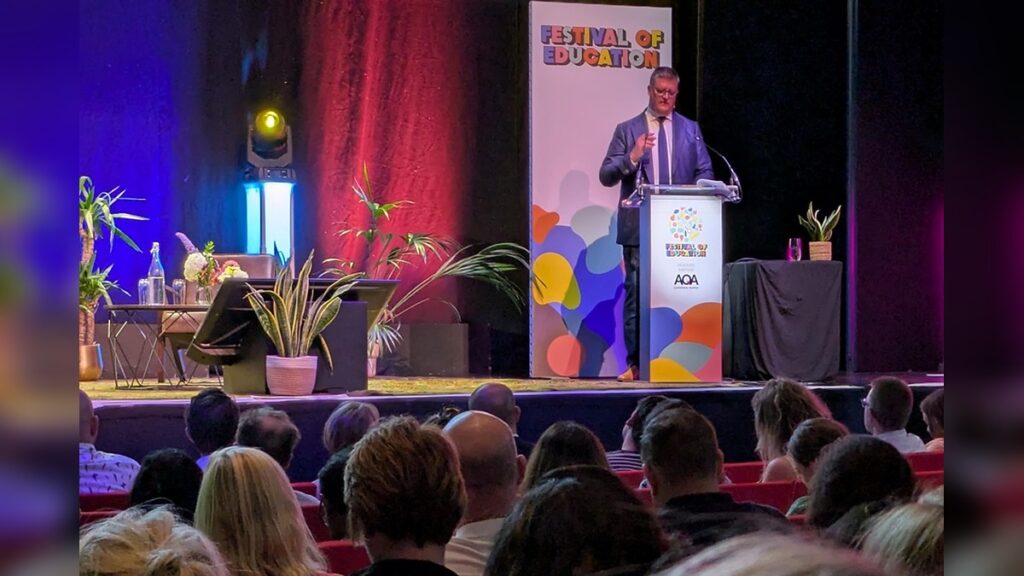
Speaking at the Festival of Education in Berkshire, Chief Inspector Sir Martyn Oliver outlined the first trends emerging from thousands of inspections while emphasizing that high-quality teaching remains the single most important factor in improving outcomes for children and young people.
New Inspection Model Designed Around Transparency and Collaboration
Addressing education professionals from across the sector, Oliver reflected on the changes introduced through Ofsted’s revised inspection process, explaining that the reforms were intended to make inspections more open, consistent and supportive without lowering expectations.
He said schools have reported that the publication of detailed inspection toolkits has made it much clearer what inspectors expect in every evaluation area.
Inspection materials used to train inspectors are also publicly available, allowing leaders to better understand how judgments are reached.
Oliver added that the revised process encourages greater dialogue between inspectors and school leaders.
Planning discussions before inspections now allow inspectors to understand each institution’s context in advance, while the introduction of nominee roles has helped reduce pressure on leadership teams, particularly in smaller primary schools.
Although inspections remain rigorous, he said feedback indicates they are increasingly viewed as collaborative professional conversations rather than exercises imposed on schools.
Thousands of Report Cards Reveal Encouraging Performance Trends
Since the updated inspection system was introduced in November, Ofsted has published almost 6,000 report cards.
While Oliver cautioned that the sample remains too small for definitive conclusions, he said several positive patterns are already becoming apparent.
Across schools, further education institutions and skills providers, 84% achieved at least the expected standard in leadership and governance.
According to Oliver, this demonstrates that most leaders are successfully establishing clear priorities, maintaining high expectations and ensuring staff receive the training needed to improve practice.
Inclusion also emerged as one of the strongest-performing areas. Current inspection data shows that 89% of schools and 85% of further education and skills providers achieved the expected standard or higher.
Oliver said these results reflect the commitment of leaders to identifying learners who require additional support, including pupils with special educational needs and disabilities, disadvantaged children and those facing challenges such as family disruption, bereavement or caring responsibilities.
Attendance, Behaviour and Wellbeing Continue to Show Strong Results
The Chief Inspector also highlighted encouraging outcomes in attendance and behaviour, with more than 84% of schools meeting or exceeding the expected standard.
He acknowledged that attendance remains a significant challenge in some communities but stressed that inspectors carefully consider each school’s circumstances rather than allowing context to predetermine inspection outcomes.




Oliver said inspectors continue to recognize schools that are working successfully to improve attendance by supporting families, creating positive learning environments and building cultures where pupils want to attend regularly.
Personal development and wellbeing produced some of the strongest results, with 95% of schools achieving the expected standard or higher.
He said these findings demonstrate that many schools are providing pupils with opportunities beyond academic learning, helping them build resilience, confidence and independence while ensuring they know where to access pastoral support when needed.
Effective Teaching Remains the Greatest Influence on Student Success
A major focus of Oliver’s address was the enduring importance of excellent teaching throughout every stage of education.
Drawing on research and evidence, including work conducted with the Education Endowment Foundation, he argued that effective teaching continues to be the single biggest influence on pupils’ educational progress.
He stressed that this impact is particularly significant for disadvantaged children and vulnerable learners, whose most meaningful daily interactions may occur within educational settings.
Oliver explained that these foundations begin in the earliest years of childhood through high-quality conversations, shared reading, language development and carefully planned interactions that strengthen children’s vocabulary, confidence and readiness to learn.
He said strong relationships between educators and pupils create learning environments where children feel safe, supported and motivated to succeed.
Teachers Described as the Heart of Every School Community
Reflecting on his own three decades working in education, Oliver praised teachers, support staff and school leaders for the lasting impact they have on children’s lives.
He described schools as places that become true communities because of the people working within them, arguing that dedicated educators transform school buildings into environments where children experience belonging, stability and trust.
Recalling one particularly difficult safeguarding case from his teaching career, Oliver explained that meaningful progress came not from isolated interventions but through years of consistent relationships involving teachers, pastoral staff, governors, police officers and social services.
He said educators cannot solve every challenge facing society, but their steady presence often provides children with the stability and encouragement they need during the most difficult periods of their lives.
Sustained Professional Learning Should Replace One-Off Training
Oliver also urged education leaders to rethink professional development, arguing that effective teaching depends on continuous learning rather than isolated training sessions.
He said expertise develops through sustained reflection, coaching, evidence-based practice and structured career-long learning rather than occasional professional development days.
Pointing to examples from early years settings, Oliver praised providers that invest consistently in staff qualifications, apprenticeships and ongoing coaching to improve teaching quality.
He argued that schools should apply the same principles used to teach pupils—including carefully sequenced learning, regular review and coherent planning—to the professional growth of teachers and support staff.
School Example Demonstrates Benefits of Strong Leadership and Staff Development
Oliver highlighted Spring Vale Primary School in Wolverhampton as an example of how strong relationships and sustained professional learning can combine to improve outcomes.
He said leaders at the school deliberately prioritise authentic partnerships with pupils and families, enabling staff to understand children’s individual circumstances from the earliest stages of education.
The school’s professional learning programme includes coaching, external training, trust-wide support and tailored development opportunities for teachers at every stage of their careers.
According to Oliver, this investment has strengthened teaching quality while creating a positive school culture where pupils feel respected, valued and ready to learn.
Ofsted Pledges to Continue Listening as Reforms Become Established
Concluding his speech, Oliver said Ofsted remains committed to refining its inspection system by listening carefully to feedback from schools and education providers.
He reiterated that the purpose of the renewed framework is to raise standards for every learner while giving parents clearer information about the quality of education their children receive.
As the new inspection arrangements become established, he encouraged educators to continue sharing effective practice, supporting colleagues facing challenges and focusing on the daily work of improving children’s lives.
Oliver said Ofsted would continue recognising the difficult circumstances many schools operate under while working alongside the education sector to ensure every child has access to high-quality teaching, supportive relationships and opportunities to succeed.
