
The United Kingdom has once again used the OSCE platform to sharply criticize Russia’s ongoing war in Ukraine, describing it as illegal, destabilising, and a direct threat to the rules-based international order.
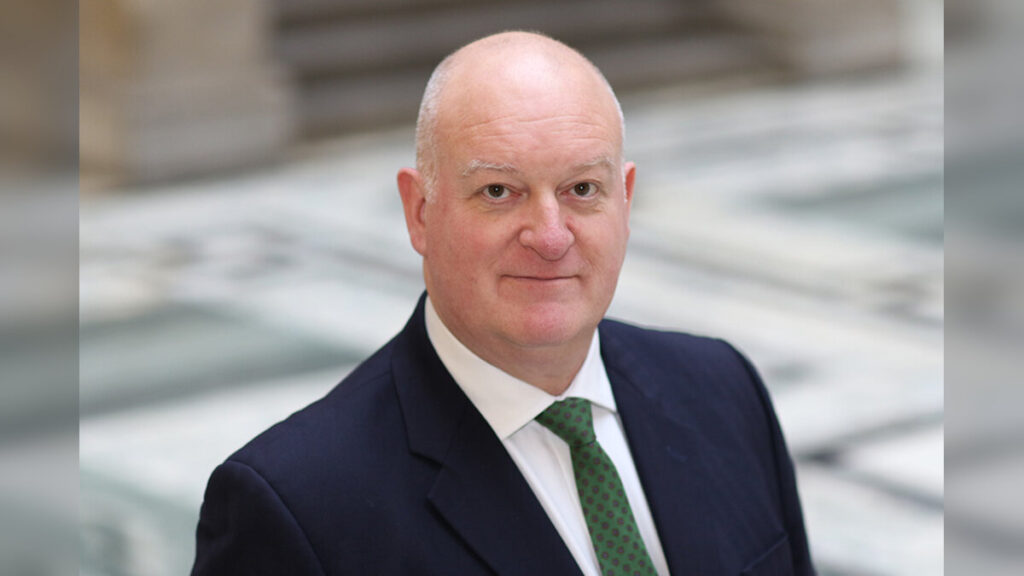
UK Ambassador Holland set a firm tone, rejecting what he called Russia’s repeated attempts to intimidate states supporting Ukraine.
He stressed that Britain and its allies will not be pressured into backing away from Ukraine, insisting that support for Kyiv remains lawful, justified, and necessary in response to continued Russian aggression.
Pushback Against Russian “Threats and Intimidation” at the OSCE
A major focus of the UK statement was the concern over what it described as Russian threats made during a recent OSCE meeting.
According to the UK, these remarks were part of a wider pattern aimed at discouraging countries from supporting Ukraine’s defence efforts.
Ambassador Holland pushed back strongly, arguing that Russia’s framing of Western assistance as “escalation” is misleading and designed to distract from its own actions on the ground.
He reinforced alignment with France and other partners, underscoring that support for Ukraine is consistent with international law and grounded in collective security principles.
International Law and the Core OSCE Principles
The UK emphasized that the foundation of European security rests on widely accepted principles such as sovereignty, territorial integrity, and adherence to international agreements like the UN Charter and the Helsinki Final Act.
London’s message was direct: Russia is violating those principles through its invasion of Ukraine, while the UK and its allies remain committed to defending them.
The ambassador added that deterrence and security are not achieved through threats, but through respect for shared rules that all OSCE members have agreed to uphold.



Demand for Release of Detained OSCE Staff
Another key issue raised was the continued detention of members of the OSCE Special Monitoring Mission to Ukraine—Dmytro Shabanov, Vadym Golda, and Maxim Petrov.
The UK noted that they have now been held for four years by Russia or Russia-backed forces, despite carrying out official duties under an OSCE mandate that was agreed by consensus, including by Russia itself.
Their detention was described as a clear violation of OSCE commitments and part of a broader effort to block independent monitoring and accountability mechanisms in the region.
Wider Pattern of Obstruction and Institutional Pressure
Beyond individual cases, the UK argued that Russia’s behaviour reflects a broader attempt to weaken international institutions designed to promote transparency and reduce conflict risk.
According to the statement, this pattern undermines trust within the OSCE system and challenges the effectiveness of collective security arrangements that rely on cooperation and compliance.
Impact and Consequences
The UK’s remarks highlight growing diplomatic tension within the OSCE, particularly over Russia’s conduct and the war in Ukraine.
The continued detention of OSCE personnel further complicates already strained relations and raises questions about the safety and neutrality of monitoring missions in conflict zones.
If unresolved, these issues risk weakening the OSCE’s credibility as a platform for dialogue and conflict prevention.
They also deepen divisions between Russia and Western-aligned member states, making consensus-driven action increasingly difficult.
What’s Next?
Pressure is expected to continue within OSCE meetings for the release of detained personnel and for greater accountability regarding Russia’s actions in Ukraine.
Western states are likely to maintain coordinated political and military support for Kyiv.
At the same time, diplomatic exchanges within the OSCE are expected to remain tense, with further confrontations over language, legitimacy, and compliance with international obligations.
Summary
The UK used its OSCE intervention to condemn Russia’s war in Ukraine, reject what it called intimidation tactics, and reaffirm strong support for Ukraine.
It also demanded the release of detained OSCE monitoring staff and warned that Russia’s actions are undermining the very foundations of European security cooperation.
Bulleted Takeaways
- UK condemns Russia’s war in Ukraine as illegal and destabilising
- Ambassador Holland rejects Russian threats made at OSCE meeting
- Britain reaffirms continued military support for Ukraine
- UK says support for Ukraine is lawful and based on international law
- Russia accused of misrepresenting Western support as “escalation”
- Call for immediate release of three detained OSCE Special Monitoring Mission members
- UK warns detention violates OSCE commitments and transparency principles
- Russia accused of undermining international institutions and trust
- OSCE credibility and cooperation seen as increasingly under strain
- Diplomatic tensions expected to continue within the organisation
