
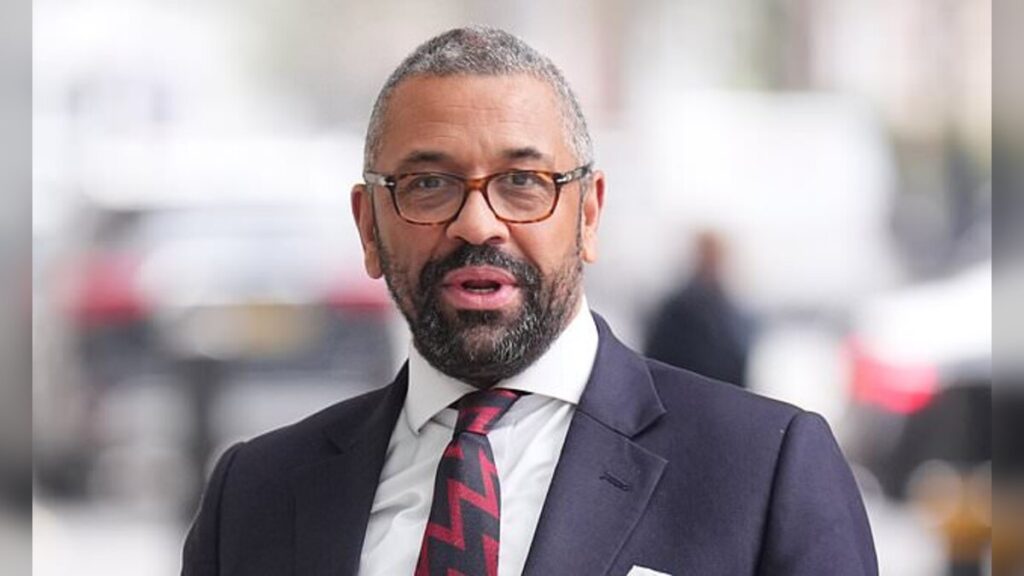
Conservative MP Sir James Cleverly is urging his party to formally commit to a nationwide prostate cancer screening programme, arguing it should feature prominently in its election manifesto as a life-saving public health measure.
The former Foreign Secretary, now serving as Tory housing spokesman, says the evidence supporting early detection is strong enough that delaying action amounts to avoidable loss of life.
His comments come amid renewed debate over how the UK should approach screening for the country’s most commonly diagnosed cancer.
Personal Loss Fuels Political Call for Action
Cleverly’s stance is deeply personal.
His father was diagnosed with prostate cancer and later died, an experience he says shaped his determination to push for earlier detection and better outcomes for families.
He described the current lack of a national screening programme as a systemic failure, especially given that medical tools already exist to identify the disease earlier when it is far more treatable.
Conservative Party leader Kemi Badenoch has previously joined Cleverly on campaign visits, as internal discussions continue within the party about its health policy direction ahead of the next election.
“Evidence Is Clear” — Cleverly Criticises Delay in Screening Rollout
Speaking ahead of an upcoming conference in London, Cleverly said routine screening could transform survival rates and ease pressure on the NHS.
He argued that earlier diagnosis would reduce treatment complexity and costs, stressing that the absence of a national programme is increasingly difficult to justify.
In his words, “the evidence is there” and the UK already has the tools to detect prostate cancer early — but is not using them at scale.
Prostate Cancer Rates Rise Without National Screening System
Prostate cancer is now the most diagnosed cancer in the UK, with around 63,000 cases and approximately 12,000 deaths annually.
Despite this, the country still does not operate a national screening programme, unlike for breast, bowel, and lung cancers.
Cleverly warned that this gap in policy is becoming more urgent as diagnosis rates continue to climb, particularly among older men and high-risk groups.
Targeted Screening Under Consideration by Health Experts
The UK National Screening Committee (UKNSC), which advises government ministers, is preparing final guidance on whether a screening programme should be introduced.




Its earlier draft recommendation supported limited screening for men with genetic risk factors such as BRCA1 and BRCA2 mutations, typically between ages 45 and 61, rather than population-wide screening.
The committee has raised concerns that widespread use of the PSA blood test could lead to overdiagnosis, including unnecessary biopsies and treatments for cancers that might never become life-threatening.
However, critics argue that this caution may be based on outdated modelling.
New Evidence Challenges Existing Screening Concerns
A review by the York Health Economics Consortium suggests the UKNSC’s underlying model may rely on outdated clinical data and does not fully reflect modern MRI-led diagnostic approaches.
It also argues that earlier assumptions may have overstated potential harms from screening by as much as seven times.
Health inequalities were also highlighted as a major gap in the current framework, particularly for high-risk populations who are less likely to be diagnosed early.
Pressure Builds on Government to Reconsider Approach
Health Secretary Wes Streeting has acknowledged surprise at the UKNSC’s draft position and said he will take into account views from medical experts and charities before making a final decision.
Meanwhile, advocacy groups and media campaigns continue to push for change.
The Chaps men’s health charity, which organised the upcoming conference in London, says current systems are failing to detect cancer early enough.
Conference to Spotlight Early Detection Failures
Sir James Cleverly is expected to address the National Conference on Prostate Cancer Screening at Freemasons’ Hall in London, where clinicians, researchers, and policymakers will gather.
The event aims to highlight shortcomings in early detection, particularly around the underuse of the PSA blood test and inconsistent GP referral practices.
A recent audit referenced by organisers found thousands of abnormal PSA results, yet only a fraction were referred for specialist follow-up.
Impact and Consequences
A national screening programme could significantly shift prostate cancer outcomes by increasing early detection rates, reducing late-stage diagnoses, and improving survival chances.
Health economists argue it could also lower long-term NHS costs by reducing the need for complex treatments associated with advanced cancer cases.
However, if implemented without updated modelling and safeguards, critics warn it could increase overdiagnosis and place additional strain on diagnostic services.
Politically, the issue is becoming a high-profile test of how the government balances preventive healthcare investment against clinical caution.
What’s Next?
The UK National Screening Committee is expected to publish its final recommendation soon, which will heavily influence whether ministers approve a national programme.
The government will then decide whether to expand PSA testing, adopt a targeted screening model, or maintain the current approach.
Within the Conservative Party, debate is likely to continue over whether to formally adopt screening expansion as part of its election manifesto.
Summary
Sir James Cleverly is calling for a national prostate cancer screening programme to be included in the Conservative manifesto, arguing that early detection saves lives and reduces NHS pressure.
His appeal comes as official health bodies review whether to expand screening guidelines amid competing concerns about overdiagnosis and resource strain.
A final policy recommendation is expected soon, which could shape future UK cancer detection strategy.
Bulleted Takeaways
- Sir James Cleverly urges Conservatives to commit to a national prostate cancer screening programme
- Says early detection would save lives and reduce NHS treatment costs
- Personal motivation linked to his father’s prostate cancer diagnosis
- Prostate cancer is now the UK’s most commonly diagnosed cancer
- UK still has no national screening programme despite high death rates
- UKNSC considering limited screening for high-risk genetic groups only
- New analysis suggests earlier models may overstate screening harms
- Health Secretary Wes Streeting reviewing final recommendations carefully
- Chaps charity highlights gaps in PSA testing referrals and early detection
- Final screening guidance from UKNSC expected soon, shaping government decision
