
What started as a quiet controversy inside political circles has now turned into a full-blown public debate in South Africa.
The so-called ANCWL CarGate scandal involving the leadership of the African National Congress Women’s League has refused to fade, instead growing more complicated with each new revelation.
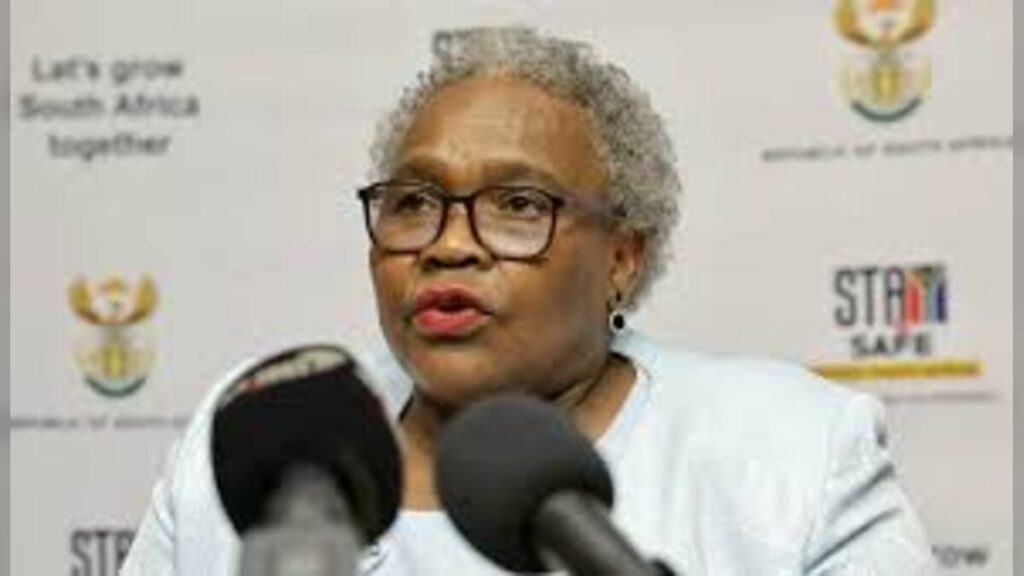
At the center of it is Sisisi Tolashe, who now faces mounting questions over how high-value assets linked to her office were handled, declared, and ultimately used.
How the Two SUVs Became the Heart of the Controversy
The controversy revolves around two BAIC SUVs reportedly provided by a Chinese-linked arrangement and allegedly given without payment.
Normally, such gifts or donations to political figures or organisations must be declared and properly recorded.
That’s where the issue begins—reports suggest the vehicles were not formally registered under the ANC Women’s League or declared transparently.
Instead, the situation reportedly became more tangled when explanations emerged that the vehicles were registered in the names of family members rather than official party structures.
A Minister Under Pressure Over Public and Political Accountability
Tolashe, who oversees South Africa’s social development portfolio and manages one of the country’s largest public spending budgets—including social grant distribution through SASSA—was called before an internal party integrity process to explain the matter.
Her position has added weight to the controversy, as the department she leads is responsible for billions in annual social assistance payments.
She has maintained that no personal enrichment took place, arguing that the vehicles were not used for private gain. However, critics argue that even the handling of such assets raises serious governance concerns.




Political Tensions and Conflicting Interpretations
Opposition voices, including ActionSA, have taken a much harder stance, accusing the minister of concealing benefits and calling for stronger consequences.
They argue that transferring or registering high-value assets in private names—especially within family structures—undermines transparency rules designed to prevent corruption and undue influence.
Supporters of the minister, however, suggest the situation may be politically motivated, pointing to the increasingly aggressive tone of South African political competition.
Financial Pressure Inside the ANC Background Noise
The scandal is unfolding at a time when the African National Congress is facing its own financial strain, with reports of delayed payments and internal funding challenges affecting party operations.
That context has added another layer of sensitivity, as scrutiny over resources, donations, and undeclared support becomes more intense across the political landscape.
Even small disputes now carry wider implications for trust and governance credibility.
Impact and Consequences
The immediate impact is reputational. The scandal has placed additional pressure on both the minister and the ANC Women’s League, raising questions about internal oversight and ethical compliance.
More broadly, it highlights ongoing concerns about transparency in political gifting practices, especially where high-value assets are involved.
If allegations continue to gain traction, it could also deepen public skepticism toward how political leaders manage both state resources and external donations.
For institutions like SASSA, any perception of governance weakness risks spilling over into broader trust issues in social service delivery.
What’s Next?
The next phase will likely depend on whether formal investigations escalate beyond internal party processes.
If legal authorities or ethics bodies step in, the matter could shift from political controversy to formal accountability proceedings.
At the same time, political pressure from opposition parties is expected to continue, especially if new details about the vehicles’ registration or disposal emerge.
Summary
The ANCWL CarGate scandal continues to grow, centering on allegations involving undeclared BAIC SUVs linked to Sisisi Tolashe.
While she denies personal benefit, questions remain about transparency, asset registration, and political accountability within the ANC Women’s League leadership.
The controversy has become part of a wider conversation about ethics in public office and governance standards in South Africa.
Bulleted Takeaways
- The scandal involves two BAIC SUVs allegedly linked to ANC Women’s League leadership
- Sisisi Tolashe is at the center of the controversy
- Vehicles were reportedly not properly declared or registered under official party structures
- Claims suggest assets may have been registered in family members’ names
- Opposition party ActionSA has called for stronger action
- The issue comes amid financial pressure within the ANC
- Concerns extend to transparency and governance in public office
- SASSA oversight context adds weight due to large public funds managed
- The situation could escalate into formal investigations depending on new developments

