A fresh player has entered the growing intersection of artificial intelligence and healthcare innovation.
Treehub, a boutique residency program positioned near Stanford’s academic ecosystem, has officially launched with a clear mission: find, fund, and fast-track early-stage founders working at the edge of AI and medical science.
Backed by the AI Health Fund, the initiative is designed to act as both a launchpad and a filter—spotting promising research-driven ideas before they even become formal startups.
Rather than waiting for companies to mature, Treehub steps in at the earliest possible moment, sometimes even before incorporation.
Where AI meets healthcare: the three big bets
Treehub is concentrating its efforts on three major areas where AI is expected to reshape healthcare in practical, high-impact ways.
First is Precision Outcomes, which focuses on tailoring treatment to individuals using tools like genomic risk analysis and patient-driven care models.
The goal is simple but ambitious: move away from one-size-fits-all medicine.
Next is Care Efficiency, where automation and ambient intelligence aim to strip away administrative overload in hospitals and clinics.
Think less paperwork, more time for actual care.
The third focus is Frontier Science, which leans into more experimental but potentially transformative technologies such as robotic surgery systems and digital twin simulations that model human health in virtual environments.
Together, these three pillars form Treehub’s roadmap for what healthcare could look like when AI and biology fully converge.
A hybrid model built for speed and early conviction
Treehub is not positioning itself as a typical accelerator or traditional venture fund.
Instead, it blends elements of a venture studio, an incubator, and an investment fund into a single structure.
Based in Los Altos, the program is built to support founders emerging directly from research labs and academic environments.
The idea is to reduce the friction between scientific discovery and company formation.
What makes the model more aggressive than most is the involvement of the AI Health Fund, which writes the first check into every Treehub-backed company.



In many cases, funding decisions happen even before a startup formally exists.
Once inside the ecosystem, founders gain access to curated programming, medical datasets, and a network of clinicians, healthcare buyers, investors, and experienced operators who have already built and exited companies in the space.
Cohorts, structure, and timing
Treehub plans to operate in structured cohorts rather than continuous intake.
Each cohort will include up to 10 companies, allowing for tighter support and more focused mentorship.
The program will run four cohorts per year, with the first official intake scheduled to align with the Stanford Spring Quarter 2026.
This cohort-based approach is designed to create a small but highly concentrated environment where founders can iterate quickly without being lost in a large accelerator pipeline.
The team shaping Treehub’s direction
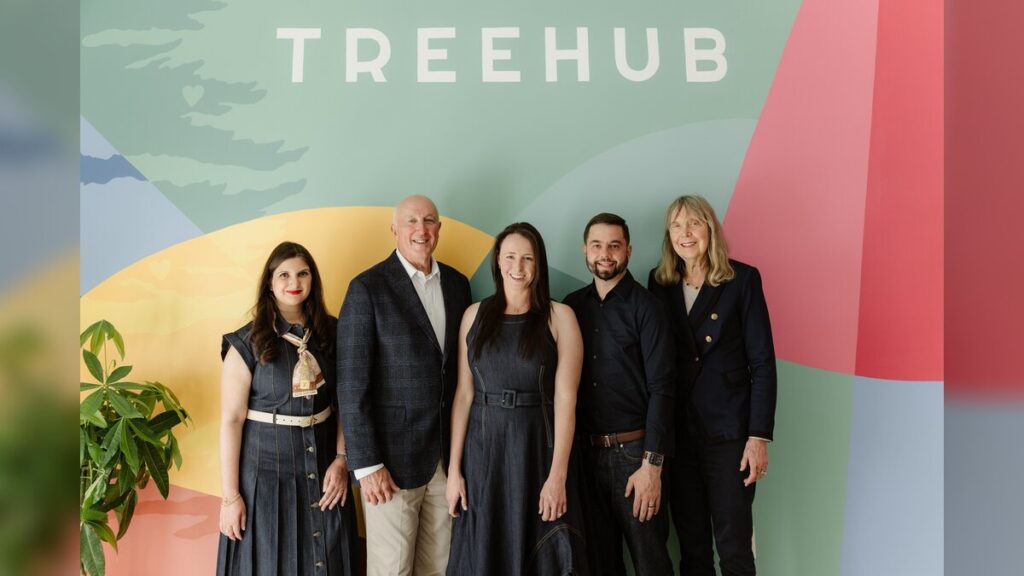
Treehub’s leadership brings together a mix of academic research, venture investing, and Silicon Valley operating experience.
At the center is Mary Minno, Founding Partner, a former venture-backed founder and early-stage operator who also held senior product leadership roles at Google.
She is joined by Roxana Daneshjou, MD, PhD, FAAD, a Stanford Medicine faculty member specializing in biomedical data science and dermatology, who also advises OpenEvidence and Pear VC.
Derek Minno, President of Point Capital, contributes decades of portfolio management experience overseeing more than $6 billion in assets.
Alexander Ioannidis, PhD, another Stanford-affiliated biomedical data science and genetics professor, also plays a founding role, bringing additional scientific depth and startup experience through Galatea Bio.
Adding a cultural and educational dimension, Esther Wojcicki joins as Founding Advisor.
Known as an influential educator and author often called the “godmother of Silicon Valley,” she brings long-standing experience in nurturing innovation talent.
Meanwhile, Anne Wojcicki, founder of 23andMe, steps in as Operating Partner, strengthening the program’s connection to consumer genetics and biotech commercialization.
Impact and Consequences
Treehub’s model signals a shift toward even earlier-stage intervention in healthcare innovation—where investors don’t just fund startups, but help create them from academic ideas.
This could accelerate the pace at which medical research turns into deployable technology, particularly in AI-driven diagnostics, personalized medicine, and healthcare automation.
However, it also raises expectations and pressure on researchers who may now be pulled into startup formation much earlier in their academic journey.
The tight coupling of funding, mentorship, and institutional influence could reshape how academic labs think about commercialization.
If successful, Treehub may become a blueprint for how venture ecosystems plug directly into universities to shorten the distance between discovery and product.
What’s next?
The immediate next step is the launch of the inaugural cohort in Spring 2026, where up to 10 early-stage teams will be selected.
From there, the program is expected to refine its selection process, expand its founder network, and potentially scale additional cohorts if early outcomes show strong startup formation and investment returns.
Attention will also likely focus on how quickly companies formed within Treehub can transition from research concepts into clinically relevant products or funded ventures.
Summary
Treehub is positioning itself as a high-intensity launch ecosystem for AI and health startups emerging from academic environments, combining capital, mentorship, and institutional access under one roof.
With backing from the AI Health Fund and leadership tied closely to Stanford and Silicon Valley, it aims to compress the timeline from research idea to investable company.
Bulleted Takeaways
- Treehub is a Stanford-adjacent residency program focused on AI and healthcare startups
- Backed by the AI Health Fund, which often invests before companies formally exist
- Focus areas: Precision Outcomes, Care Efficiency, and Frontier Science
- Hybrid structure combining venture studio, incubator, and fund
- Based in Los Altos with deep ties to academic and clinical ecosystems
- Runs 4 cohorts per year, each with up to 10 companies
- First cohort launches during Stanford Spring Quarter 2026
- Leadership includes Mary Minno, Roxana Daneshjou, Derek Minno, and Alexander Ioannidis
- Esther Wojcicki serves as Founding Advisor; Anne Wojcicki joins as Operating Partner
