
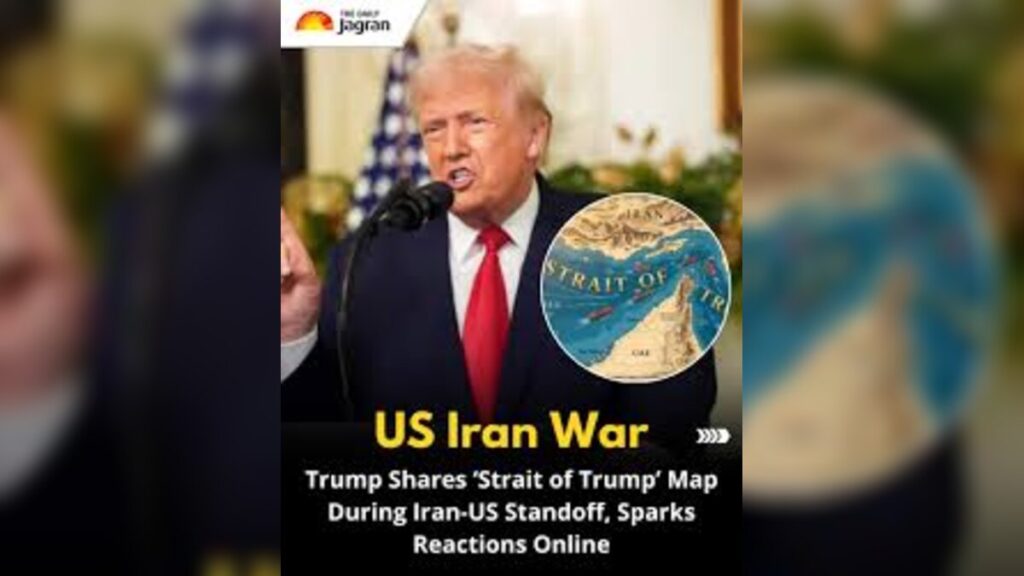
A fresh wave of debate erupted after Donald Trump appeared to support a proposal to rename one of the world’s most sensitive waterways—the Strait of Hormuz.
The idea, shared via a repost on Truth Social, suggested calling it the “Strait of Trump,” instantly drawing global reactions.
The post included a map showing the narrow shipping route labeled with the new name.
While it was not an official policy announcement, the timing and tone were enough to raise eyebrows in diplomatic and economic circles.
Why the Strait Matters More Than the Name
The Strait of Hormuz is not just a stretch of water—it is one of the most important energy corridors in the world.
Every day, millions of barrels of crude oil pass through it, linking major producers in the Middle East to global markets in Asia, Europe, and beyond.
Any disruption in this narrow passage can immediately shake global energy prices and supply chains.
Geographically, it connects the Persian Gulf to the Gulf of Oman, making it a natural bottleneck for maritime trade.
A Region Already Under Pressure
This symbolic renaming comes at a moment when tensions between the United States and Iran are already high.
The Strait has long been a geopolitical pressure point, often appearing in disputes over sanctions, military presence, and freedom of navigation.
Over the years, naval encounters and political standoffs in the region have made the waterway one of the most closely monitored shipping routes on the planet.
Against this backdrop, even symbolic political gestures tend to carry amplified meaning.
Oil Markets React to Rising Uncertainty
The reaction from energy markets was immediate.



Brent crude climbed sharply, reaching levels not seen since mid-2022, as traders priced in the risk of prolonged disruption in the region.
Reports linked the price surge to concerns over U.S.-Iran tensions, particularly around shipping access through the Strait.
According to market coverage, fears of a tightening global supply chain were already building due to stalled nuclear negotiations and ongoing enforcement actions affecting Iranian exports.
One report also noted that Trump had rejected proposals tied to reopening the Strait, reinforcing expectations that restrictions could continue.
Legal Reality vs Political Messaging
Despite the attention, experts point out that international waterways like the Strait of Hormuz are governed by established global maritime law and long-standing international conventions.
That makes any unilateral attempt to rename or reclassify the route effectively symbolic rather than enforceable.
Global shipping authorities, insurers, and governments continue to recognize it under its traditional name.
Still, symbolic statements at this level often carry political weight, especially when they intersect with existing tensions.
Impact and Consequences
The immediate impact has been felt in energy markets, where volatility tends to rise quickly on geopolitical headlines.
Higher oil prices can feed into global inflation, affecting transportation, manufacturing, and food costs worldwide.
For countries dependent on energy imports, especially in Asia and Europe, uncertainty around the Strait adds another layer of economic pressure.
Diplomatically, the move risks further straining already fragile relations between Washington and Tehran, potentially complicating ongoing negotiations around nuclear and regional security issues.
Even if symbolic, such statements can influence investor sentiment and increase short-term market instability.
What’s Next?
The focus now shifts to whether rhetoric will translate into policy action or remain symbolic political messaging.
Markets will closely watch any developments around naval activity or sanctions enforcement in the region.
Energy traders are also tracking diplomatic signals tied to nuclear negotiations, which remain a key factor in determining whether tensions escalate or ease.
If shipping stability in the Strait is maintained, markets may gradually settle.
If not, volatility could persist in global oil prices.
Summary
Donald Trump’s reshared post suggesting the renaming of the Strait of Hormuz as the “Strait of Trump” has triggered global attention due to the waterway’s strategic importance.
While the idea is symbolic and not legally enforceable, it arrives at a time of heightened U.S.-Iran tensions and rising oil prices, with markets reacting quickly to fears of supply disruption.
Bulleted Takeaways
- Donald Trump reshared a post suggesting renaming the Strait of Hormuz
- The Strait is a key global oil shipping route linking the Persian Gulf and Gulf of Oman
- The proposal is symbolic and not legally enforceable under international maritime law
- Oil prices surged amid fears of supply disruption and geopolitical tension
- U.S.-Iran relations remain strained, especially over nuclear negotiations
- Markets reacted to concerns about possible shipping restrictions in the region
- Brent crude reached its highest level since mid-2022
- Investors are closely watching developments around diplomacy and maritime security

